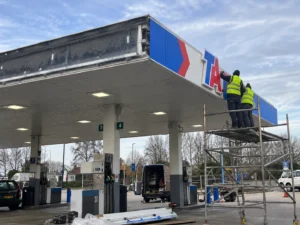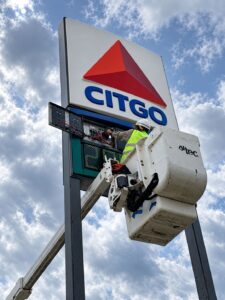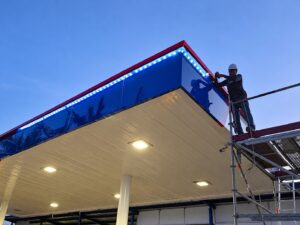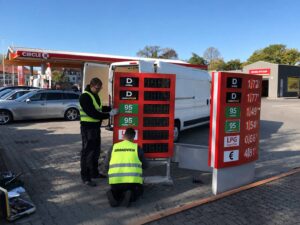
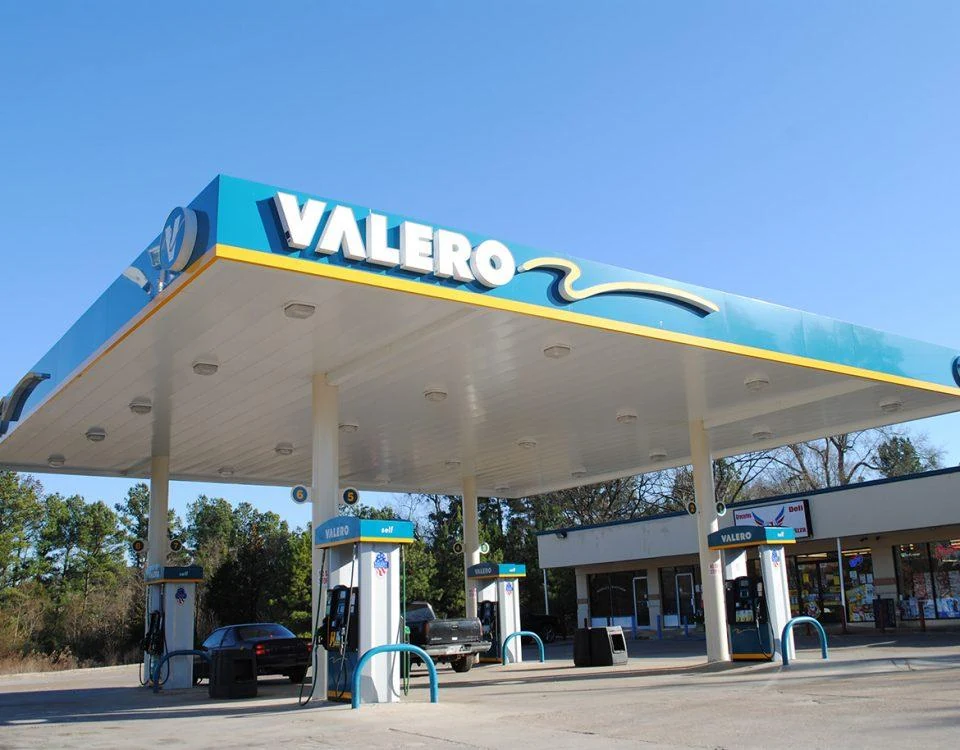
Rebranding a gas canopy does not necessarily mean rebuilding it. A station may need new fascia panels, an updated illuminated logo, or a different lighting treatment while keeping its existing roof and supports. A branded panel is not a structural repair, and a replacement logo must fit existing mounting and wiring.
Separate visual changes from conditions needing site assessment before choosing an upgrade.
What Parts of a Gas Canopy Can Change Separately?
The following are possible upgrade scopes, not approvals to modify existing structures.
| Component | Can It Change Separately? | What Must Be Checked First | Responsible Party |
|---|---|---|---|
| Roof and supports | Not a signage-only upgrade | Damage, leaks, load and structural condition | Local qualified engineer or contractor |
| Fascia panels | Often, if the support is suitable | Substrate, fixing points, corners and clearances | Fabricator plus local installer |
| Illuminated logo face | Sometimes, without changing the cabinet | Face size, retention system, lighting and brand approval | Sign fabricator and installer |
| Logo cabinet or assembly | Sometimes, as a separate sign package | Support capacity, attachment and wiring route | Fabricator plus local professionals |
| Accent light band | Conditionally | Lighting rules, power, cabling and service access | Sign fabricator and local electrical team |
Corrosion, leaks, movement or loose attachments mean the affected area needs local professional assessment before signage work proceeds. New fascia cannot fix underlying structural problems.
Decide What to Keep Before Choosing a Replacement
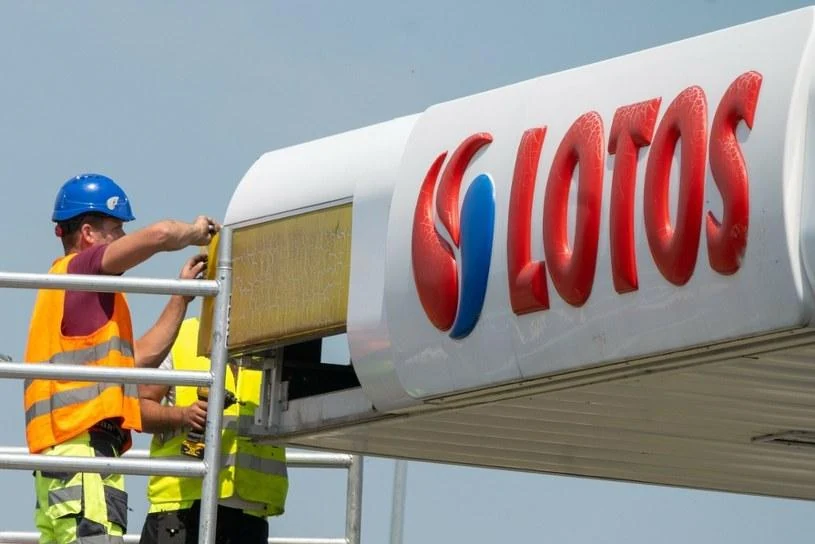
Keeping the existing structure is a decision, not an assumption. New signage may change loads, attachments or wiring; have local professionals review reuse of existing supports.
Faded branding may need only new panels or sign faces, but uncertain substrates or cabinet condition require investigation.
There are three useful decision rules:
- Replace only the logo face when the cabinet is sound, the face-retention method is compatible, the lighting still suits the design, and the approved branding fits.
- Replace the cabinet as well when its shape, depth, deterioration or internal layout prevents a suitable new face or lighting arrangement.
- Plan a complete sign-component replacement when the face, cabinet, lighting and attachment arrangement cannot be reused together. The supporting canopy must still be assessed separately.
For example, changing to a taller logo may place lettering beyond the existing cabinet opening or across a fascia seam. A replacement face alone will not solve that mismatch. Even if the existing LEDs work, their layout may not illuminate a redesigned face evenly. Check those constraints before deciding whether to retain the housing.
Decisions depend on cabinet dimensions, mounting details, service access and existing wiring.
Whether old cladding should be overlaid, removed or completely replaced is a separate decision. Our guide to canopy refacing versus replacement covers those options in detail.
Match Fascia, Logos and Lighting to the Existing Canopy
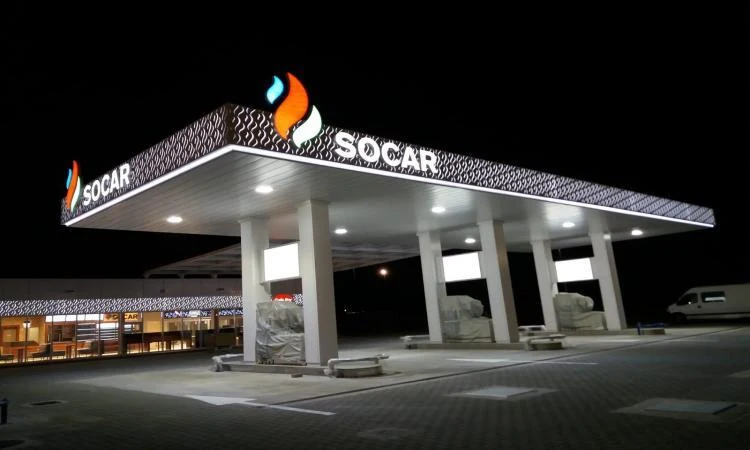
Fascia panels establish the main brand color. A logo adds a face, housing and lighting, particularly important where it crosses panel joints.
A shop drawing should show where long runs break, how corners meet, and which areas remain accessible after installation. Without those checks, a seamless rendering can become visible joints, exposed holes or blocked access.
Do not add an accent light band just because it improves the night view in a mock-up. First check local lighting restrictions, the brand’s approved appearance, available power, a feasible cable route and access for future service. A lighting concept that fails any of those checks needs revision before fabrication.
For component-specific details, explore custom gas station canopy panels and illuminated canopy signage.
Account for an Operating Station’s Site Constraints
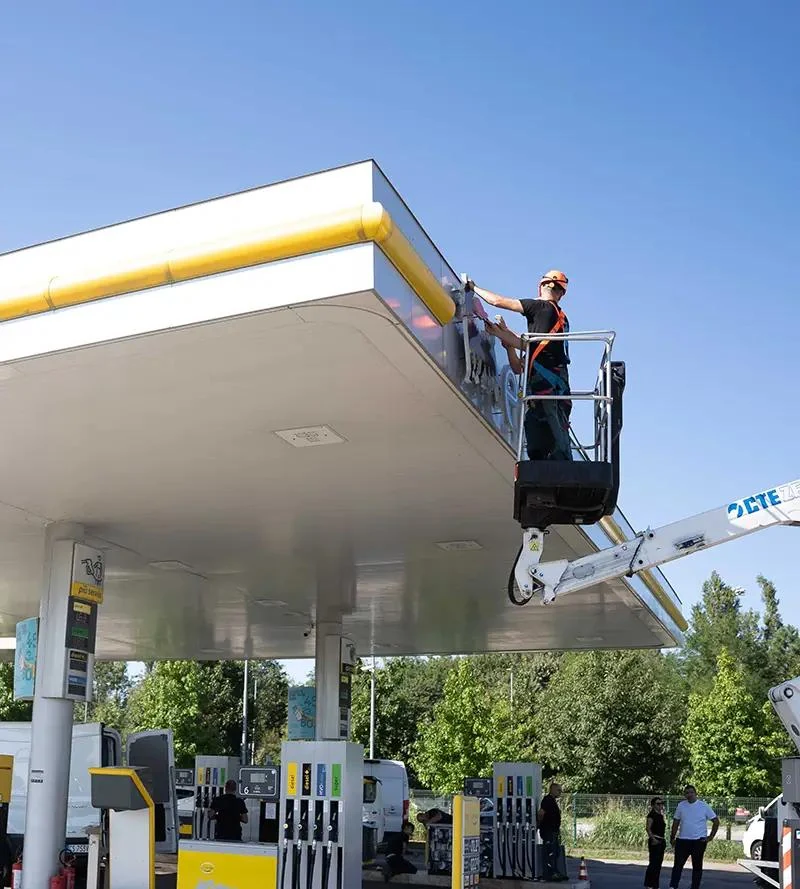
Operating stations have constraints: lifts may obstruct dispensers, closures affect traffic and canopy edges may be inaccessible at peak times. The local installer should coordinate lift access, any necessary pump downtime, barriers and traffic control with the station operator.
Before manufacturing is finalized, site measurements should confirm edges, corner transitions, existing openings and service clearances. Where old fasteners or concealed cabling are found, resolve their treatment in the approved shop drawings rather than improvising during installation. Licensing, safety and permits depend on location and work scope.
Keep Factory Review Separate from Local Approval
A signage factory can translate approved artwork into fascia and sign components, review fit against provided measurements, and inspect manufactured assemblies. Those checks do not certify an existing canopy’s structural condition or authorize local installation.
The local engineer, electrician, installer and relevant authority address the site-specific engineering, permits, wiring and inspections. For electrical signs, the International Sign Association’s guidance on the National Electrical Code discusses NEC Article 600; which code edition applies depends on local adoption.
The factory verifies components; qualified local parties confirm site suitability.
FAQ
Can I change gas canopy branding without replacing the roof?
Potentially. Fascia and logo components may be independent of the roof, but reuse of the existing structure depends on its condition and the proposed mounting.
Is a new illuminated logo face enough for a brand change?
Only when the existing cabinet, lighting, attachment method and approved logo layout remain compatible. Otherwise, a new cabinet or complete sign assembly may be needed.
Conclusion
The useful first question is not “Which gas canopy design looks best?” It is “Which parts of this canopy actually need to change?” Establish the component scope, check the site constraints, and keep structural approval separate from signage fabrication.
References / Further Reading
- International Sign Association — National Electrical Code and Electric Sign Installation