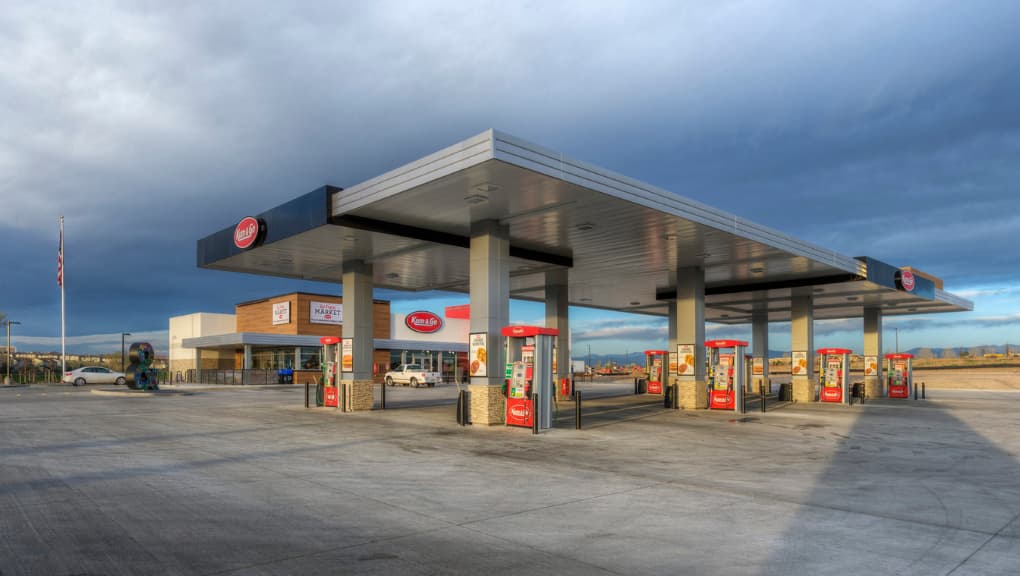
Owning a gas station remains one of the most resilient retail business models worldwide. Beyond fuel sales, modern stations generate revenue from convenience stores, food services, car washes, and advertising displays.
However, successful gas station ownership requires far more than purchasing land and installing fuel pumps. Investors must evaluate construction costs, franchise opportunities, site development requirements, branding systems, and long-term operational expenses.
This guide explains the main steps, costs, and key points for opening and owning a gas station today.
Understanding Gas Station Ownership
Generally, you can become a gas station owner in three ways:
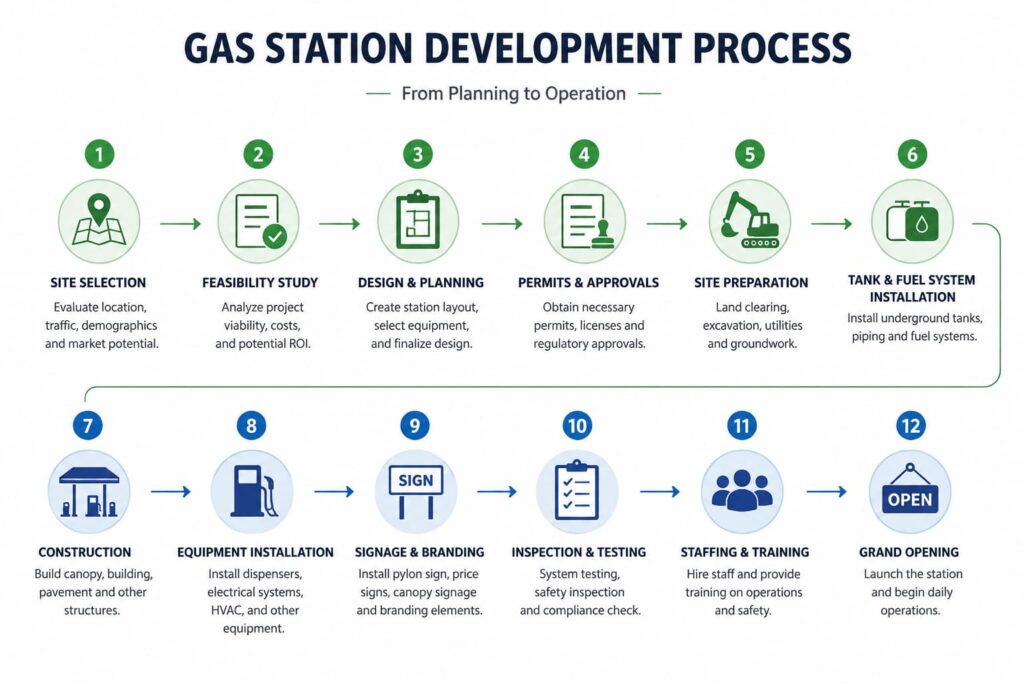
Build a New Gas Station
Developing a station from the ground up provides complete control over design, branding, and equipment selection.
Advantages:
- Customized layout
- Modern fuel systems
- Higher long-term efficiency
- Stronger brand positioning
Challenges:
- Higher initial investment
- Longer approval process
- Construction management requirements
Buy an Existing Gas Station
Many investors choose to purchase an operating station.
Benefits include:
- Existing customer base
- Immediate cash flow
- Established permits and licenses
Before purchasing, conduct detailed due diligence on:
- Fuel sales volume
- Property condition
- Environmental compliance
- Existing contracts
- Signage and branding assets such as gas station pylon signs and LED gas price signs.
Join a Gas Station Franchise
Major fuel brands offer franchise programs that provide:
- Brand recognition
- Supply agreements
- Marketing support
- Operational systems
While franchise ownership reduces startup risks, franchise fees and brand compliance costs can significantly affect profitability.
How Much Does It Cost to Own a Gas Station?
One of the most common questions investors ask is:
How much does it cost to open a gas station?
The answer depends on location, size, and ownership model.
A detailed business plan should include land cost, construction cost, fuel equipment, staffing, insurance, signage, and working capital.
Typical investment ranges include:
| Expense Category | Estimated Cost |
| Land Acquisition | $250,000-$3M+ |
| Site Preparation | $100,000-$500,000 |
| Underground Fuel Tanks | $150,000-$600,000 |
| Fuel Dispensers | $50,000-$300,000 |
| Convenience Store Building | $300,000-$2M+ |
| Canopy Construction | $80,000-$500,000 |
| Electrical Systems | $50,000-$250,000 |
| Signage & Branding | $15,000-$200,000+ |

For most projects, the total gas station construction cost ranges from:
$1.5 million to over $10 million
depending on project scope and market conditions.
Key Factors Affecting Gas Station Construction Cost
Location
Urban properties typically require larger investments because of land costs, permitting requirements, and infrastructure upgrades.
Fuel Capacity
Larger storage systems increase installation costs but may improve operating efficiency.
Site Conditions
Rock excavation, soil remediation, and utility relocation can significantly increase construction budgets. For sites involving trenching or underground work, contractors should follow OSHA excavation safety requirements.
Brand Requirements
Franchise operators often require standardized canopies, fuel dispensers, LED price displays, and pylon signs.
Local fire and building codes should also be reviewed before finalizing station layout and fuel dispensing areas.
The Importance of Gas Station Signage
Many investors underestimate the impact of signage on station performance.
In practice, signage is one of the most visible assets on the property.
A complete branding system typically includes:
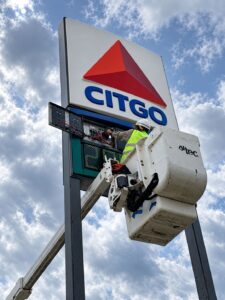
- Gas station pylon signs
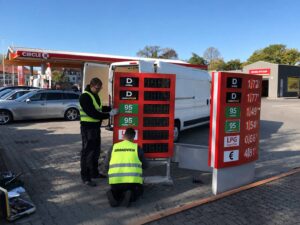
- LED gas price signs
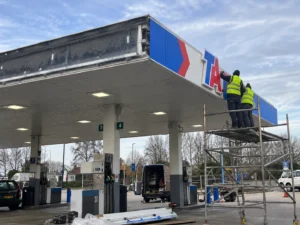
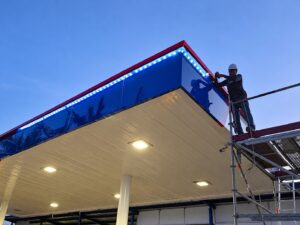
- Canopy fascia signage
- Directional signs
- Convenience store branding
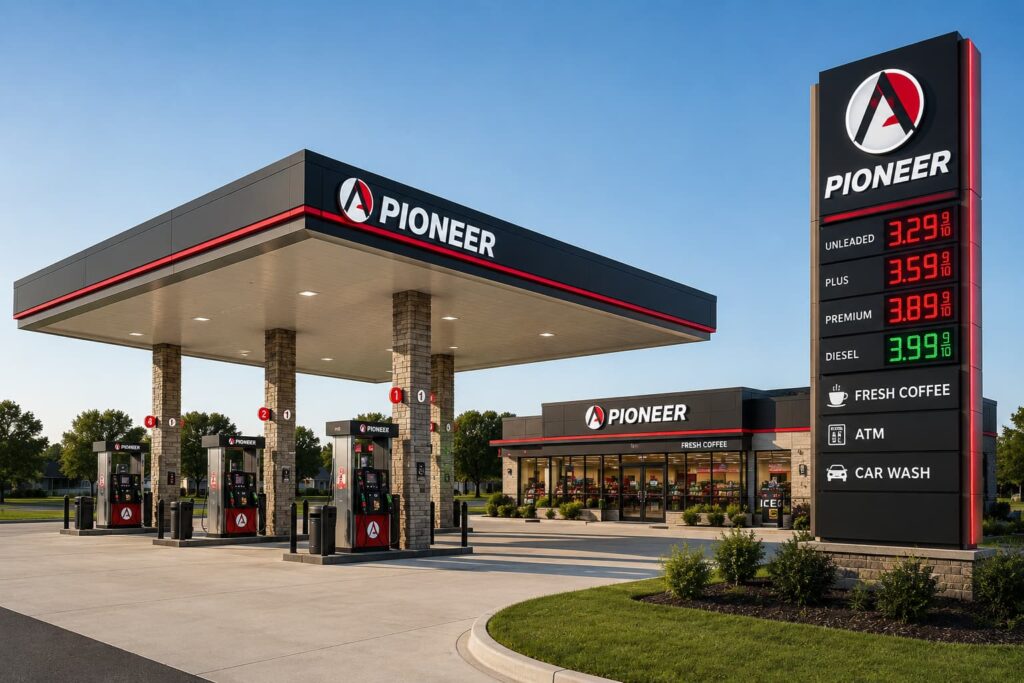
A well-designed pylon sign improves visibility from long distances and helps attract passing traffic.

Modern LED gas price signs let operators update fuel prices at once. They also cut maintenance costs versus manual systems.
Industry Case Example
A recent fuel station project in the Middle East illustrates how strategic branding affects customer acquisition.
The developer invested approximately $4.8 million in construction and fuel infrastructure.
During planning, the project team upgraded from a standard monument sign. They chose a 12-meter illuminated pylon sign with integrated LED price displays.
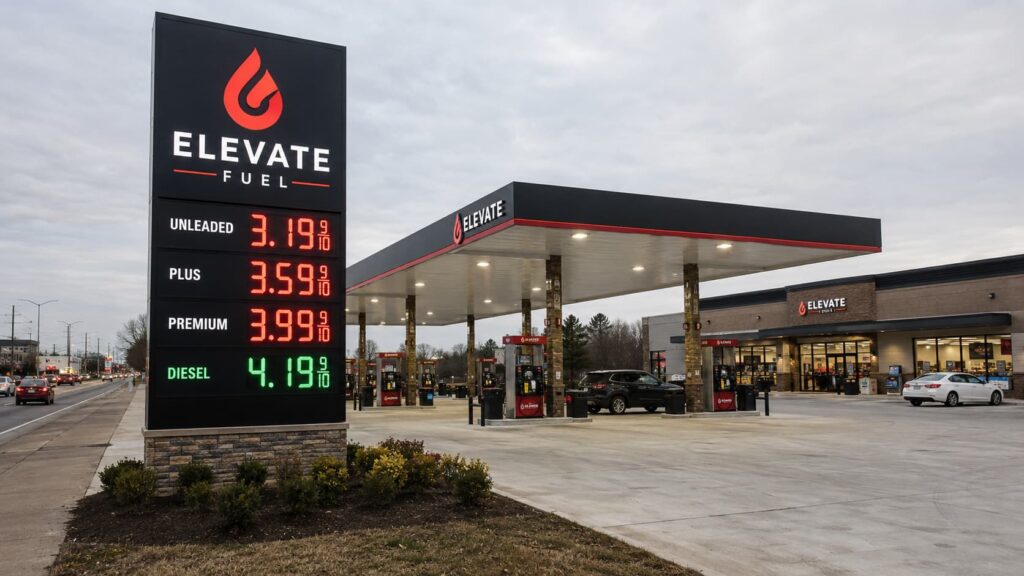
The result:
- Improved highway visibility
- Faster customer recognition
- Enhanced brand consistency
- Increased forecourt traffic after opening
Although signs were less than 3% of the total project cost, they became one of the most visible parts of the station.
Engineering and Material Considerations
When selecting gas station signage, buyers should evaluate more than appearance.
Key considerations include:
Structural Materials
- Hot-dip galvanized steel structures
- Aluminum sign cabinets
- Corrosion-resistant fasteners
LED Components
- High-brightness outdoor LEDs
- Low-energy power supplies
- Remote control systems
For illuminated signs, buyers should also check whether electrical components and sign assemblies follow recognized electric sign safety standards.
Weather Resistance
Stations located in coastal or high-temperature regions should prioritize:
- UV-resistant finishes
- Waterproof electrical systems
- Wind-load certified structures
These factors directly affect maintenance costs and service life.
Future Trends in Gas Station Development
Several trends are shaping future gas station investments:
- Digital fuel price displays
- Smart energy management
- EV charging integration
- Larger convenience retail areas
- Enhanced brand visibility systems
As competition grows, fuel retailers invest more in branding and customer experience, not just fuel margins.
Conclusion
Owning a gas station can be a profitable long-term investment.
It takes good planning.
You also need a realistic budget and strong branding.
Whether you build a new station, buy an existing facility, or join a franchise, you must understand key factors. These include construction costs, operating needs, and customer visibility.
While land, fuel systems, and buildings are the biggest costs, engineered signage is a high-ROI investment. It attracts traffic and builds brand recognition.
Request Professional Gas Station Signage Support
Planning a new gas station project?
GV Sign Factory provides:
- Custom gas station pylon signs
- LED gas price signs
- Canopy signage systems
- Fuel station branding solutions
- Engineering and manufacturing support
Contact our team today for project consultation and a customized quotation.
FAQ
How much does it cost to build a gas station?
Most projects range between $1.5 million and $10 million, depending on land, construction scope, and equipment requirements.
How much does it cost to own a gas station franchise?
Franchise investments usually range from several hundred thousand dollars to several million dollars. The amount depends on the fuel brand and locati0n.
Is buying an existing gas station cheaper than building one?
In many cases, buying an existing station can reduce construction costs. It can also help you start operating sooner. However, inspect the property carefully before you buy it.
What is the most important factor when selecting a gas station location?
Traffic volume, visibility, accessibility, and local demographics are among the most critical factors.
How much should I budget for gas station signage?
Most projects allocate between $15,000 and $200,000+ depending on sign size, branding requirements, and LED display systems.