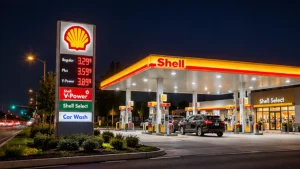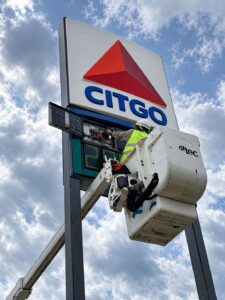
Changing one fuel price should not leave the two sides of a roadside sign showing different numbers. A controller that updates one display may not be configured to reach every face or fuel grade.
When choosing an LED price sign for gas station use, the question is not simply whether it comes with a remote. It is how each display is addressed, checked and troubleshot.
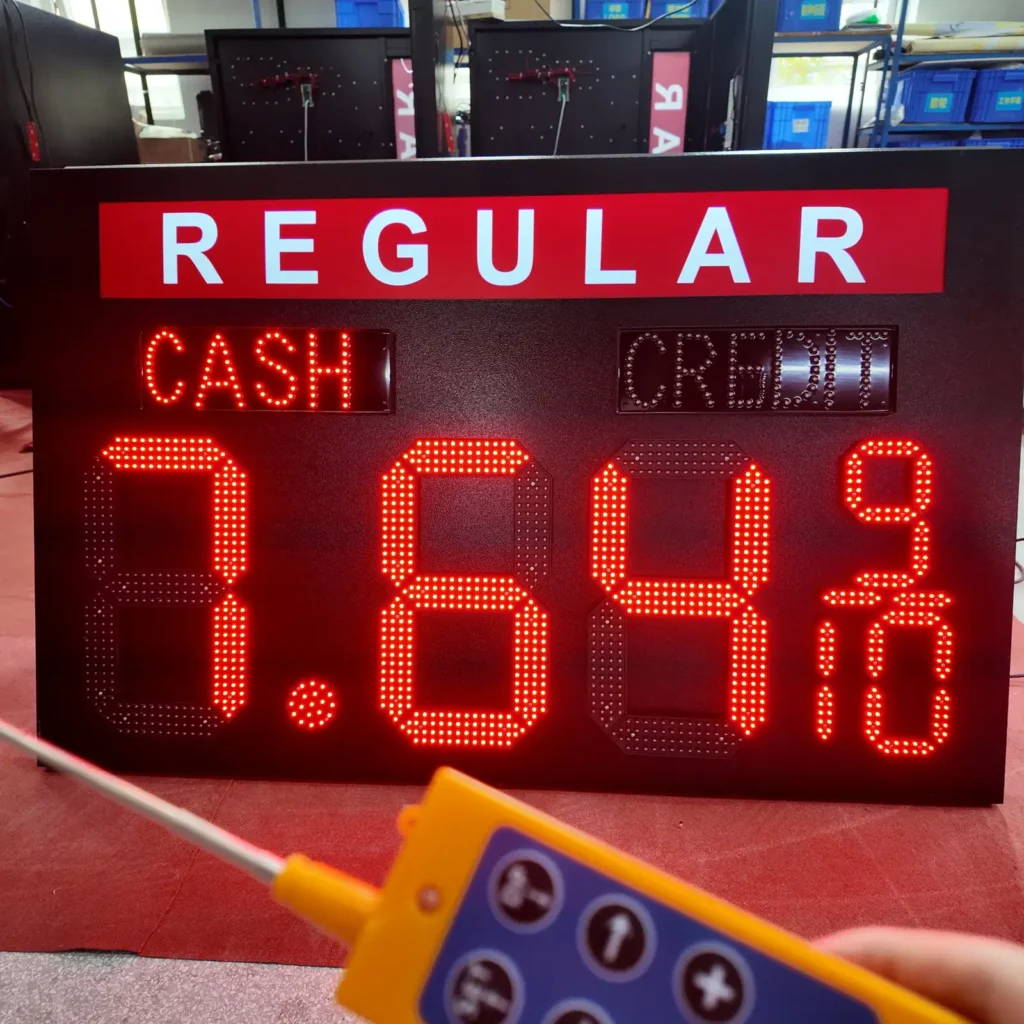
RF vs Wired Control: Which Fits Your Station?
For a station with one roadside sign and occasional manual changes, a compatible RF remote can be a straightforward choice. Staff can change prices without opening the cabinet. Range, pairing and supported display count depend on the equipment; test the remote from its normal operating position.
Wired control suits sites with a planned cable route between the operating point and the sign. It avoids a radio link, but the controller and display still need matching protocols, electrical connections and addressing. Network management also requires suitable hardware, software and access permissions.
| Control option | Practical fit | Main trade-off | Confirm before use |
|---|---|---|---|
| RF remote | Local manual price changes | Radio coverage and pairing vary | Which displays and rows respond |
| Wired controller | Fixed route between control point and sign | Cabling and protocol must match | Interface and addressing |
| Network-enabled control | Connected price management | Depends on compatible hardware and network | Access, recovery and update confirmation |
| POS integration | Coordinated pump and sign workflow | Not a standard feature of every controller | Exact POS and interface compatibility |
Decision rule: Choose the simplest configuration that can address every required price row and can be checked reliably by staff. More connectivity does not automatically mean fewer errors.
How One Controller Reaches Multiple Displays
Consider a double-sided sign with regular and diesel prices. Both faces may need to show the same figures, but that does not mean every LED board has the same address or uses the same wiring.
One system might mirror values to two display faces; another might identify each face or row separately. Another roadside sign adds a further destination.
Check three things:
- Which rows are linked? A regular-price change must not alter the diesel row.
- Which faces share a value? A command intended for both sides must reach both, not just the nearest receiver.
- What identifies each display? Addressing, grouping or a master/slave arrangement must match the selected controller and drivers.
Grandview’s LED gas price sign range lists RF, RS232/RS485, LAN and master/slave options; not every controller supports every arrangement.
For existing signs, a replacement controller must also match the installed driver, control card and protocol. A broader retrofit decision may be necessary if those parts cannot work together.
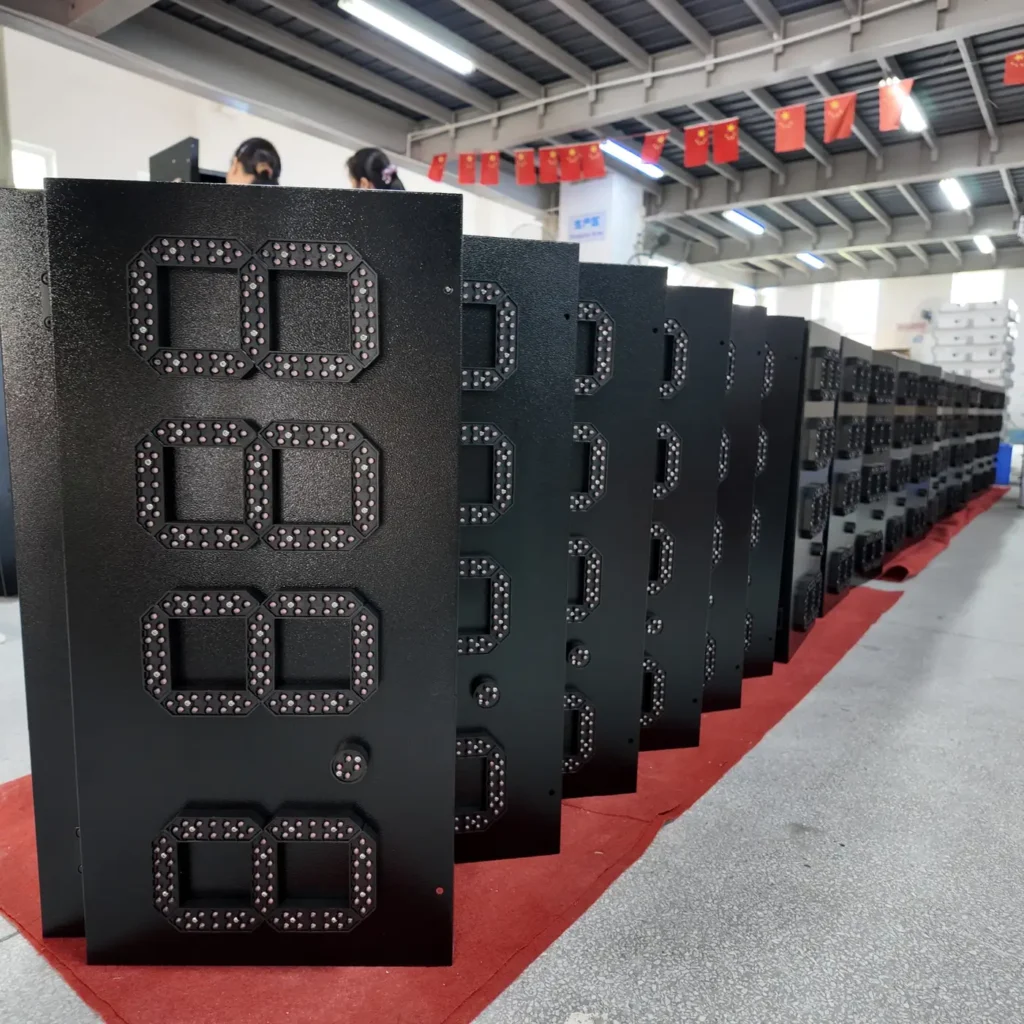
Confirm the Price Change—and Find Where It Failed
Sending a command and seeing the correct roadside price are two separate events. Some systems provide electronic feedback; others require visual inspection. Without documented acknowledgement, a button press does not prove that every display changed.
A practical update check follows the path of the price:
- Set the intended price for the correct fuel grade.
- Inspect every face and price row that should have changed, including any secondary sign.
- Compare the displayed prices with the station’s approved prices and pump settings, taking any cash or credit conditions into account.
- If one display differs, identify the affected face and row before resetting equipment or replacing parts.
In Delaware, 6 Del. C. §2902 addresses pump prices and requires cash-discount conditions to be prominent on other station price signs. Requirements differ elsewhere.
When nothing updates, the controller, its power supply and the communication path are reasonable starting points.
When one face stays unchanged, check its address or pairing, signal path and driver.
When only one fuel row is wrong, inspect row assignment and channel configuration.
If the roadside sign disagrees with the pump, the issue may be in the station’s operating procedure or POS interface rather than the LED digits.
These are diagnostic starting points for qualified technicians, not instructions to open energized cabinets. The station should correct any inaccurate public price display promptly.
Factory Review and On-Site Responsibilities
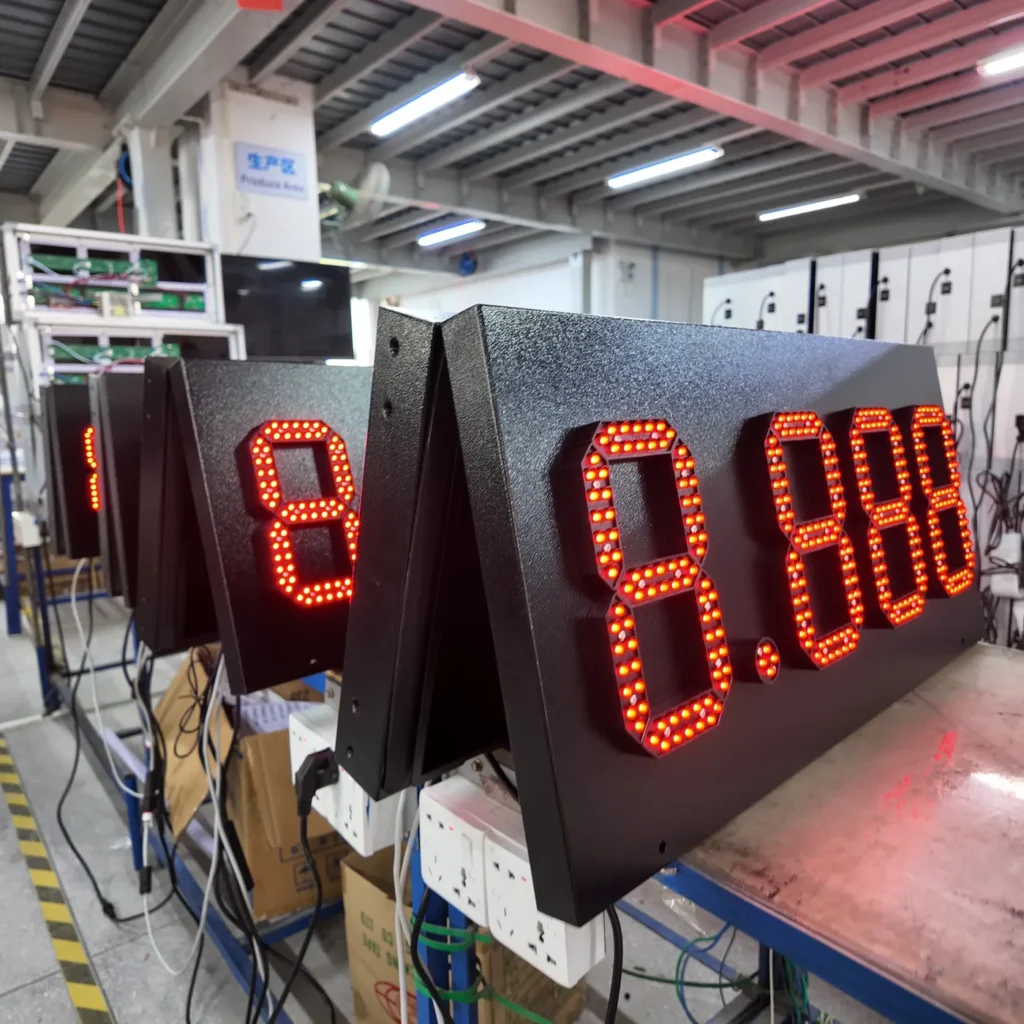
A price display that illuminates correctly in isolation has not necessarily passed a complete control-system check.
Before shipping a multi-display configuration, a meaningful factory acceptance test would use the selected controller to change each price row, verify the intended faces respond, and check that unrelated rows remain unchanged. Any promised acknowledgement or offline-recovery feature should also be demonstrated on the actual hardware.
Locally, qualified installers and electricians handle wiring, power and commissioning under applicable rules. POS integration may require the station’s equipment or software provider.
UL Solutions identifies standards for electric signs, components and retrofit kits; this does not certify any particular Grandview product.
For a specific RF-controlled LED price sign, confirm the supplied controller and the displays it is intended to operate before assuming the same workflow will suit a larger site.
FAQ
Can one RF remote update both sides of a price sign?
Yes, if the receiver, controller and display configuration support both faces. Together or separate updates depend on configuration.
Does wired control automatically synchronize the sign with fuel pumps?
No. A wired connection to a sign is not the same as an integrated POS connection. Pump-to-sign coordination requires a compatible interface and a verified update process.
The better control choice is the one staff can operate and verify across every required display—not simply the one with the longest feature list.