If your gas price sign will not update, do not replace the LED digits first. Start by looking at what still works.
A sign with every price stuck has a different problem from a sign where only one side fails. The same is true when only one fuel price row will not change.
Finding the failure pattern first can save time and avoid replacing the wrong part.
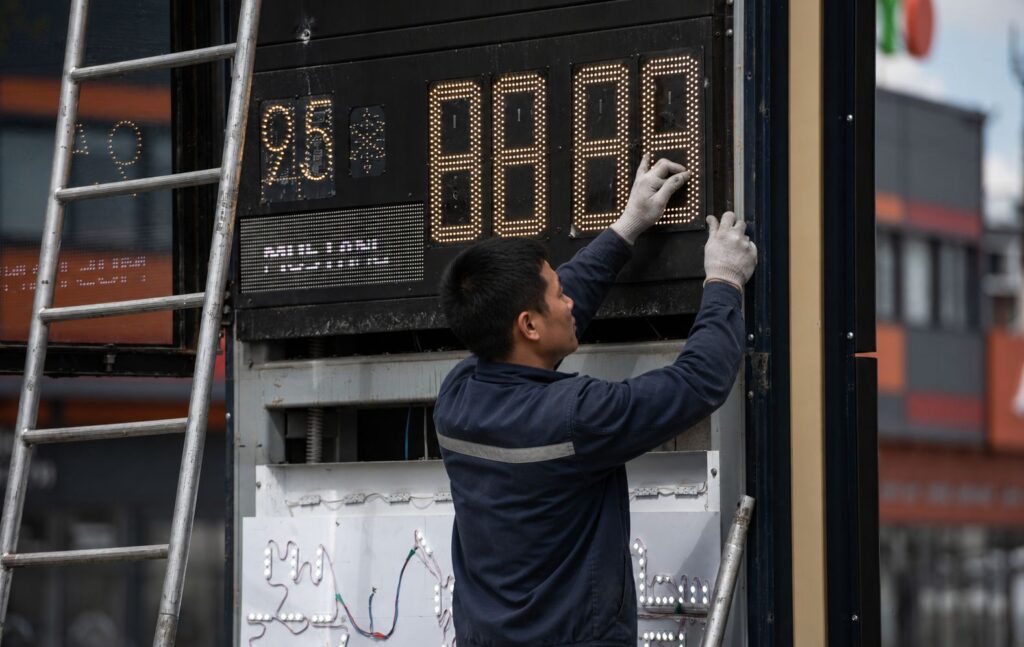
Start With What Failed
| What you see | Check first |
|---|---|
| No prices update | Controller, power, or control connection |
| One side does not update | Addressing, signal path, or driver |
| One price row is wrong | Row setup, channel, or driver |
| Price is always off by the same amount | Settings or price offset |
| Remote works but POS does not | POS connection or setup |
| Pump changes but roadside sign does not | Control path and final display |
These are starting points, not fixed repair rules. Gas price signs can use different controllers, drivers, wiring, and control methods.
If No Prices Update
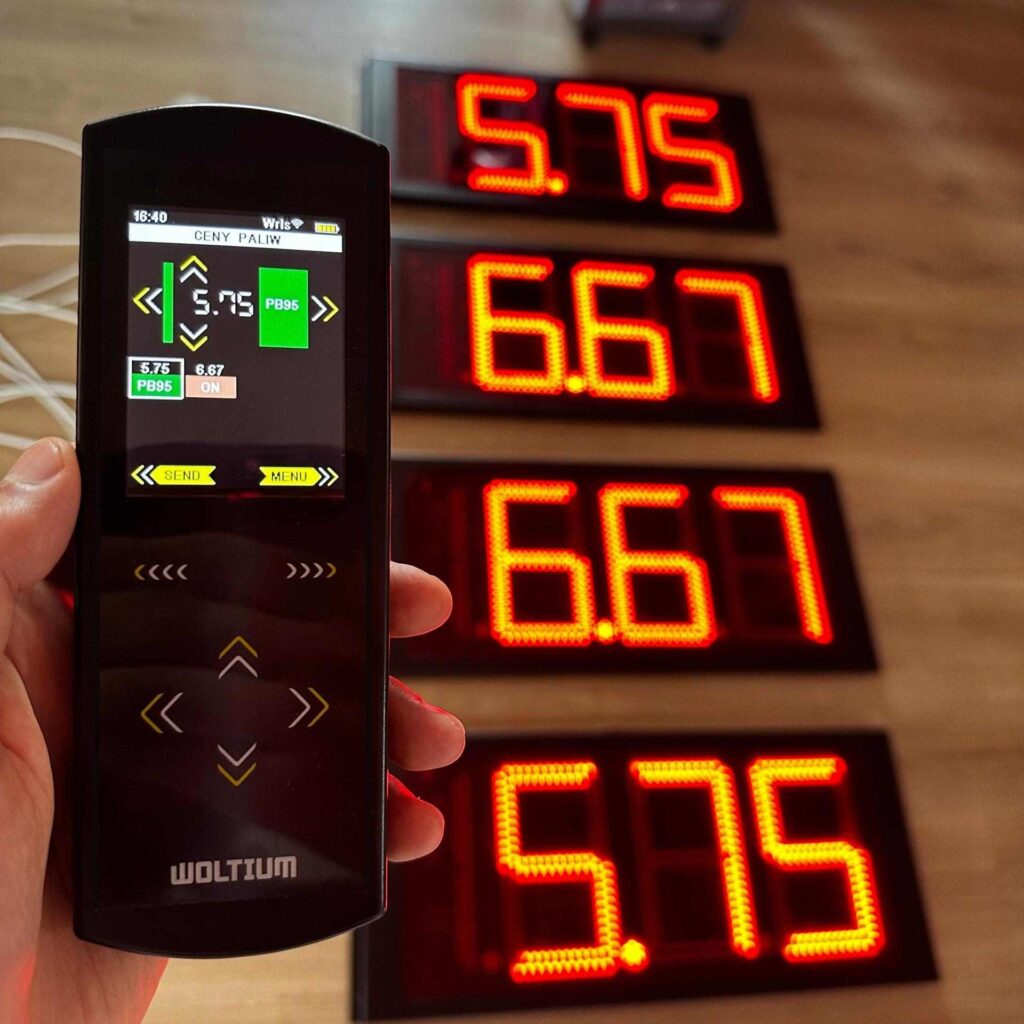
If every price stays the same, the problem is probably not one LED digit.
Start with the control side of the system.
Check whether the controller is working. Then check whether the new price can reach the sign. The problem may be power, the controller, a control cable, or another part in the signal path.
A remote or control screen may accept a new price even when the roadside display does not receive it.
If the station uses several displays or a more complex setup, it may help to first understand the existing gas price sign control system.
If Only One Side or One Row Is Wrong
A partial failure is often easier to narrow down.
For example, one side of a double-sided sign may update while the other side stays on the old price. In this case, the main controller may still be working.
The problem may be in the address setting, signal path, driver, or connection for that side.
The same idea applies when two price rows work but one row does not.
This is also why testing only whether the LEDs light up is not enough. For a multi-row or double-sided sign, each price row should be changed during testing. Both sides should also show the correct new price.
When the Controller and Sign Show Different Prices
Sometimes the new price is entered correctly, but the roadside sign still shows the wrong number.
If the difference is always the same, a setting or price offset may be involved.
Another problem can happen when the pump price changes but the roadside sign does not. In that case, the fault may be between the POS, controller, and price display.
Do not assume the update worked just because the control device accepted it.
After a price change, check the actual roadside sign. Also make sure it matches the pump price when required by the station’s normal process.
Local rules for fuel price displays can vary, so local staff and service technicians should also follow local requirements.
Repair It or Replace the System?
One fault does not always mean the whole price sign needs to be replaced.
A repair may make sense when the problem comes from one known part and the rest of the system still works well.
Replacement becomes more worth considering when:
- the same faults keep coming back;
- the controller is old;
- several parts are starting to fail;
- replacement parts are hard to find;
- old controls do not work well with newer LED displays.
In these cases, compare the cost and risk of more repairs with a larger upgrade. You can also review whether to retrofit the LED price changer or replace more of the existing sign.
FAQ
Why does one side of my gas price sign update but the other does not?
The problem may be limited to that side of the sign. Check its address setting, signal path, driver, and local connections. The exact cause depends on the system.
Should I replace the controller or the whole LED price display?
Not always. If one part has failed and the rest of the system is stable, repair may be enough. If faults keep returning or old and new parts no longer work well together, a wider retrofit may make more sense.