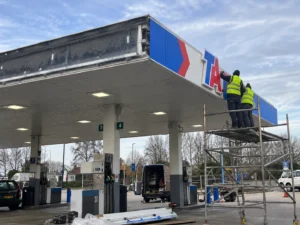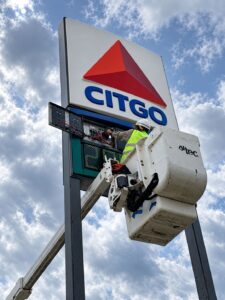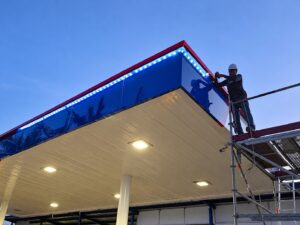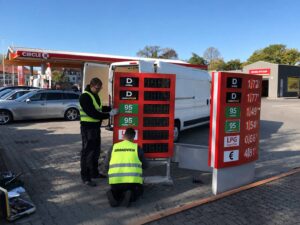
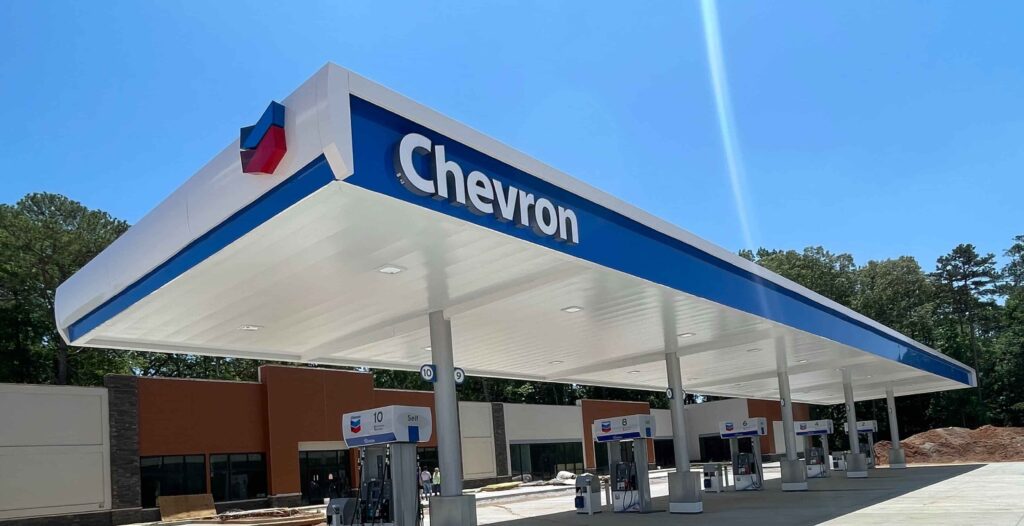
 A gas station canopy is one of the most visible and functional components of any fuel station. Beyond protecting customers and fuel dispensers from weather, it supports lighting, branding, safety systems, and overall site appearance.
For fuel station owners, contractors, and petroleum brands, selecting the right canopy requires more than choosing a roof structure. Material selection, structural design, dimensions, and long-term maintenance all affect project cost and performance.
This guide explains the key materials, features, and engineering considerations behind modern gas station canopy systems.
What Is a Gas Station Canopy?
A gas station canopy, also known as a fuel station canopy, is the overhead structure installed above fueling islands. It provides weather protection while supporting lighting, signage, electrical systems, and branding elements.
A typical canopy consists of:
- Structural steel framework
- Roof decking system
- Aluminum fascia cladding
- LED canopy lighting systems
- Drainage systems
- Brand logos and signage
In modern fuel stations, the canopy often serves as the main visual identity element, making it vital for branding.
What materials do gas station canopies use?
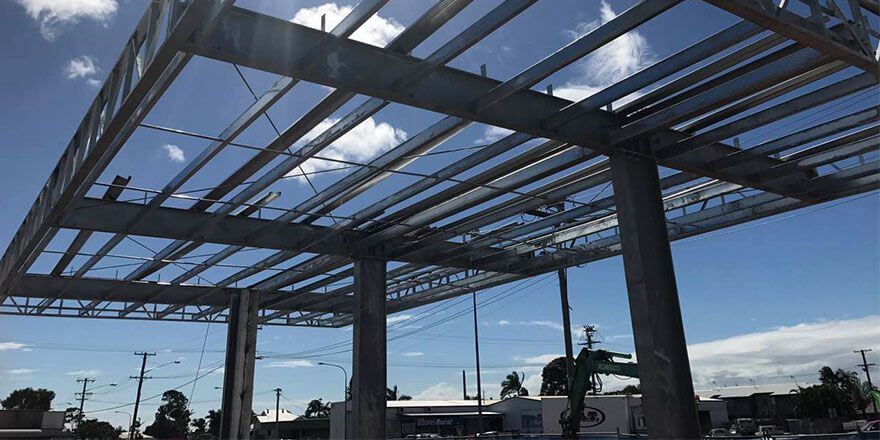
Structural Steel Framework
The main load-bearing structure is usually fabricated from galvanized or painted structural steel.
Advantages include:
- High load capacity
- Excellent wind resistance
- Long service life
- Compatibility with large-span designs
Steel structures are commonly used in custom gas station canopy fabrication projects where durability and engineering performance are priorities.
Aluminum Composite Panel (ACP) Fascia
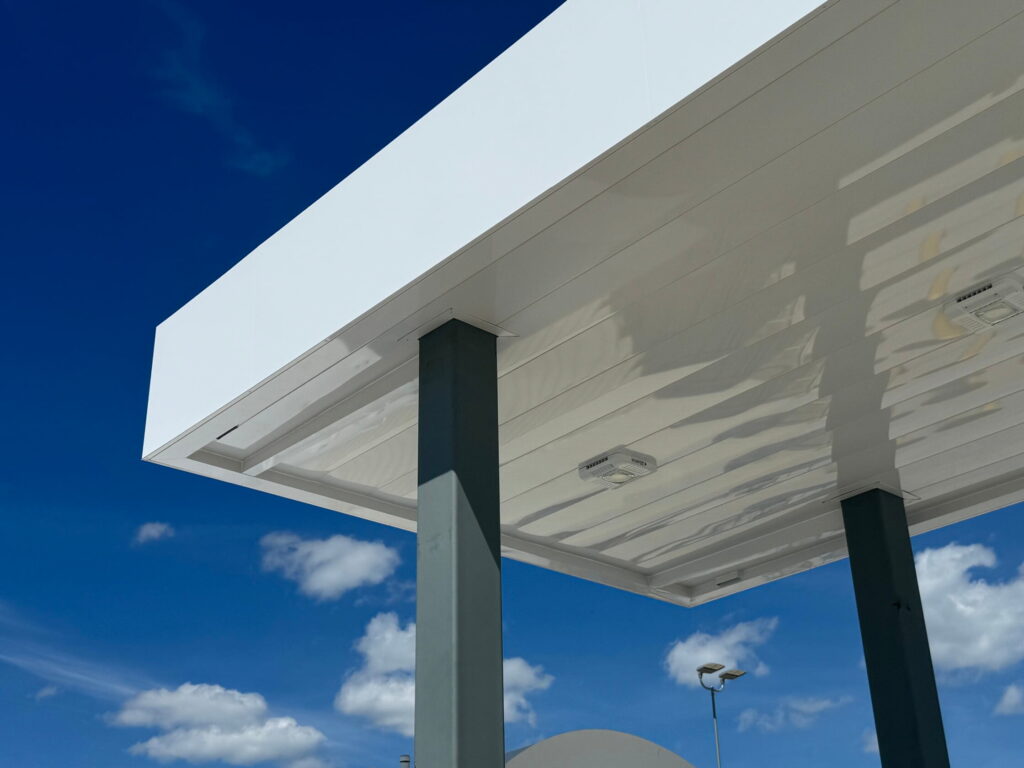
The fascia is the visible outer cladding installed around the canopy perimeter.
ACP panels are popular because they offer:
- Lightweight construction
- Corrosion resistance
- Smooth surface finish
- Easy brand color customization
Most major fuel brands use ACP fascia panels to create a clean and professional appearance.
Roofing Systems
Roof systems may include:
- Metal decking
- Insulated panels
- Waterproof membrane systems
The choice depends on climate conditions, local building codes, and project budget.Building code requirements may vary by region and should always be reviewed during project planning.
What Is the Dimension of a Gas Station Canopy?
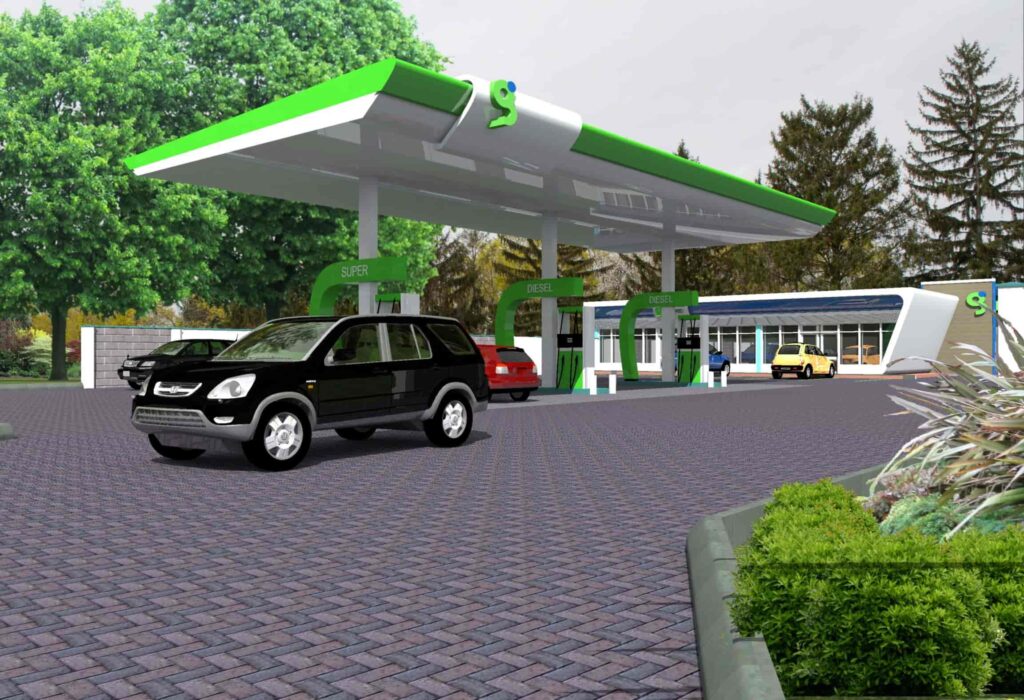
One of the most common questions from fuel station developers is: What size is a gas station canopy?
No universal size exists, but most projects fall within the following ranges:
| Station Type | Width | Length | Clearance Height |
| Small Station | 20–25 m | 8–10 m | 4.5–5 m |
| Medium Station | 25–35 m | 10–15 m | 5–5.5 m |
| Large Station | 35–50 m+ | 15–20 m+ | 5.5–6 m |
Dimensions should always be determined according to:
- Number of fueling positions
- Vehicle types served
- Traffic flow requirements
- Local regulations
- Branding standards
For international fuel brands, canopy dimensions are often standardized across multiple locations.
Key Features of Modern Fuel Station Canopies
Integrated Canopy Lighting Systems
LED lighting has become the industry standard.
Benefits include:
- Improved nighttime visibility
- Reduced energy consumption
- Lower maintenance costs
- Enhanced customer safety
Properly designed canopy lighting systems also improve fuel station visibility from nearby roads.
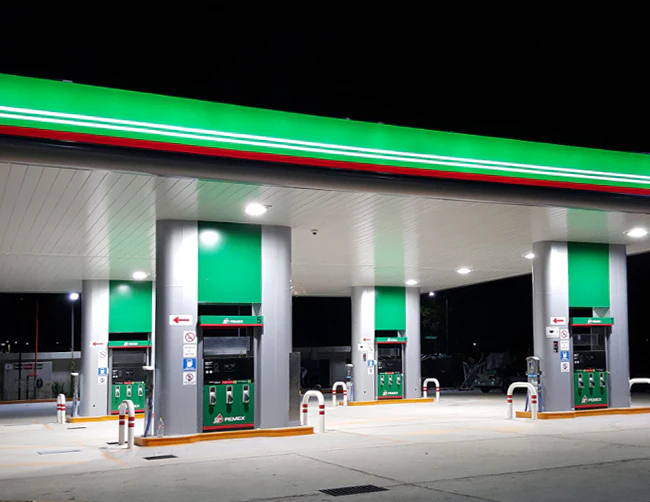
Branding Integration
Today’s gas station canopy branding goes beyond color schemes.
Common branding elements include:
- Illuminated fascia panels
- Corporate logos
- LED trim lighting
- Integrated digital signage
A well-designed canopy helps create a consistent customer experience across multiple locations.
Weather and Corrosion Protection
Fuel stations operate continuously in outdoor environments.
Quality canopy systems should include:
- Anti-corrosion coatings
- Waterproof roofing systems
- UV-resistant materials
- Wind-load engineering
These features significantly extend service life and reduce maintenance expenses.
Construction and Installation Considerations
Successful gas station canopy construction starts long before installation.
A typical project includes:
- Site survey
- Structural engineering
- Fabrication
- Surface finishing
- Transportation
- On-site installation
- Electrical integration
From a manufacturing perspective, precision fabrication is critical. Even minor dimensional errors can affect fascia alignment, lighting installation, and overall appearance.
Experienced gas station canopy manufacturers typically use CNC cutting, robotic welding, and strict quality-control procedures to ensure accuracy.
How to Choose the Right Gas Station Canopy Supplier
When evaluating a fuel station canopy supplier, buyers should consider:
- Engineering capabilities
- Manufacturing experience
- Material quality
- Fabrication accuracy
- Installation support
- Previous fuel station projects
Choosing a supplier who knows canopy construction and gas station branding often leads to a smoother project. It also improves the final look.
Conclusion
A gas station canopy is far more than a protective roof. It is a structural, architectural, and branding asset that directly affects customer experience and station visibility.
By choosing the right materials, sizes, lighting, and manufacturer, fuel station operators can build longer-lasting signs. They can also reduce maintenance costs. This helps create a stronger brand.
If you are planning a new fuel station, review canopy materials and structural needs early.
If you are upgrading an existing site, review canopy materials and structural needs early. This can improve long-term performance.
Looking for a custom gas station canopy solution?
Grandview Sign Factory provides fuel station canopy fabrication, branding integration, LED signage, and custom manufacturing services for fuel retailers, contractors, and petroleum brands worldwide.
Contact our team to discuss your project requirements and receive professional recommendations.
FAQ
What is a gas station canopy?
A gas station canopy is an overhead structure installed above fuel dispensers. It provides weather protection, supports lighting and signage systems, and enhances fuel station branding.
What materials are used in gas station canopies?
Most gas station canopies use structural steel for the framework, aluminum composite panels (ACP) for the fascia, and metal decking or waterproof roofing systems for the roof.
What is the standard dimension of a gas station canopy?
Typical canopy dimensions range from 20–50 meters in width and 4.5–6 meters in clearance height, depending on the station size, traffic flow, and local regulations.
Why is canopy lighting important for fuel stations?
LED canopy lighting improves visibility, enhances customer safety, reduces energy consumption, and strengthens the station’s appearance at night.
How do I choose the right gas station canopy supplier?
Look for a supplier with proven engineering experience, high-quality materials, precise fabrication capabilities, and successful fuel station projects.