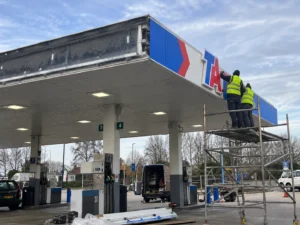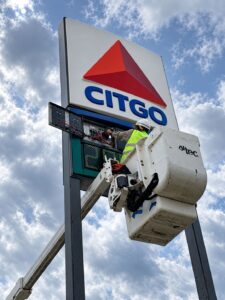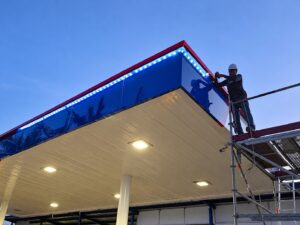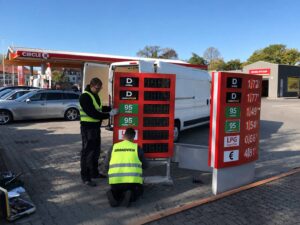
In the fuel retail industry, visibility directly impacts customer traffic. Before drivers notice a station’s canopy, store, or special offers, they usually see one thing first: the gas price sign.
A well-designed gas price display is an important way to share information. It works well on busy city roads, suburban intersections, and highway corridors. It informs drivers of fuel prices, reinforces brand identity, and helps fuel stations stand out in increasingly competitive markets.
As fuel retailers continue to invest in station upgrades, digital and LED gas price displays have become standard. They are now a common part of station branding. Beyond displaying fuel prices, these systems improve roadside visibility, streamline operations, and contribute to a more professional customer experience.
This article explains how gas price displays improve visibility. It also covers technical factors that affect performance. Fuel station owners will learn what to consider when choosing a display solution.
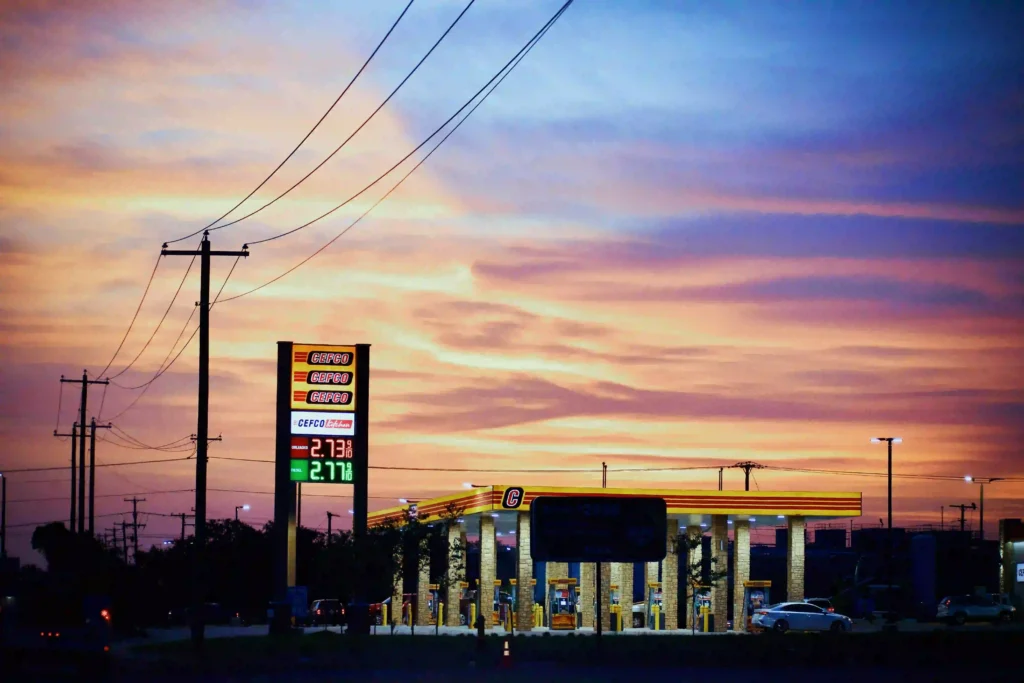
Why Visibility Is Critical for Fuel Station Success
Unlike many retail businesses that rely on planned visits, fuel stations often depend on quick purchasing decisions. Drivers usually choose where to stop based on a combination of convenience, fuel pricing, brand understanding, and visibility.
A station may offer low fuel prices, clean facilities, and great service. But if drivers cannot spot it from the road, the business loses sales before they enter.
Effective visibility helps fuel stations:
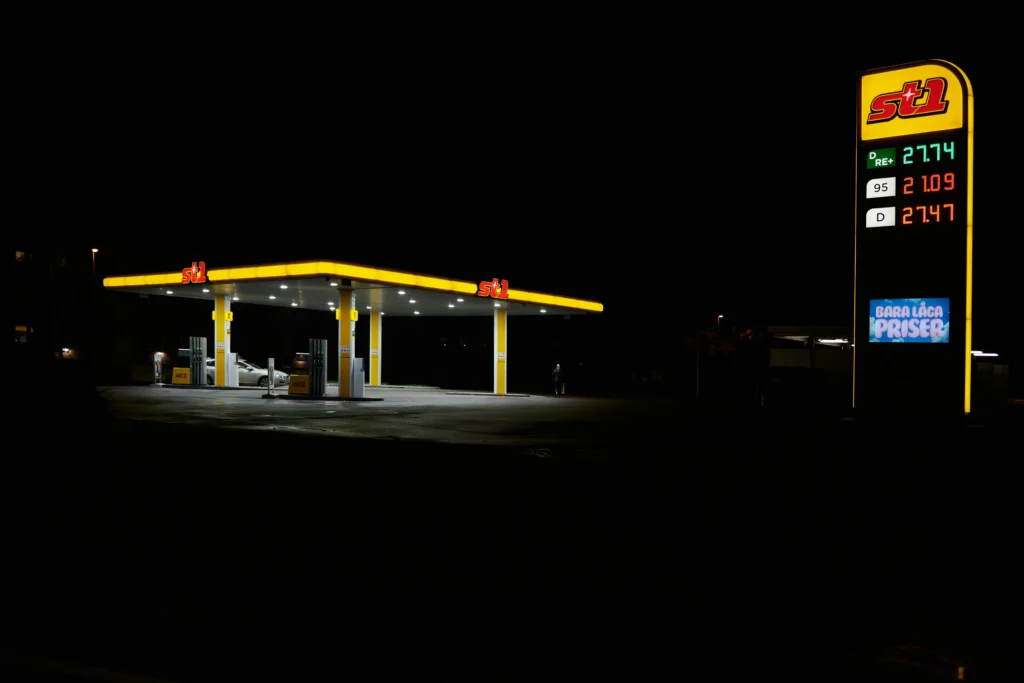
- Capture attention from passing traffic
- Increase awareness among first-time visitors
- Improve brand recognition
- Communicate fuel prices quickly
- Support promotional campaigns
- Encourage impulse visits
Industry experience shows that drivers often make fueling decisions within seconds. This means signage must communicate essential information instantly and clearly.
A well-designed gas price display can greatly increase the chance of attracting drivers over old manual boards or dim displays.
For stations on high-speed roads or highways, visibility is even more important. Drivers have less time to see and understand information before they pass.
How Modern Gas Price Displays Improve Roadside Visibility

The primary purpose of a gas price display is to provide clear pricing information. However, modern digital systems do much more than that.
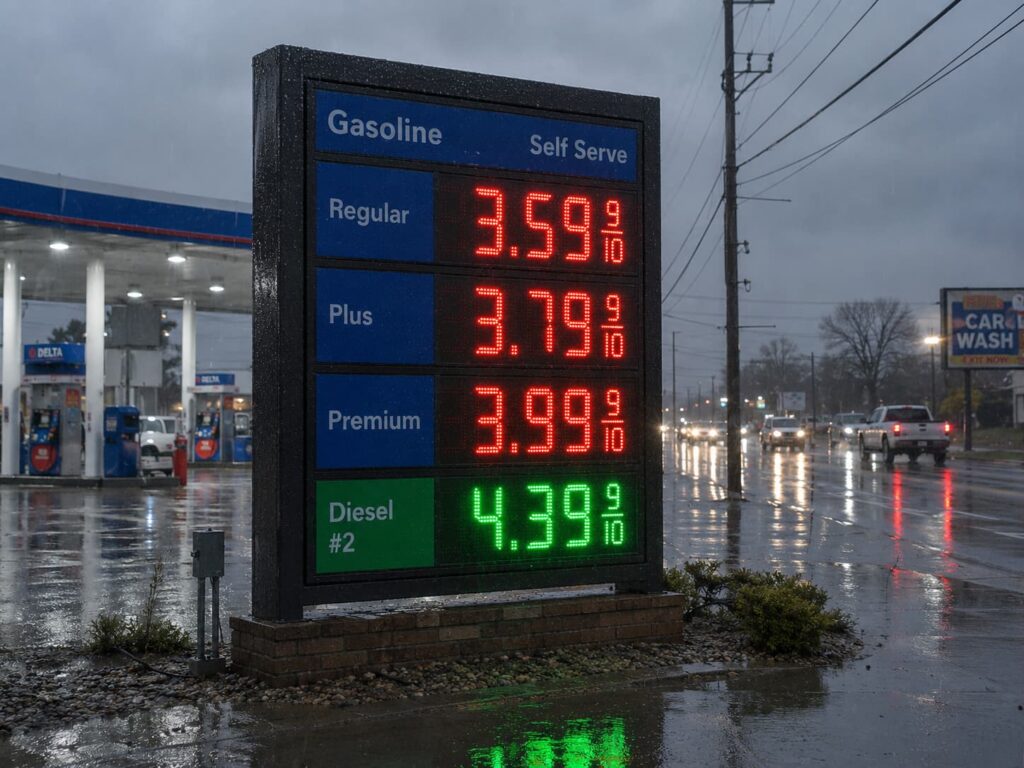
Engineers design today’s LED gas price displays to maximize readability under various environmental conditions, including direct sunlight, rain, fog, and nighttime operation.
High-Brightness LED Technology
One of the most significant improvements over traditional price boards is brightness.
Modern gas station LED price signs utilize high-output LED modules specifically designed for outdoor environments.According to the U.S. Department of Energy, LED technology provides significantly higher energy efficiency and longer service life compared with conventional lighting systems.
Benefits include:
- Superior daytime visibility
- Consistent nighttime readability
- Better contrast in changing weather conditions
- Longer viewing distances
For stations in areas with strong sunlight, high-brightness LED modules keep prices visible even at midday.
Larger Digits Increase Recognition Distance
Digit size directly influences how far away fuel prices can be read.
Common digit heights include:
- 10-inch digits
- 12-inch digits
- 18-inch digits
- 24-inch digits
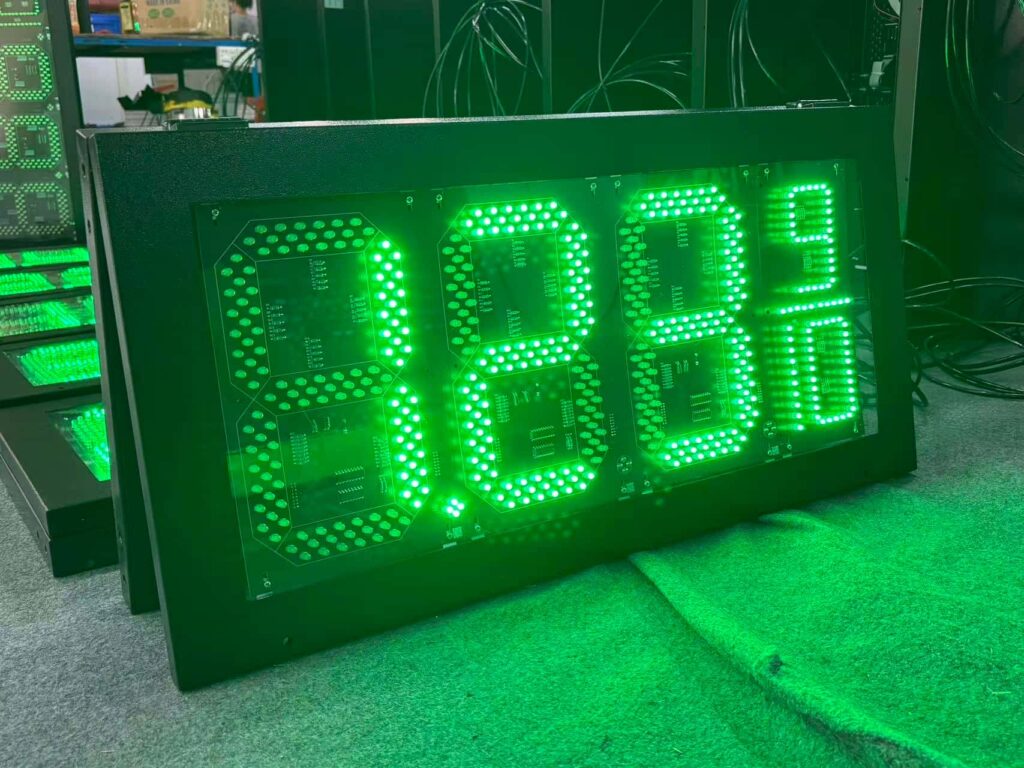
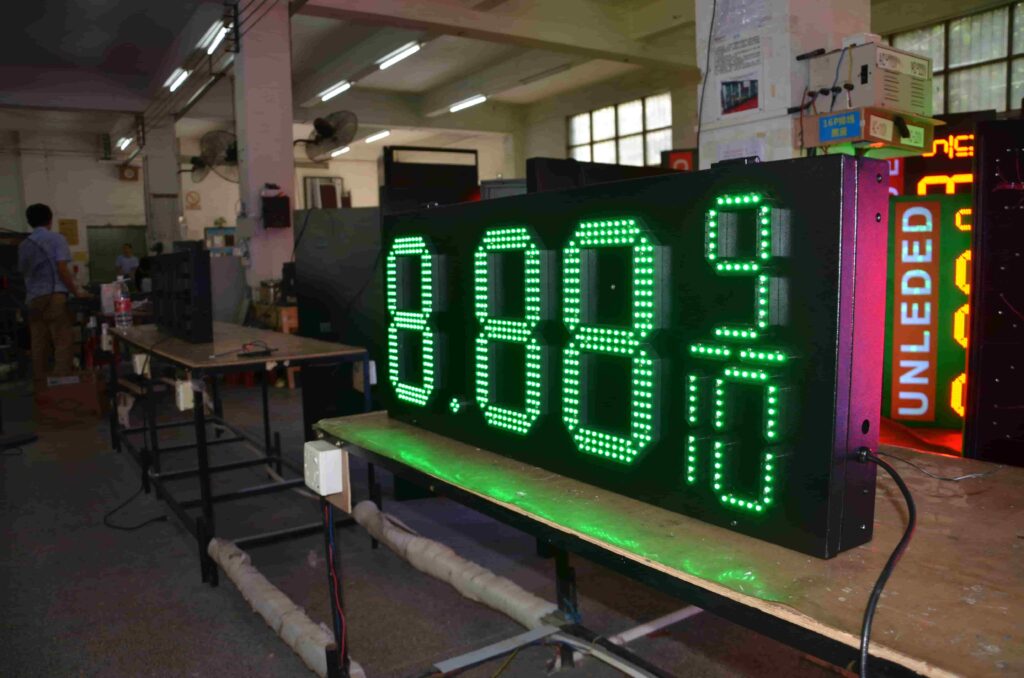
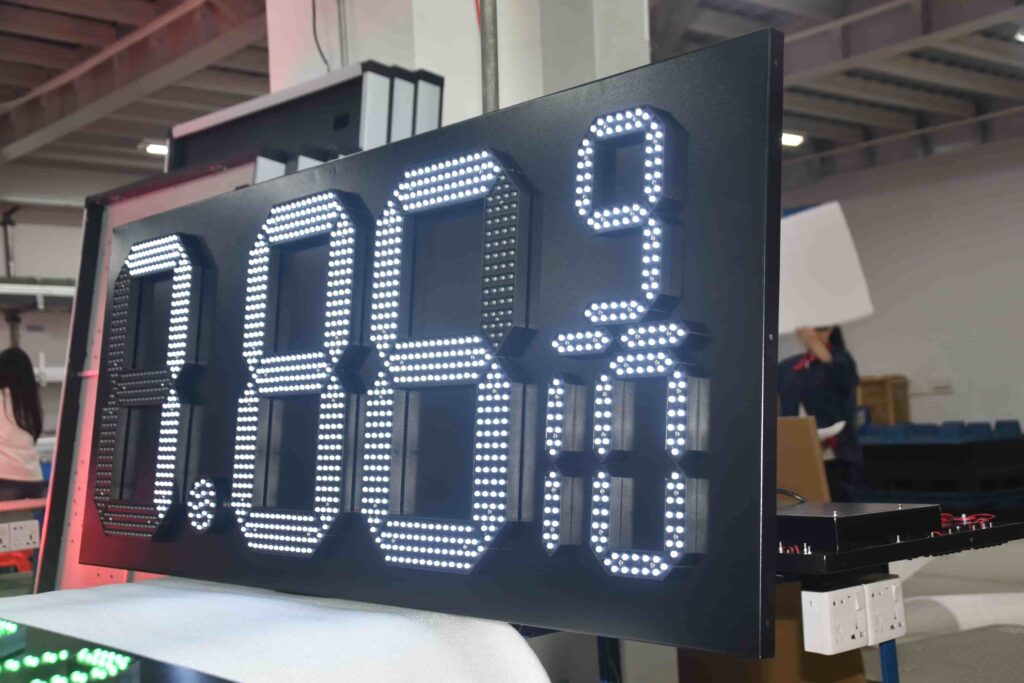
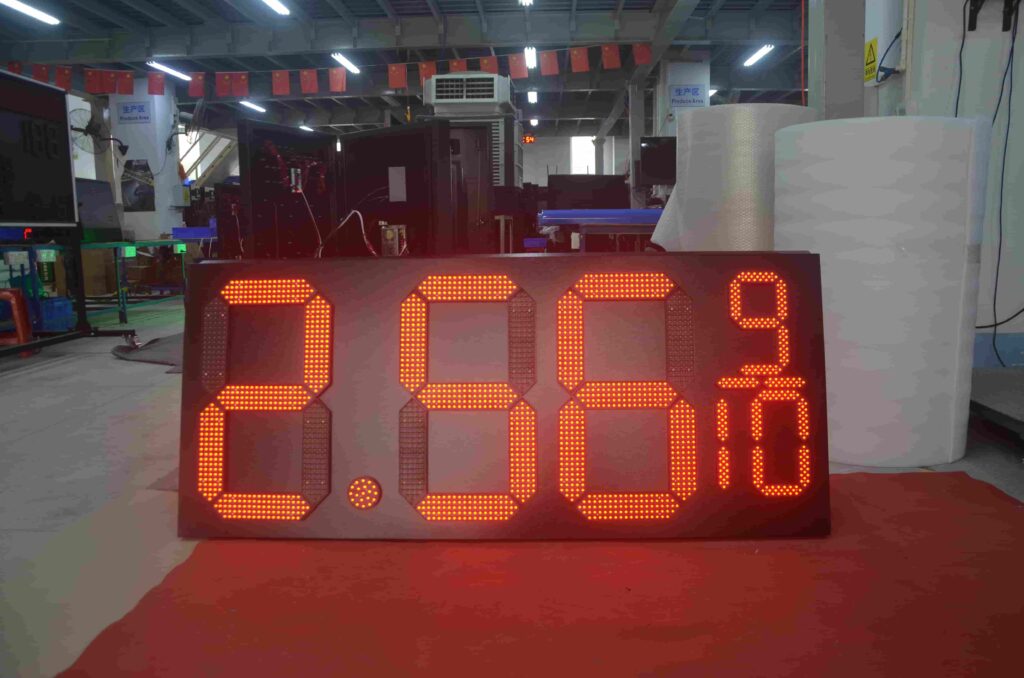
As viewing distance increases, larger digits become necessary.
Many roadside pylon signs incorporate oversized LED digits specifically to improve visibility from fast-moving traffic.
Better Contrast and Readability
Modern displays are engineered with optimized LED spacing, protective lenses, and anti-glare surfaces.
These features help improve:
- Number recognition
- Viewing angles
- Contrast performance
- Driver safety
A quickly readable display reduces driver distraction and increases communication effectiveness.
The Role of Gas Price Displays in Fuel Station Branding
Visibility is only part of the equation.
A gas price display also functions as an extension of a station’s brand identity.
Leading fuel retailers understand that customers associate professional signage with professionalism, reliability, and service quality.
As a result, modern fuel station branding projects often integrate digital price displays into larger signage systems.
Consistent Brand Presentation
Digital displays can be customized to match:
- Corporate colors
- Brand standards
- Logo placement requirements
- structural design elements
This consistency creates a stronger visual identity across multiple locations.
Integration with Pylon Signs
Many stations combine gas price displays with pylon signs.
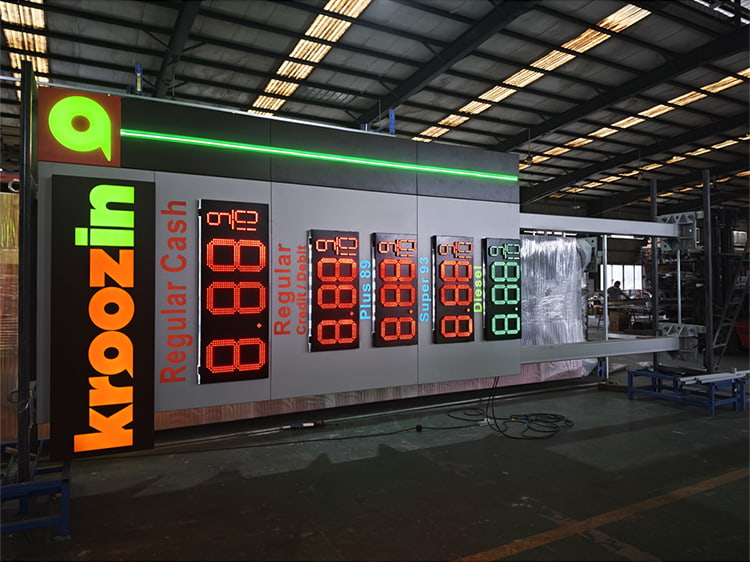
This approach offers several advantages:
- Improved roadside presence
- Better use of available space
- Stronger brand recognition
- More efficient communication
Instead of separate structures, fuel retailers can create a unified visual system that combines branding and pricing information.
Creating a Modern Customer Impression
Consumers often judge a station before entering the site.
Modern digital displays communicate:
- practical efficiency
- Updated facilities
- Competitive pricing
- Professional management
These perceptions influence purchasing decisions and customer confidence.
Engineering and Manufacturing Factors That Affect Visibility
Not all gas price displays perform equally.
Visibility depends not only on LED technology but also on engineering quality and manufacturing standards.
Cabinet Construction
The cabinet protects the internal electronics and influences long-term performance.
Professional gas price displays commonly utilize:
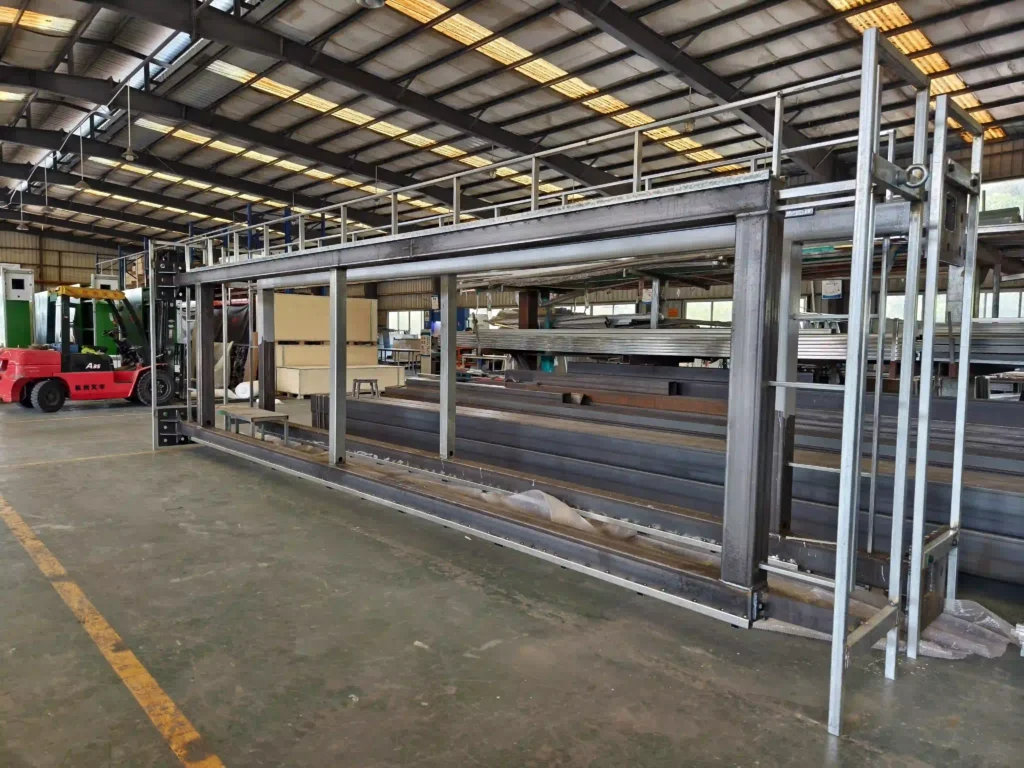
- Aluminum cabinets
- Galvanized steel frames
- Powder-coated finishes
Aluminum is particularly popular because it offers excellent corrosion resistance and reduced structural weight.
Waterproof Protection
Outdoor displays operate year-round.
Exposure includes:
- Rain
- Snow
- UV radiation
- Humidity
- Dust
To maintain reliability, high-quality systems are designed with weather-resistant construction and sealed electronic components.
Manufacturers build many commercial displays to IP65 or higher protection standards.
Structural Engineering
Large roadside displays are subject to significant environmental loads.Wind load calculations are commonly referenced during the design phase to ensure structural safety and compliance.
Engineering considerations include:
- Wind resistance
- Foundation design
- Pole strength
- Mounting systems
- Electrical safety
For large pylon projects, structural calculations are often required before installation.
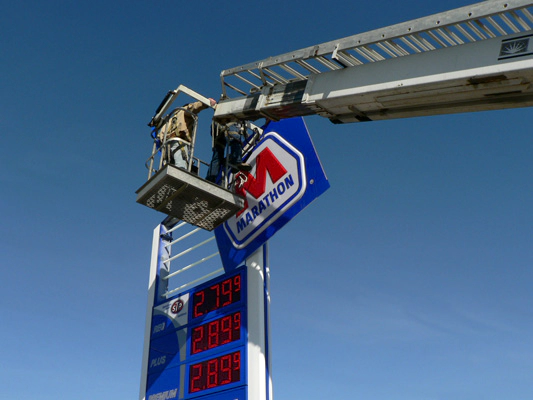
Installation Considerations for Maximum Visibility
Even the best display technology can underperform if installed incorrectly.
Proper installation begins during the planning stage.
Location Assessment
Before installation, project teams evaluate:
- Traffic flow direction
- Vehicle speed
- Road elevation
- Nearby structures
- Local regulations
These factors determine optimal placement and display size.
Mounting Height
The height of the display significantly affects visibility.
Mount displays too low and objects may obstruct them because of:
- Vehicles
- Landscaping
- Nearby buildings
Higher mounting positions often provide superior visibility and greater recognition distance.
Electrical and Communication Systems
Modern displays frequently support:
- Wireless control
- RF remote systems
- Ethernet connections
- Cloud-based management
Proper infrastructure planning simplifies future maintenance and price updates.
Real-World Example: Upgrading a Fuel Station Visibility Strategy
Consider a fuel station located along a busy arterial road.
The original site relied on manually updated price boards attached to a small monument sign.
Several challenges existed:
- Limited visibility
- Poor nighttime performance
- Slow price updates
- Inconsistent branding
The station upgraded to a custom pylon sign featuring an integrated LED gas price display.
The new system provided:
- Larger LED digits
- Improved roadside visibility
- Remote price management
- Stronger brand presence
As a result, the station improved its ability to communicate pricing information while creating a more professional appearance.
This type of modernization project has become increasingly common among fuel retailers seeking long-term advantage.
Industry Trends Shaping the Future of Gas Price Displays
Fuel retail signage continues to evolve.
Several trends are influencing purchasing decisions.
Digital Transformation
More stations are replacing manual systems with digital displays that support centralized control.
Multi-Site Management
Fuel retailers operating multiple locations increasingly prefer systems that allow remote price updates across an entire network.
Integrated Branding Systems
Price displays are becoming part of comprehensive branding programs that include:
- Pylon signs
- Canopy fascia
- Directional signage
- lighted channel letters
Energy-Efficient LED Technology
New LED systems consume less power while providing greater brightness and longer operational lifespans.
This helps reduce operating costs over time.
How to Choose the Right Gas Price Display for Your Fuel Station
Selecting a gas price display involves more than comparing prices.
Buyers should evaluate:
Visibility Requirements
Consider:
- Road type
- Traffic speed
- Viewing distance
custom design Capabilities
Look for manufacturers that can provide:
- Custom branding
- Multiple digit sizes
- Pylon integration
Manufacturing Experience
Experience often translates into:
- Better engineering
- Reliable quality
- Faster project execution
After-Sales Support
Ask about:
- Warranty coverage
- Replacement parts
- Technical assistance
- Remote troubleshooting
A reliable partner can reduce long-term operating costs and improve project outcomes.
FAQ
What is a gas price display?
A gas price display is a signage system used by fuel stations to communicate fuel prices to passing drivers. Modern systems typically use LED technology for improved visibility.
How do LED gas price displays improve visibility?
LED displays provide higher brightness, better contrast, and longer viewing distances than traditional manual price boards.
Can someone update gas prices remotely?
Yes. Most modern systems support remote control, RF communication, or cloud-based management.
How long do gas price displays last?
A professionally made LED gas price display can often run for 50,000 to 100,000 hours. It depends on part quality and the environment.
Can we customize gas price displays?
Yes. Custom options typically include digit size, cabinet design, brand colors, logos, and integration with pylon signage systems.
Conclusion
A gas price display is far more than a pricing tool. One of the most important visibility assets a fuel station can invest in.
Modern LED gas price displays help fuel retailers improve roadside recognition, strengthen branding, communicate pricing information efficiently, and create a more professional customer experience.
For fuel station owners, contractors, and branding professionals, choosing a well-made display system can support long-term success. It can also help attract more customers.
Looking for a custom gas price display solution for your next fuel station project?
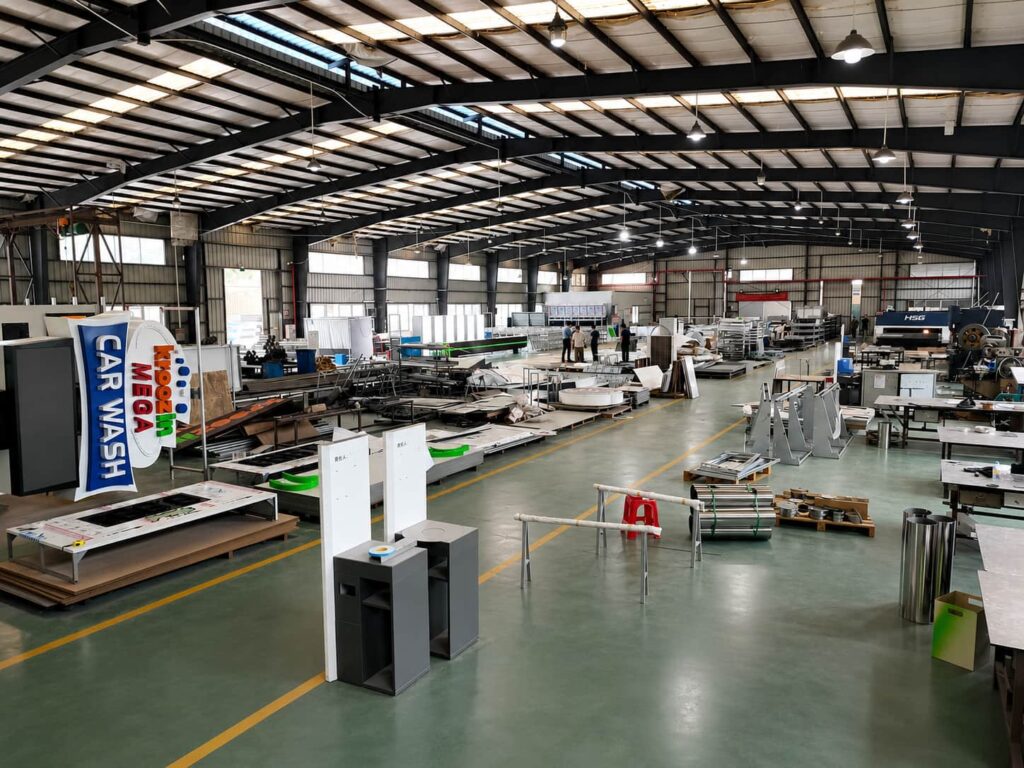
Grandview Sign Factory makes LED gas price signs, pylon signs, canopy branding systems, and full fuel station sign solutions. Our team supports projects from design and engineering through manufacturing and installation planning.
Contact us today to discuss your fuel station branding requirements and receive a customized signage proposal.