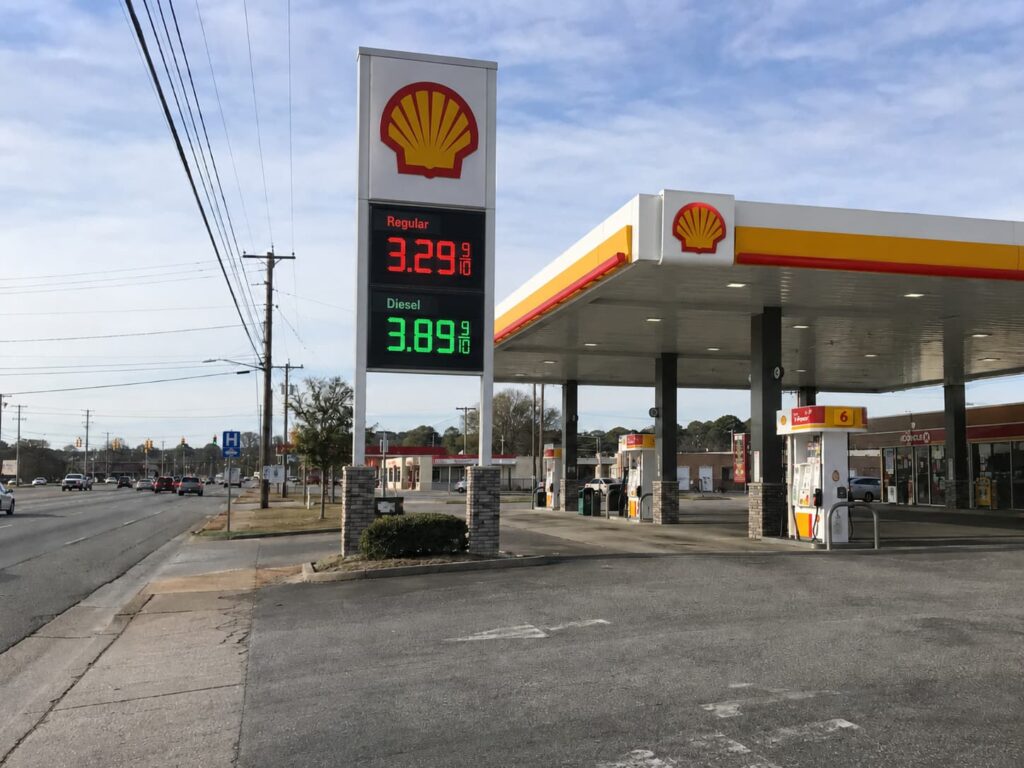
A gas price sign may look like a simple LED display, but the purchase involves more than choosing digit height and color. It must be easy to read from the road, fit the pylon or monument structure, withstand outdoor weather, and allow safe maintenance.
For fuel station owners, contractors, petroleum brands, and signage distributors, the right specification can reduce changes during installation. It can also lower service costs. Check these ten points before requesting a quotation.
1. Start with the Viewing Conditions
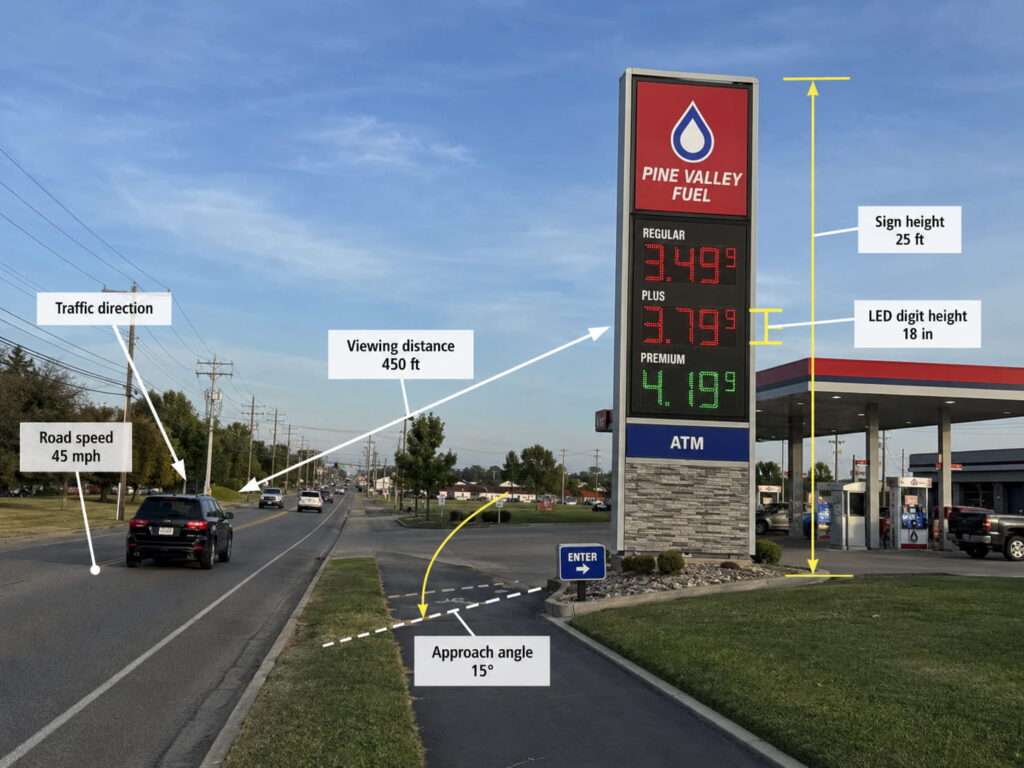
Road Speed, Distance, and Approach Angle
Digit size should be selected from the site, not from a catalog alone. Review traffic speed, distance from the road, mounting height, approach direction, and the number of fuel price rows.
Large digits improve long-distance visibility, but an oversized layout can reduce spacing. It may crowd prices, fuel grade labels, and branding panels.
2. Confirm the Price Format
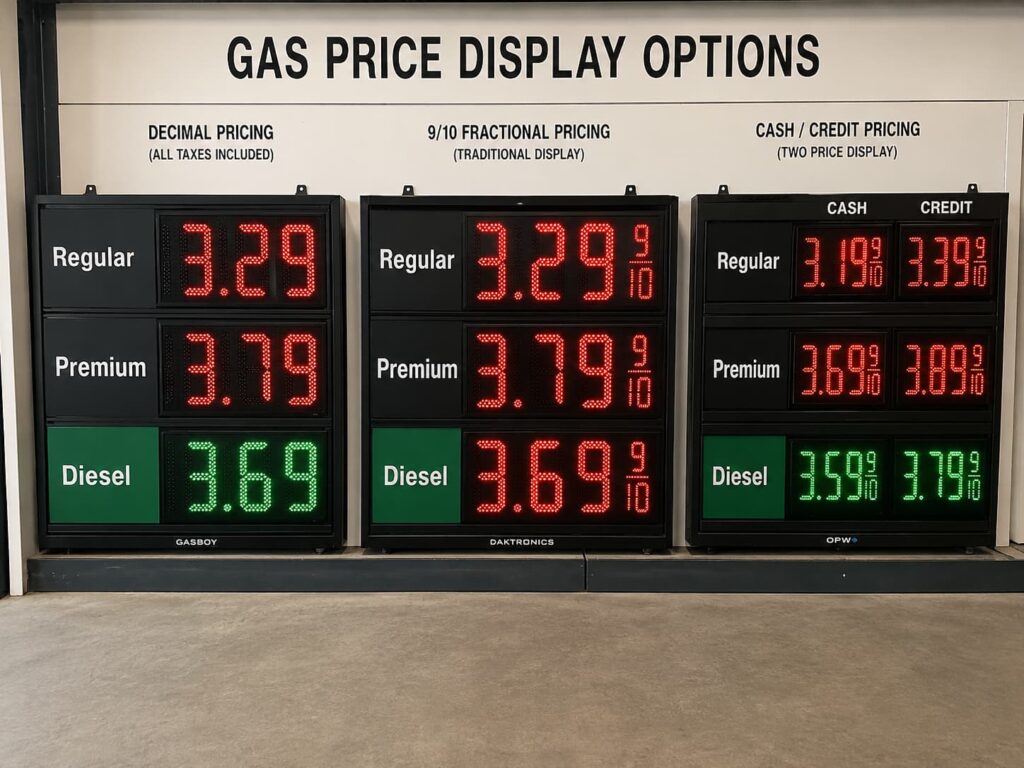
Fuel Grades, Decimals, and Cash/Credit Pricing
The price format should match the local market and the station’s needs. It may use three or four digits, include a 9/10 fraction, show decimal prices, list several fuel grades, or display separate cash and credit prices.
Confirm the layout before production. Changing the format later may require new LED modules, wiring, controls, and cabinet panels.
3. Choose Single- or Double-Sided Display
Match the Sign to Traffic Flow
A single face may be enough for one-way visibility. A roadside pylon serving two-way traffic normally needs a double-sided display.
Confirm whether both faces update together and whether they use independent or shared power supplies. This affects wiring, troubleshooting, and spare-parts planning.
4. Check Daylight Readability
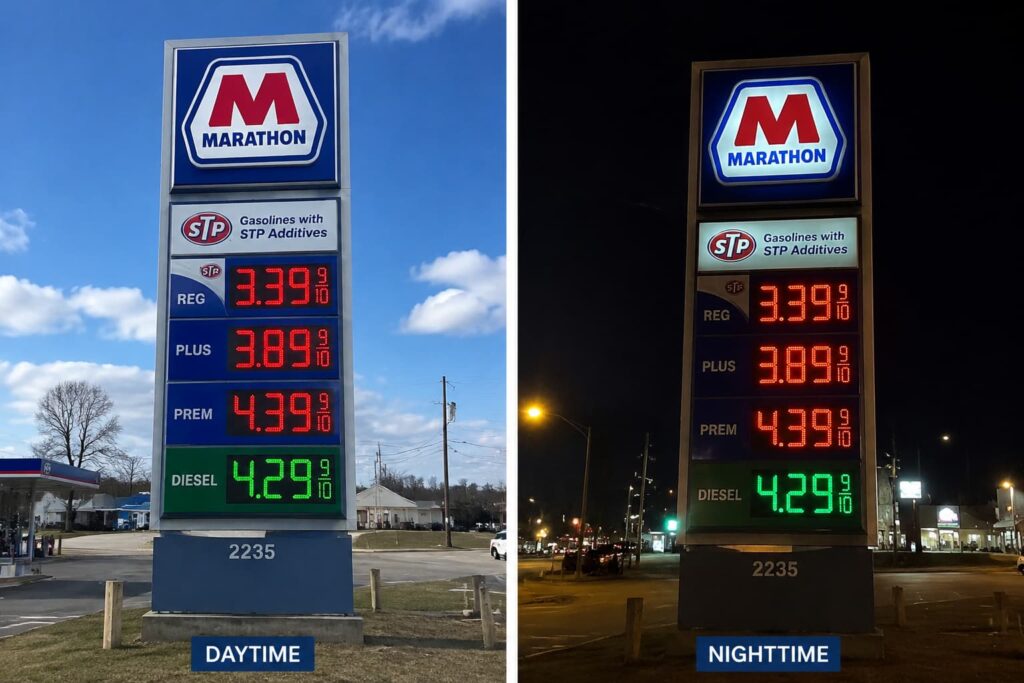
Brightness Is Not the Only Factor
Readability also depends on contrast, viewing angle, digit stroke width, cabinet depth, and background color.
Automatic dimming can reduce glare after dark. Factory testing should check the completed display at several brightness levels, not only indoors at maximum output.
5. Review the Cabinet and Materials
Outdoor Construction Details
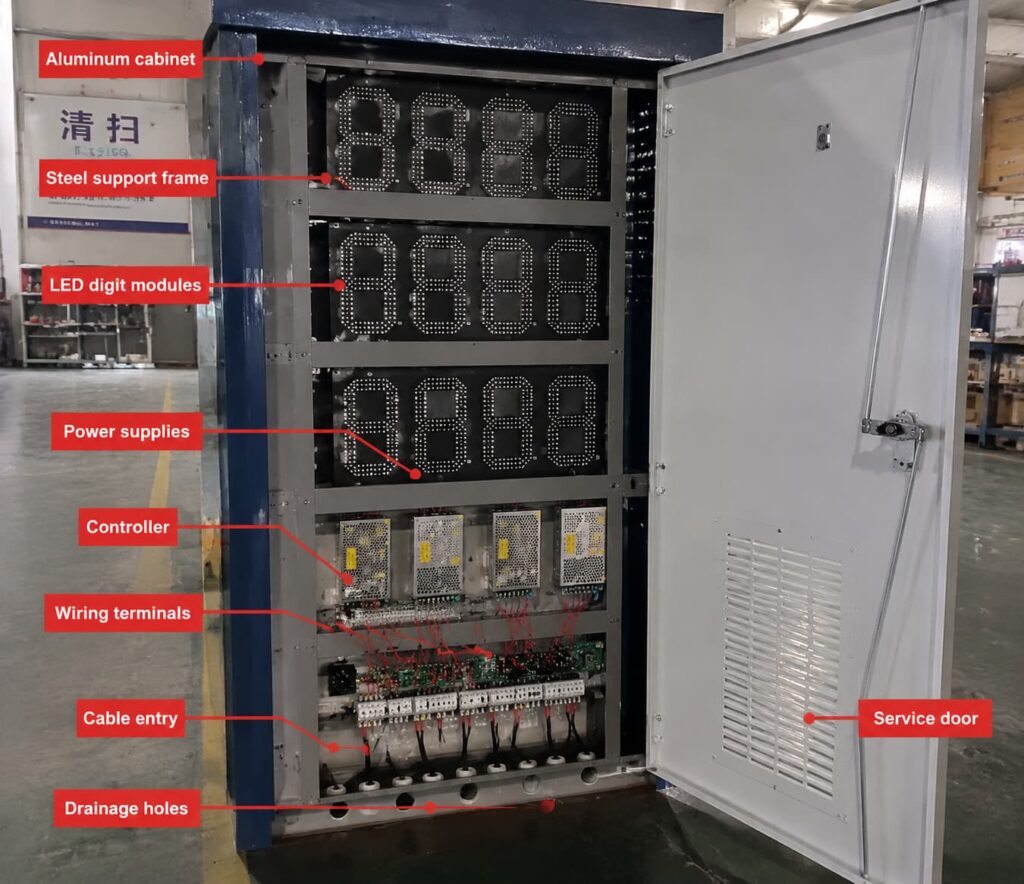
Common materials include aluminum sheet, galvanized steel, stainless steel, and aluminum composite panel cladding. Aluminum offers a lightweight, corrosion-resistant option, and builders often use steel for internal support frames.
Ask how the manufacturer handles:
- Surface coating and fasteners
- Cable entry and drainage
- Ventilation and heat dissipation
- Front or rear service access
Weather protection depends on the complete cabinet design, not simply a sealed metal box.
6. Understand the Control Method
Remote, Wired, Cellular, or POS Control
RF remotes suit individual stations. Wired controllers offer stable operation where cable routes are available. Cellular, network, or POS-connected systems are useful for multi-site operators.
Confirm control distance, supported price formats, user permissions, communication method, and what happens if the connection fails.
7. Inspect the Electrical Design
Power Supplies, Wiring, and Serviceability
Look for organized wiring, accessible terminals, properly selected power supplies, grounding provisions, and suitable electrical protection.
For U.S. projects, requirements may involve NEC Article 600 and UL electric-sign certification. Confirm local approval requirements before production.
8. Check the Existing Structure
Retrofit or Full Replacement
LED modules can often be added to an existing pylon sign. Before installation, check the opening size, cabinet depth, steel structure, power supply, and maintenance access.
In a typical retrofit, the pole and logo cabinet stay the same. Manual price panels are replaced with LED modules and access doors. Reusing a corroded or undersized frame, however, may create more risk than replacing it.
9. Plan for Installation and Wind Load
Drawings Must Match the Site
Clarify whether the quotation covers only the LED display, a finished cabinet, or the complete pylon.
A new freestanding sign may require:
- Structural and electrical drawings
- Pole, base plate, and anchor bolt details
- Foundation information
- Lifting and installation instructions
Outdoor signs must follow locally adopted codes and site-specific wind conditions. ICC Appendix H covers the construction and protection of outdoor signs, while ASCE 7 provides structural design-load criteria, including wind loads. A qualified local engineer or contractor should review the final structure and foundation.
10. Compare the Total Project Cost
Do Not Compare Only the Display Price
A low unit price may not include the cabinet, logo panels, controller, or spare modules. It may also exclude the steel structure, packing, freight, duties, permits, electrical work, and installation.
A useful B2B quotation should state:
- Display size, digit height, rows, and faces
- Cabinet material and finish
- Control system and input voltage
- Drawings, testing, and spare parts
- Warranty, packing, and shipping terms
Industry Trend: Modular and Connected Price Signs
In today’s fuel station projects, buyers often want modular LED digits and easy service access. They also want remote price control and matched branding across pylons, canopies, pumps, and stores.
The value is practical: modular components are easier to replace. Connected controls reduce manual price changes across multiple stations.
Conclusion
A gas price sign is part of an outdoor engineering and branding project. Visibility, format, cabinet construction, controls, electrical design, structure, installation, and service access all affect the result.
A reliable supplier should ask for details about the site. They should provide clear drawings. They should clearly explain what the quote includes. They should also plan for easy installation and maintenance.
Request a Project Quote
Send us your site photo, sign size, fuel types, price format, voltage, quantity, and installation location. You can also include your preferred control method and delivery date.
Grandview provides custom LED gas price signs, pylon signs, and complete signage systems for fuel station projects.
Frequently Asked Questions
How much does a gas price sign cost?
Cost depends on digit size, price rows, number of faces, cabinet material, controls, structure, certification requirements, and shipping. A meaningful quotation requires the project configuration.
Can we add LED digits to an existing pylon sign?
Often yes, if the cabinet opening, depth, steel structure, electrical supply, and service access are suitable. Site photos and dimensions are normally required.
What information do you need to prepare a quotation?
Provide dimensions, digit height, price format, rows, display color, faces, voltage, control method, quantity, site photos, logo files, and delivery location.
Can someone change gas prices remotely?
Yes. Prices can be updated in different ways, based on the system. You can use an RF remote or a wired controller. You can also use a cellular connection or a network platform. POS integration is another option.