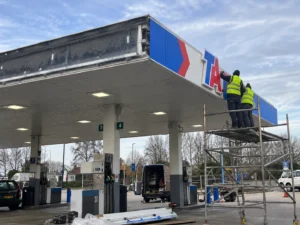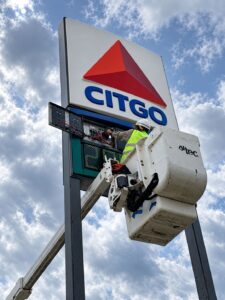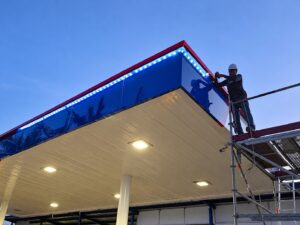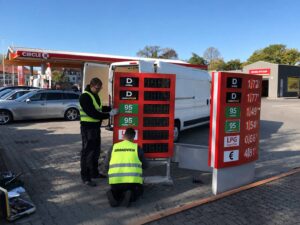
A gas station sign is rarely one product. A complete system may include a roadside pylon. It may also include an LED fuel price display. It may include canopy fascia and pump island graphics. It may include store signs and entry or exit signs.
Plan these components together. A large logo cannot compensate for unreadable prices, while a bright display cannot solve poor roadside positioning. Design must start with site conditions, traffic direction, brand standards, and installation needs.
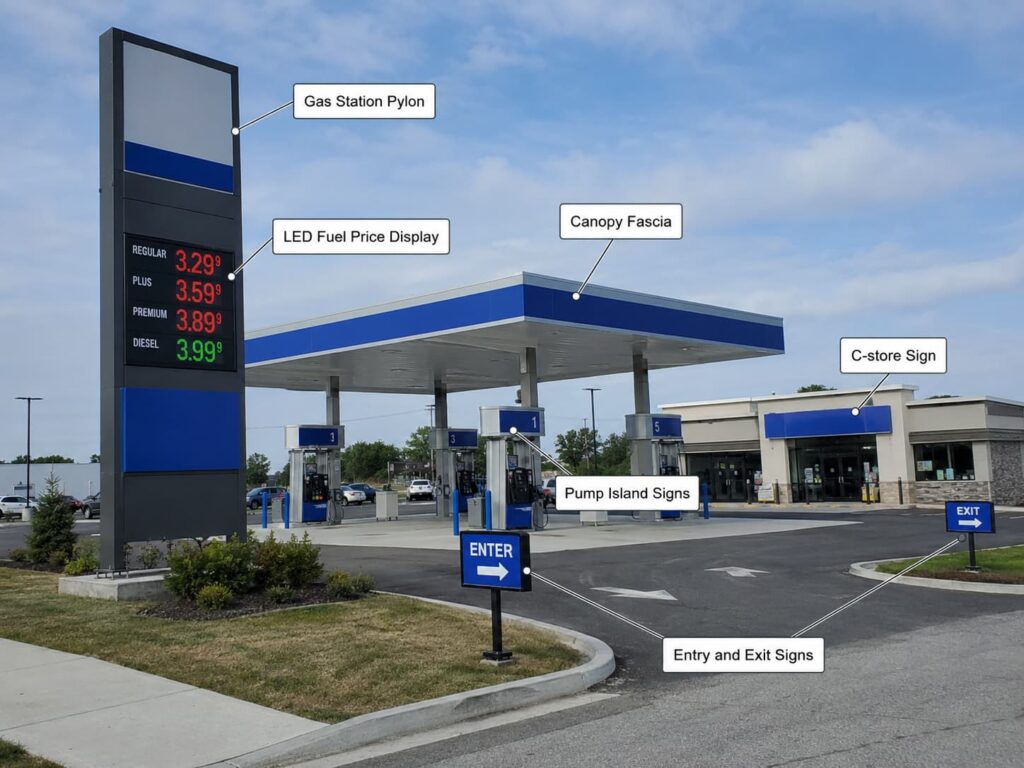
Main Types of Gas Station Signs
Pylon Signs and LED Fuel Price Displays
The pylon is usually the first sign motorists see. It may combine an illuminated logo, fuel labels, digital prices, and service panels.
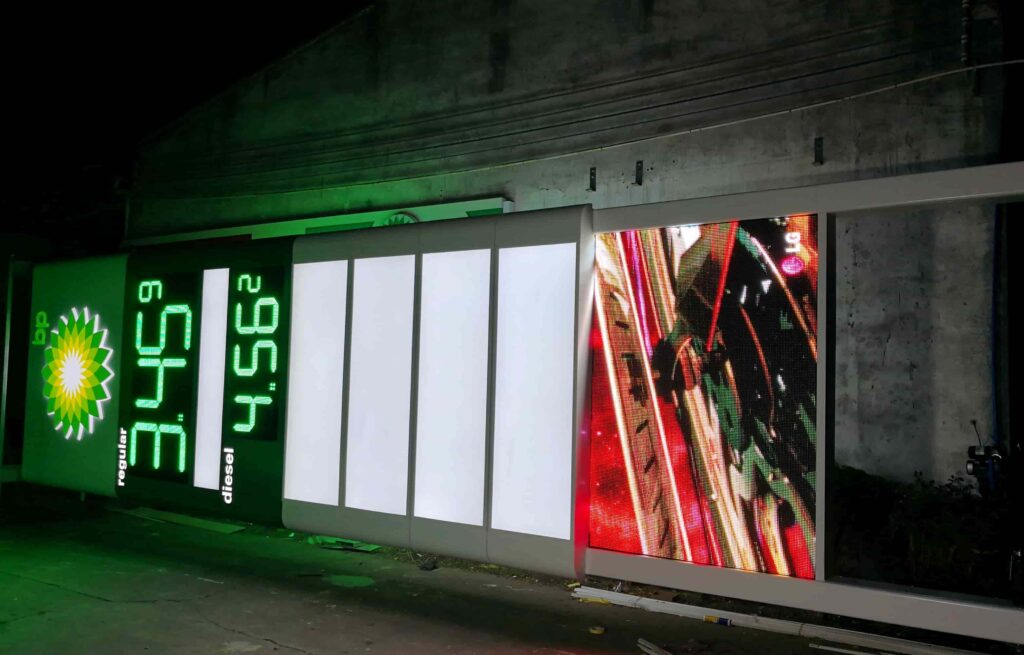
Before selecting the height or LED digit size, review:
- Road speed and viewing distance
- Approach direction
- Single- or double-sided visibility
- Number of fuel grades
- Local sign restrictions
- Maintenance access
Prices may be updated by RF remote, wired controller, computer, mobile application, or a network system. Confirm the control method before production because it affects the controller and wiring.
Canopy, Pump, and Building Signs
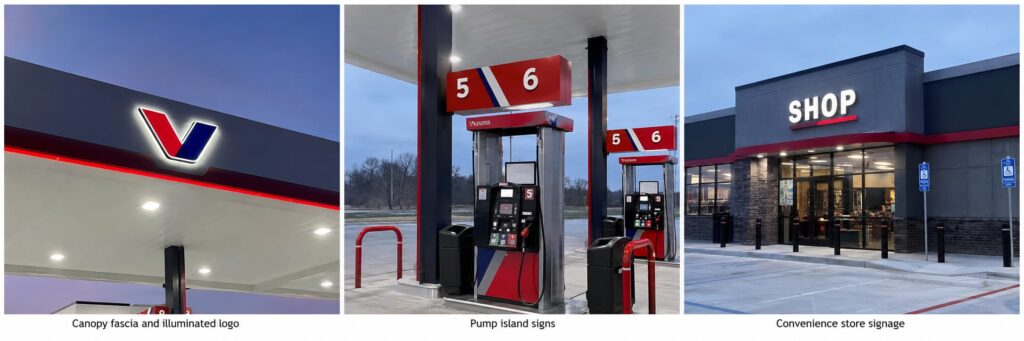
The canopy fascia carries colors and logo. Pump island signs show pump numbers, fuel types, safety information, or promotions.
C-store signs, directional signs, and entrance or exit markers should use consistent colors, logo proportions, and lighting. Designing them separately often produces visible differences across the forecourt.
Choosing Signage for the Project
New Builds, Rebranding, and Retrofits
For a new station, plan foundations, cable routes, canopy fixing points, and electrical supply before signage production.
For rebranding, inspect the existing pylon for corrosion, cabinet depth, pole condition, wiring, service doors, and foundation stability. Do not assume the old structure can carry a larger cabinet.
An LED retrofit also requires accurate opening dimensions. The modules must fit while leaving space for power supplies, ventilation, drainage, and maintenance.
Visibility Is an Engineering Decision
Digit size should not be chosen from a catalog alone. A city station serving slow traffic needs a different layout from a highway site.
Larger digits improve visibility, but they also increase cabinet size, structural load, power demand, and shipping volume. The layout must balance readable prices with clear spacing around the logo and fuel labels.
Materials and Manufacturing Details
Typical construction includes:
- Coated or galvanized steel support frames
- Aluminum sheet or ACM cabinet cladding
- Acrylic or polycarbonate logo faces
- Outdoor LED modules and power supplies
- Stainless steel fasteners
- Powder coating or outdoor paint systems
Inside the cabinet, wiring should be organized and labeled. Power supplies need ventilation, cable entries require protection, and drainage holes must remain clear.
A practical manufacturing process includes drawing confirmation, cutting, bending, welding, finishing, LED assembly, wiring inspection, lighting tests, and protective packing. For export projects, modular sections and numbered parts simplify site assembly.
Installation and Compliance
The supplier should provide elevation drawings, fixing details, electrical diagrams, and foundation information. The local contractor must confirm soil conditions, wind load, power supply, lifting access, and permits.
For U.S. projects, electric signs may involve UL 48 and NEC Article 600. Confirm final compliance with the local authority and project engin
What Affects Gas Station Sign Cost?
A reliable quotation needs more than a photo. Cost depends on:
- Overall size and height
- Number of display faces
- LED digit size and price rows
- Logo illumination
- Steel and cabinet materials
- Control system
- Certification
- Quantity, packing, and shipping
- Installation scope
The lowest quotation is not always the lowest project cost. Poor service access, difficult module replacement, or site modifications can create larger expenses later.
Industry Project Example
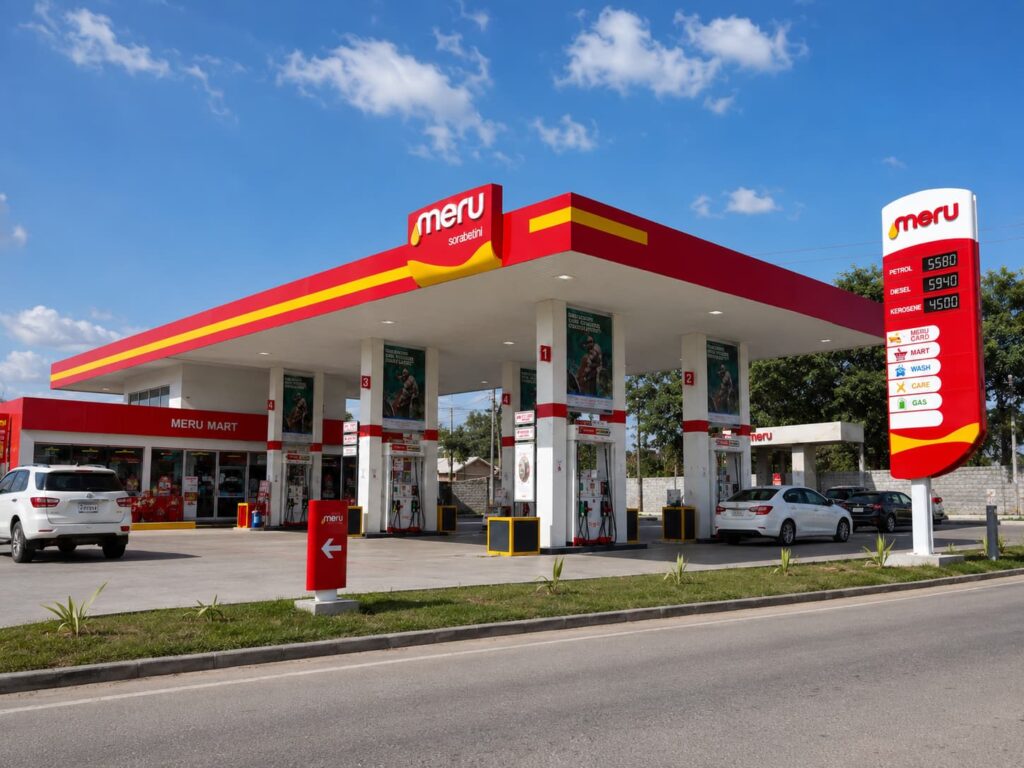
The completed Meru Sombetini project included a branded canopy. It also had a pylon with digital prices for petrol, diesel, and kerosene. It included pump island signs, directional signs, and service-area identification.
The canopy measured approximately 24 × 9.5 metres, while the pylon body was about 7.3 × 1.8 metres. Red, yellow, and white formed the main identity, while smaller service panels used separate col
The project arranged information by viewing distance. The canopy and pylon set roadside recognition. Fuel prices supported the approach decision. Pump and directional signs guided drivers inside the site.
Gas Station Sign Buying Checklist
Before requesting a quotation, prepare:
- Site photos or layout
- Logo and brand colors
- Required dimensions
- Fuel grades and price format
- Display faces
- Voltage and control method
- Installation country
- Delivery address and schedule
A complete brief identifies missing information before production rather than after delivery.
Industry Direction
Current projects increasingly favor integrated branding, remote price control, replaceable LED modules, and easier maintenance. In many cases, a cleaner layout and better service access provide more value than a complicated display.
Frequently Asked Questions
What is the tall gas station sign called?
People usually call it a pylon sign, pole sign, or fuel price pylon.
Can someone convert a manual price sign to LED?
Often yes, but you must check the cabinet opening, depth, wiring, structure, ventilation, and service access.
How are LED fuel prices changed?
Common options include RF remote, wired control, computer software, mobile applications, and network integration.
What materials do manufacturers use for gas station signs?
Builders commonly use steel for structural support, use aluminum for cabinets, and use acrylic or polycarbonate for illuminated faces.
Do gas station signs require permits?
Many projects require local sign, structural, or electrical approval. Requirements depend on the installation location.
Conclusion
A successful gas station sign project connects roadside visibility, pricing, branding, manufacturing, and installation planning. Buyers should evaluate the complete system rather than purchase each sign as an unrelated product.
Get a Project-Based Signage Recommendation
Planning a new fuel station, rebranding an existing site, or upgrading a price board?
Send Grandview your station plan, logo, dimensions, fuel-grade requirements, or site photos. Our team can help plan the pylon sign, LED price display, canopy fascia, pump signs, and directional signs before a quote.