Introduction
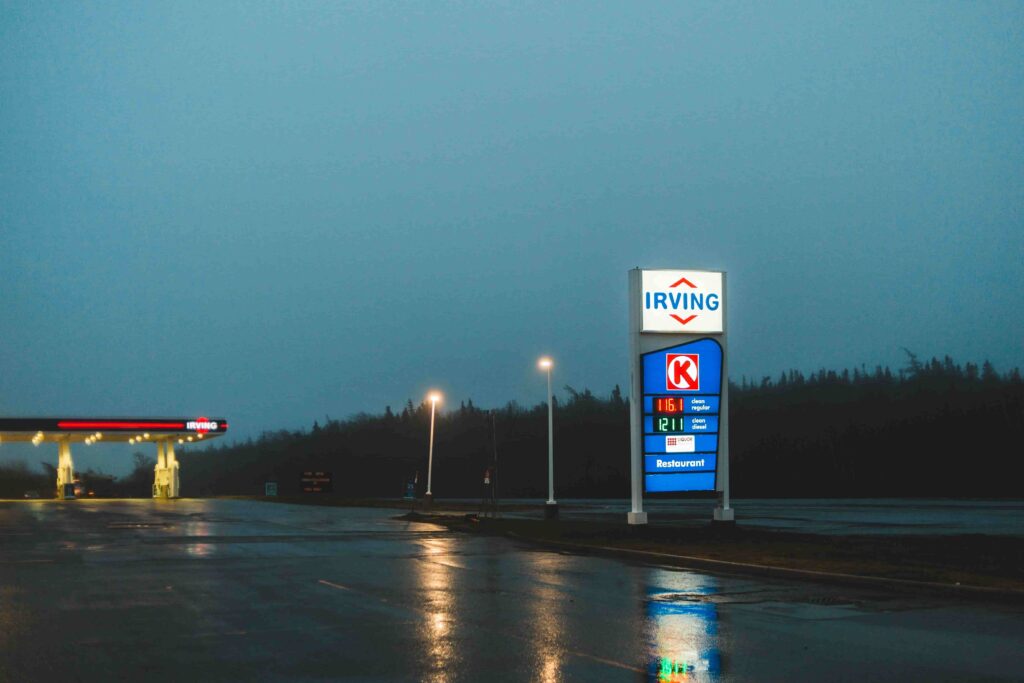
A digital gas price sign is no longer just a pricing display. For modern fuel stations, this is now part of the station’s brand, roadside visibility plan, and operating efficiency.
Many station owners focus only on screen brightness or price size when sourcing signage. In real-world projects, however, the long-term performance of a digital gas price sign depends on much more:
- Cabinet structure
- LED module quality
- Waterproof engineering
- Remote control system stability
- Installation environment
- Maintenance accessibility
- Branding integration
Choosing the wrong sign can lead to visibility issues, premature LED failures, difficult maintenance, or expensive structural Changes later.
This guide shows how fuel station operators, contractors, and branding teams assess digital gas price signs before buying.
What Is a Digital Gas Price Sign?
A digital gas price sign is an LED display system with electronic controls. It shows fuel prices at gas stations, truck stops, and convenience fuel sites. Commercial petroleum retail locations also use it.
Unlike traditional manual price boards, digital systems allow operators to:
- Update fuel prices remotely
- Improve day and night visibility
- Reduce manual labor
- Maintain consistent branding
- Integrate with modern station design
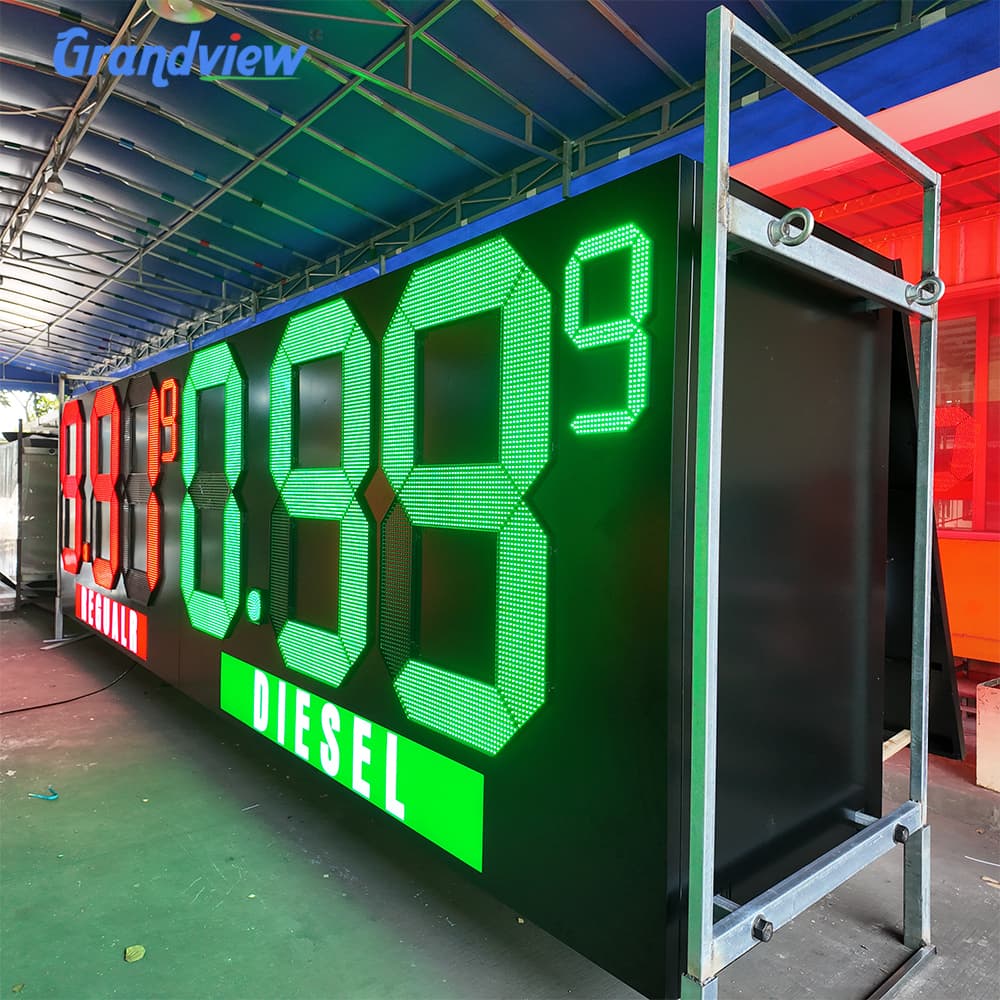
Most commercial systems include:
- LED price modules
- Aluminum or steel cabinet structures
- Control boards
- Power supply systems
- Wireless or wired communication systems
- Front service or rear service maintenance access
In large fuel branding projects, digital gas price signs are usually integrated into:
- Pylon signs
- Monument signs
- Canopy fascia systems
- Fuel pump toppers
- Highway visibility towers
For stations located near highways or busy intersections, visibility distance and viewing angle become critical engineering considerations.
Understanding the Different Types of Digital Gas Price Signs
LED Digit Price Displays
These are the most common systems used in retail fuel stations.
They typically use:
- 8-inch digits
- 10-inch digits
- 12-inch digits
- 18-inch highway digits
- 24-inch high-visibility digits
Smaller stations often use compact displays. Workers mount these displays on canopy fascia panels. Larger roadside pylons need oversized digits. These digits are radiant.
The selection depends on:
- Road setback distance
- Vehicle speed
- Local signage regulations
- Pole height
- Traffic density
Embedded Cabinet Systems
Some premium fuel brands prefer integrated cabinet systems where the LED modules sit flush inside fabricated aluminum panels.
This approach creates:
- Cleaner aesthetics
- Better weather resistance
- Improved brand appearance
- Easier cleaning
Embedded systems are commonly used for:
- Shell-style station branding
- BP station upgrades
- Premium urban fuel sites
- Corporate-owned retail fuel chains
Modular Retrofit Systems
Retrofit solutions are designed for replacing outdated manual signs without rebuilding the entire structure.
These systems help operators:
- Reduce installation costs
- Reuse existing pylon frames
- Upgrade faster
- Minimize station downtime
Retrofit engineering becomes especially important in older North American fuel stations where legacy steel structures vary significantly from modern cabinet dimensions.
Key Factors to Consider Before Buying a Digital Gas Price Sign
1. LED Brightness and Visibility
Brightness is one of the most misunderstood aspects of fuel price signage.
Higher brightness is not always better.
Professional manufacturers typically adjust brightness according to:
- Installation orientation
- Climate conditions
- Viewing distance
- Local sunlight exposure
- Urban or highway environments
For example:
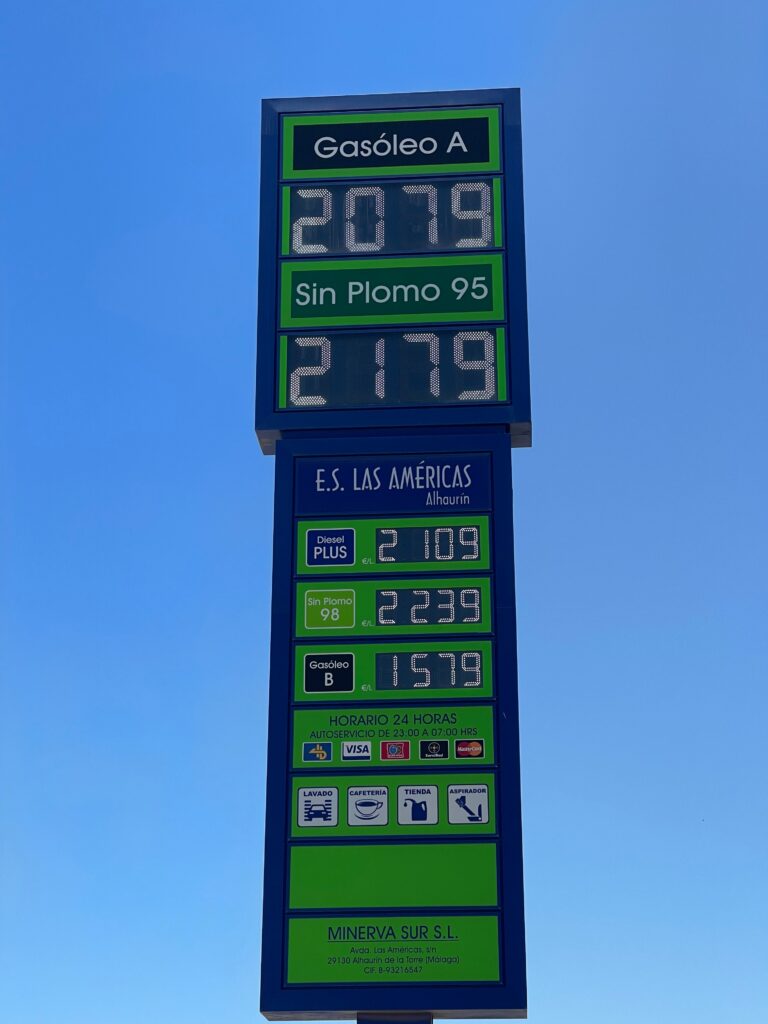
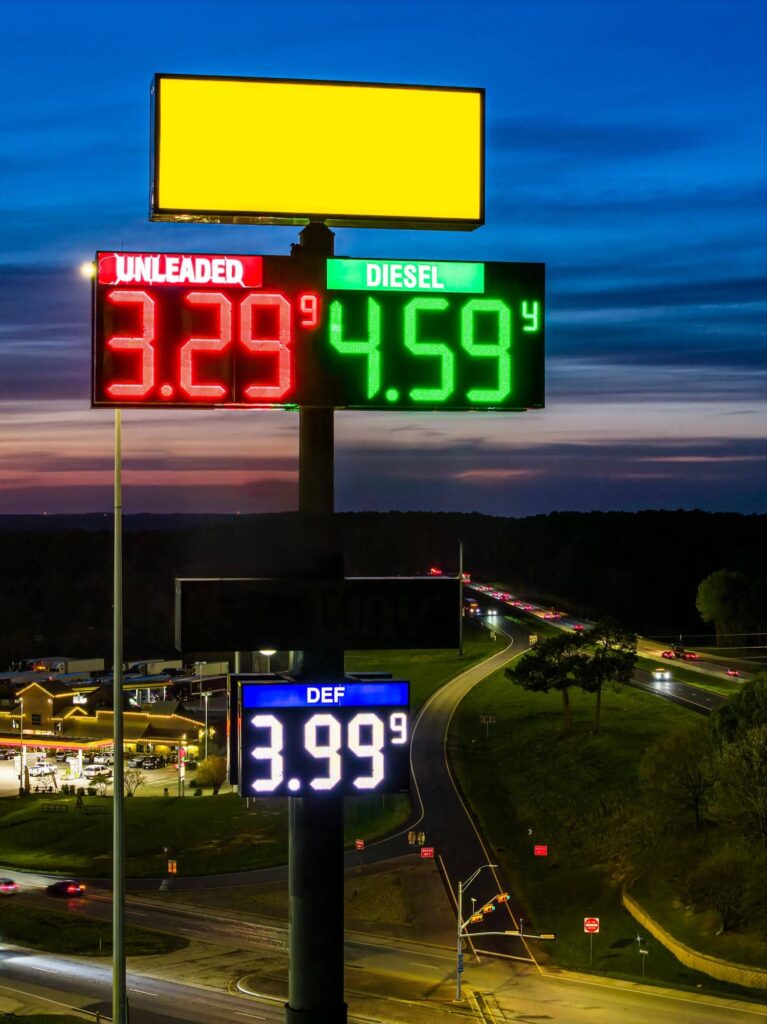
- Highway stations often require 7000–10000 nits
- Urban stations may operate efficiently at 5000–7000 nits
outdoor LED visibility standards
Excessive brightness can create glare at night and shorten LED lifespan.
High-quality systems include automatic brightness adjustment sensors that adapt to ambient light conditions.
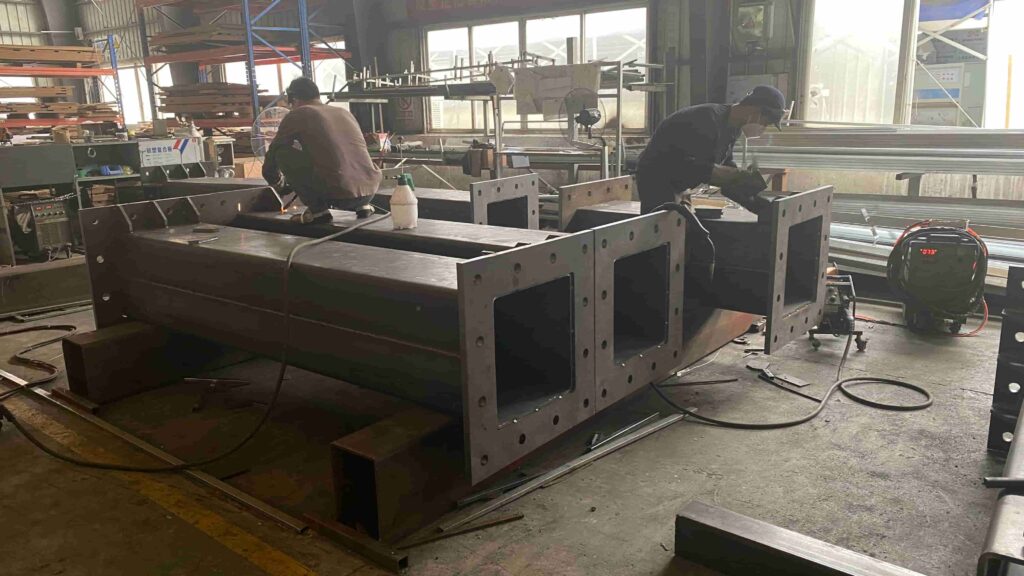
2. Cabinet Material and Structural Durability
Cabinet engineering directly affects lifespan.
In coastal or humid environments, poor cabinet fabrication leads to:
- Corrosion
- Water leakage
- Internal condensation
- LED failure
- Unstable power supply
Professional-grade digital gas price signs usually use:
- Powder-coated aluminum
- Galvanized steel structures
- Stainless steel mounting hardware
Aluminum cabinets are widely preferred because they:
- Resist rust
- Reduce overall weight
- Improve heat dissipation
- Simplify installation
In high-wind regions, internal reinforcement design is critical.
Experienced manufacturers calculate:
- Wind load resistance
- Structural flex tolerance
- Pole mounting stress
- Cabinet vibration behavior
This engineering process is often overlooked during low-cost sourcing.
3. Waterproof and Weather Protection334155
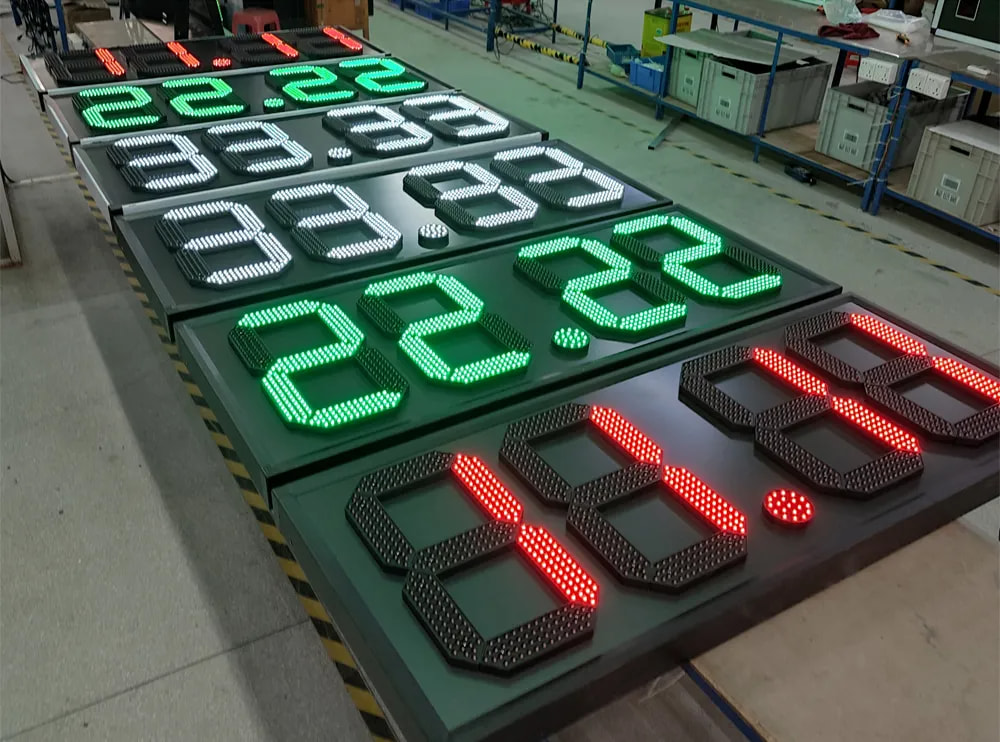
Outdoor fuel station environments are extremely demanding.
A properly engineered digital gas price sign should include:
- IP65 or higher waterproof protection
- UV-resistant acrylic faces
- Sealed cable routing
- Ventilation design
- Drainage systems
One common issue in poorly manufactured signs is condensation inside the cabinet after temperature changes.
Professional systems prevent this through:
- Pressure-balanced ventilation
- Waterproof gaskets
- Thermal airflow management
This becomes especially important in regions with:
- Heavy rain
- Snow
- Desert heat
- Tropical humidity
4. Remote Control and Communication System
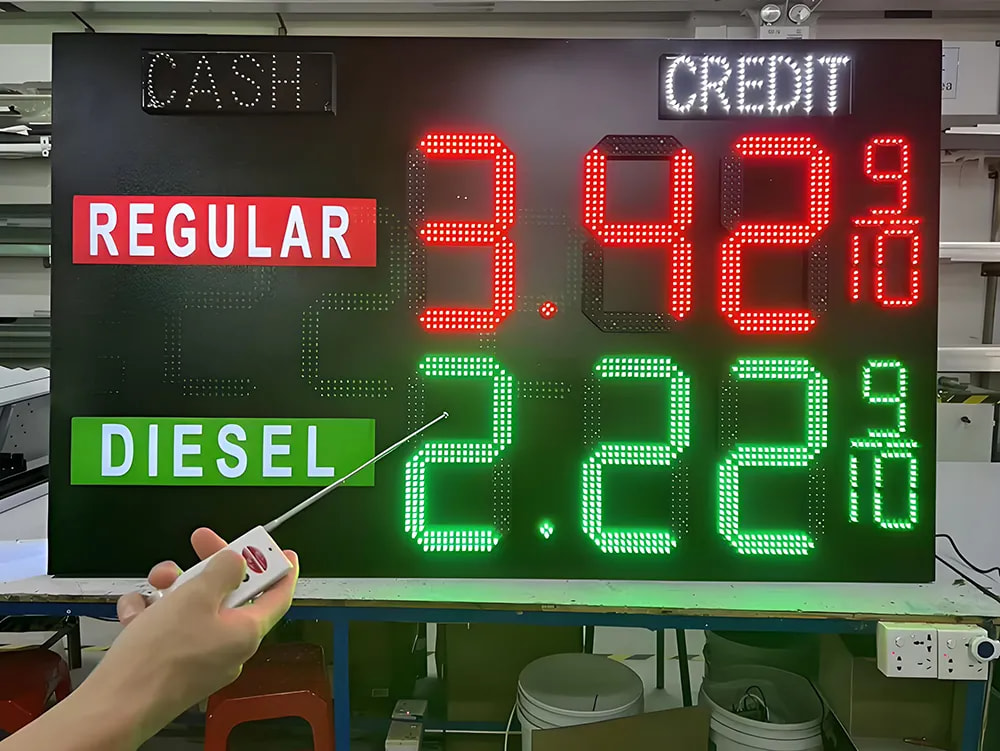
Modern stations expect centralized price management.
Most digital gas price signs now support:
- RF remote control
- WiFi control
- Ethernet systems
- Cloud-based management
- Mobile app updates
For multi-location fuel brands, centralized control systems significantly improve operational efficiency.
A reliable control system should include:
- Signal stability
- Anti-interference protection
- Backup manual control
- Emergency override capability
Communication failures are one of the biggest operational complaints in low-quality imported systems.
Manufacturing Details That Buyers Often Ignore
LED Module Quality
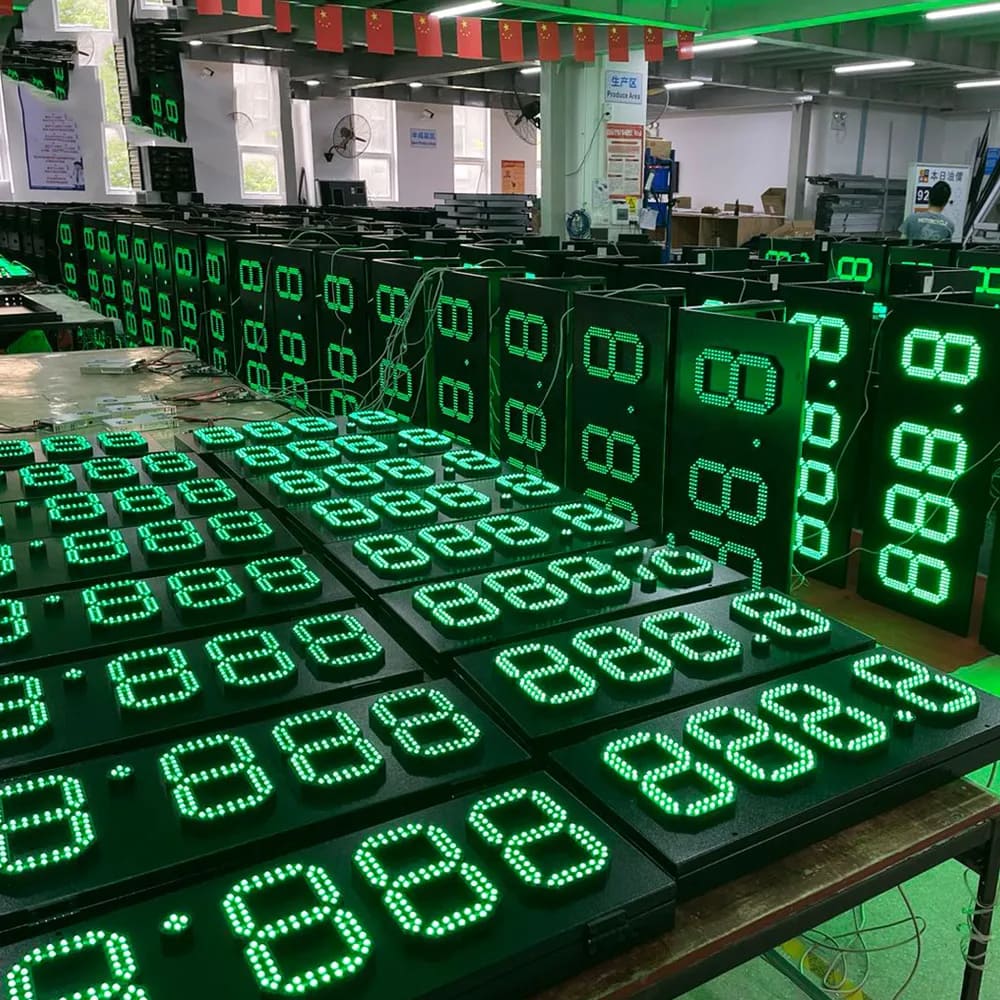
Not all LED modules are equal.
Industrial-grade fuel station displays typically use:
- High-stability LED chips
- Anti-static PCB boards
- Industrial power supplies
- Uniform brightness calibration
Cheap modules often suffer from:
- Color inconsistency
- Pixel failure
- Brightness decay
- Uneven digit appearance
For long-term operation, LED heat management is critical.
Professional manufacturers design cabinet airflow specifically to reduce thermal stress on internal electronics.
Acrylic Face Material
The front protection panel is usually made from:
- Acrylic
- Polycarbonate
- UV-resistant composite materials
Low-grade acrylic may yellow or crack after prolonged UV exposure.
High-quality UV-stabilized materials maintain clarity and appearance for years.
Wiring and Internal Assembly
In commercial petroleum projects, internal wiring quality matters more than many buyers realize.
Poor wiring can create:
- Voltage instability
- Water intrusion risk
- Difficult maintenance
- Fire hazards
Professional assembly includes:
- Organized cable routing
- Waterproof connectors
- Labeled internal systems
- Accessible maintenance layouts
Installation Planning for Fuel Stations
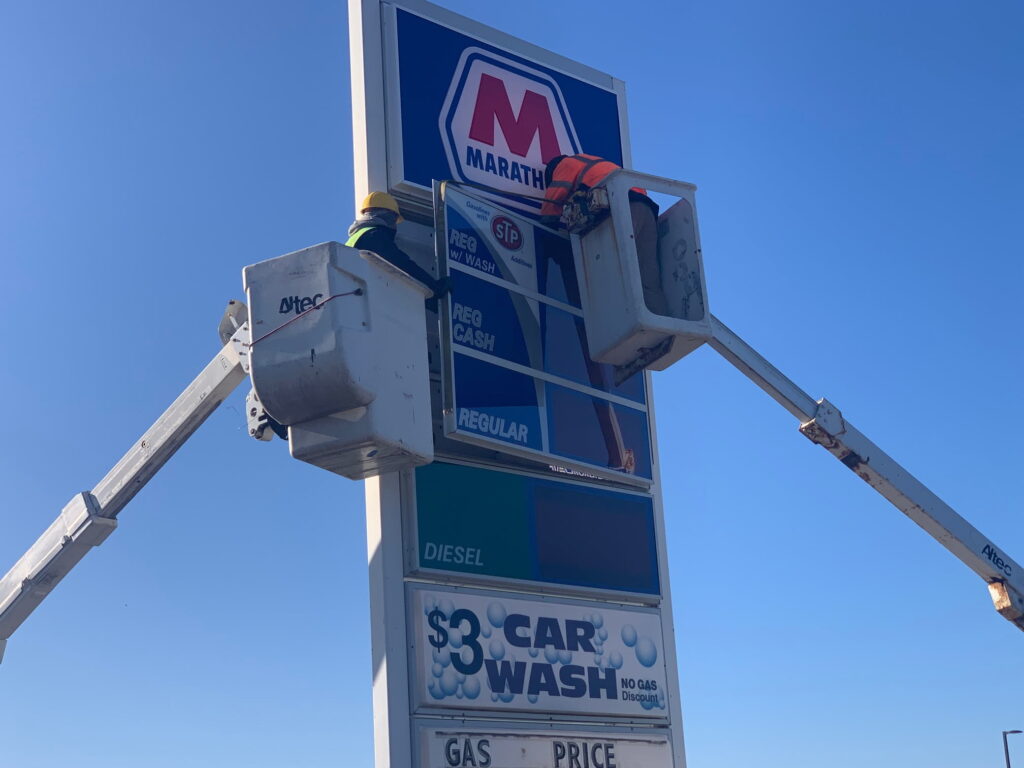
Many sign problems actually originate from installation mistakes rather than manufacturing defects.
Before purchasing a digital gas price sign, contractors should evaluate:
- Existing pole condition
- Electrical infrastructure
- Wind load requirements
- Local code compliance
- Viewing direction
- Service access space
Front Service vs Rear Service Design
Front-service systems allow maintenance from the front panel.
These are ideal for:
- Tight urban stations
- Wall-mounted applications
- Limited rear access locations
Rear-service systems are commonly used in large pylons where maintenance platforms already exist.
Power Supply Considerations
Stable power distribution is essential.
Professional installations include:
- Surge protection
- Grounding systems
- Voltage stabilization
- Dedicated power circuits
This is especially important in regions with unstable utility power.
Branding and Customization Trends in 2026
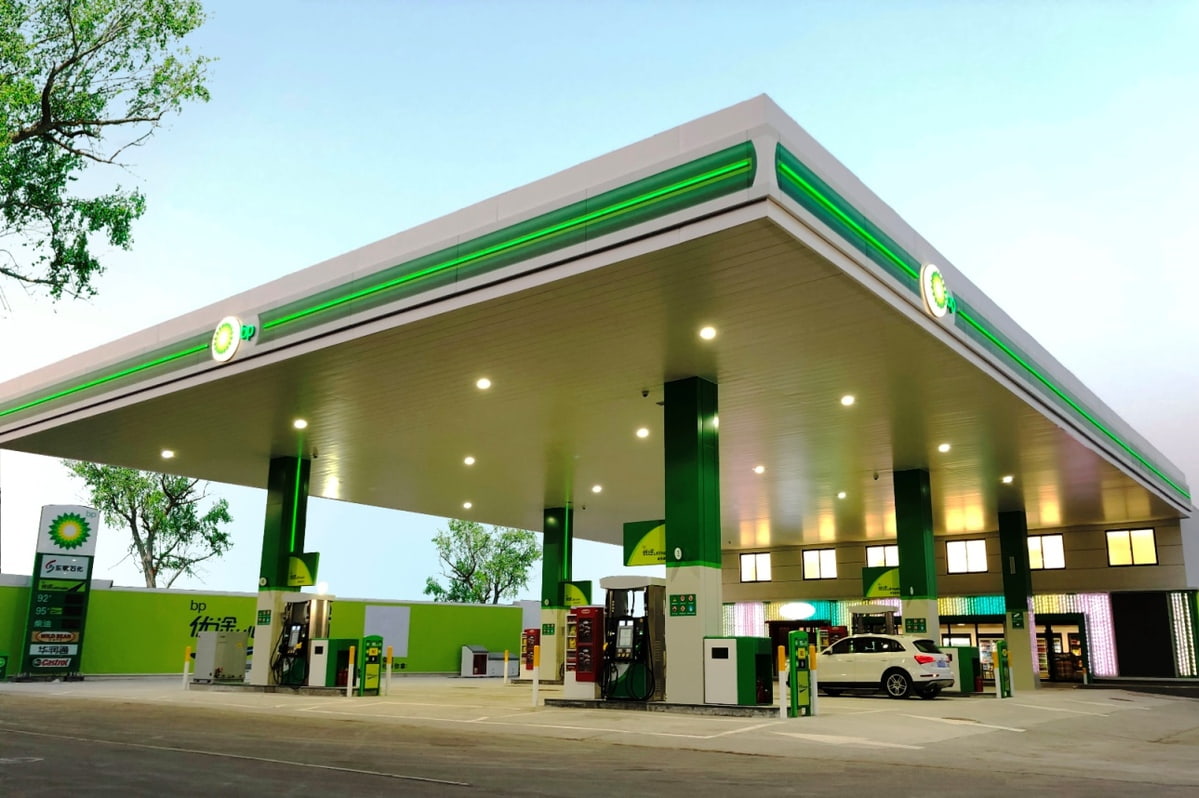
Fuel station branding has evolved significantly.
Today’s stations increasingly use digital gas price signs as part of a broader visual identity system.
Popular customization trends include:
- Brand color-matched cabinets
- Integrated LED borders
- Backlit logo panels
- Architectural aluminum cladding
- Slim-profile cabinet designs
Large fuel brands now prioritize:
- Clean visual alignment
- Consistent corporate identity
- Minimalist engineering aesthetics
- Smart digital integration
Many modern projects combine:
- LED gas price displays
- Canopy fascia systems
- Directional signage
- Digital advertising displays
into one unified branding environment.
Common Mistakes Buyers Make
Choosing Based Only on Price
The lowest quotation often creates the highest long-term cost.
Low-cost systems frequently compromise:
- Waterproof sealing
- LED lifespan
- Cabinet thickness
- Power supply quality
- Structural engineering
Ignoring Maintenance Access
A sign that is difficult to service becomes expensive over time.
Always verify:
- Module replacement method
- Access panel layout
- Spare part availability
- Control system compatibility
Overlooking Local Regulations
Different regions regulate:
- Brightness levels
- Sign dimensions
- Electrical standards
- Structural requirements
Early engineering coordination helps avoid permit delays.
Real-World Project Example
In one highway fuel station renovation project, the operator originally planned to reuse an old steel pylon structure.
After structural inspection, engineers discovered internal corrosion and insufficient wind-load capacity for modern LED cabinets.
Instead of forcing a retrofit, the project team redesigned:
- Pole reinforcement
- Cabinet mounting system
- Internal electrical routing
- Maintenance access platform
Although the initial investment increased, the upgraded structure reduced future maintenance risks and improved long-distance visibility significantly.
This is a common scenario in aging fuel station infrastructure projects.
Future Trends in Digital Gas Price Signage
The industry is gradually moving toward smarter systems.
Emerging trends include:
- Cloud-controlled pricing networks
- Energy-efficient LED systems
- Smart diagnostics
- Dynamic brightness optimization
- Integrated advertising displays
- Solar-assisted power systems
Fuel retailers are also investing more heavily in:
- Brand consistency
- Customer experience
- Roadside visibility analytics
As EV charging infrastructure expands, digital signage systems are increasingly being integrated into hybrid fueling environments.
FAQ
How long does a digital gas price sign typically last?
A professionally made LED gas price sign can usually run for 50,000 to 100,000 hours.
This depends on LED quality, weather conditions, and maintenance.
What is the best material for outdoor gas price sign cabinets?
Many people prefer powder-coated aluminum because it resists corrosion, weighs less, and lasts longer over time.
Can someone remotely control digital gas price signs?
Yes. Most modern systems support RF remote control, WiFi, Ethernet, or cloud-based management systems.
Are retrofit installations possible on existing pylons?
Yes. Many fuel stations retrofit LED price displays onto existing structures, although experts strongly recommend a structural evaluation beforehand.
What brightness level should highway fuel stations use?
Highway applications commonly require 7000–10000 nits for optimal daytime visibility.
Conclusion
Choosing the right digital gas price sign involves far more than selecting LED digits.
Long-term performance depends on:
- Structural engineering
- Material quality
- Waterproof protection
- Installation planning
- Maintenance accessibility
- Control system reliability
For fuel station operators, the right signage system improves:
- Visibility
- Operational efficiency
- Brand perception
- Customer trust
A professionally engineered digital gas price sign is ultimately an infrastructure investment, not just a display product.
Planning a new fuel station project or upgrading an existing gas price display system?
Our team designs custom digital gas price signs, LED fuel price systems, pylon signs, and complete fuel station branding. We support commercial petroleum projects worldwide.
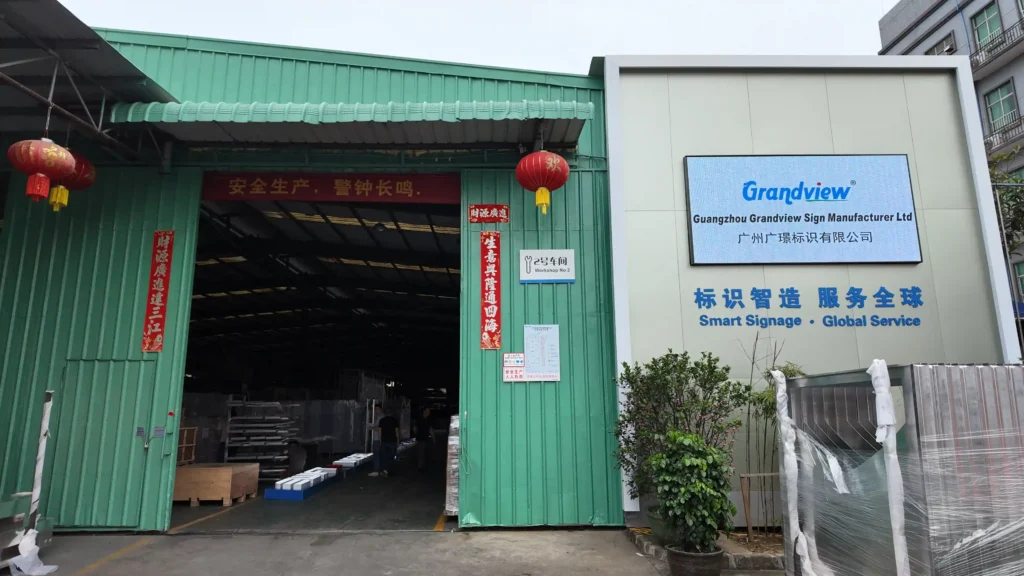
Contact GV Sign Factory to discuss:
- Custom signage engineering
- Branding integration
- Retrofit solutions
- Large-scale fuel station projects
- OEM/wholesale manufacturing support
Written by GV Sign Factory Engineering Team
With over 20 years of experience in gas station signage manufacturing and fuel station branding projects, GV Sign Factory has supported petroleum retail projects across North America, the Middle East, Africa, and Southeast Asia.