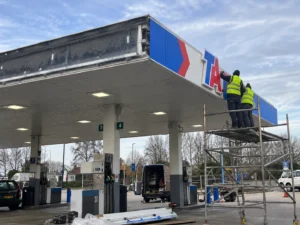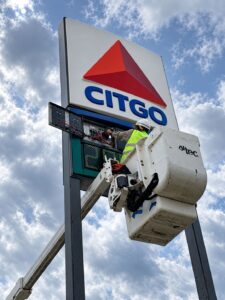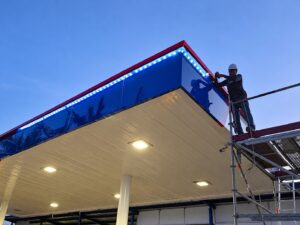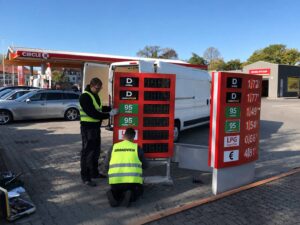
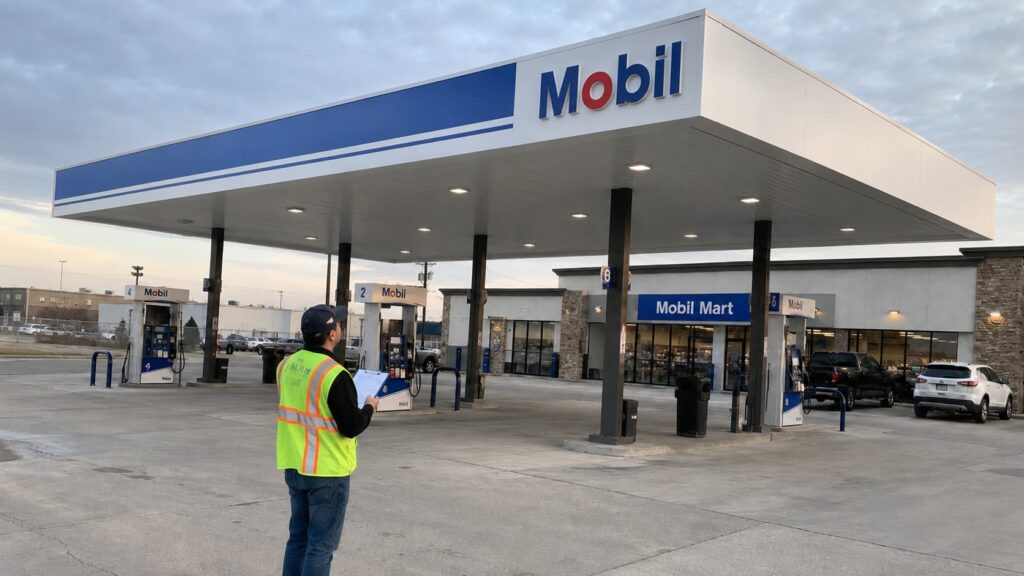
A gas station canopy rebranding project may look simple at first. You have station photos, a logo, and an approximate canopy size, so asking for a quotation seems like the next step.
However, those details mainly show how the project should look. They do not always define what must be manufactured.
For an existing station, the new gas station canopy fascia must fit the real site. That includes each elevation, corner, logo position, lighting requirement, and installation condition. If these details are still based on estimates, the quotation should be treated as preliminary.
A simple rule is:
Measure before you manufacture.
Define the Project Type First
The information needed for a new build is different from the information needed for a rebrand or replacement.
A canopy fascia project may involve a new station, an operating-station rebrand, a fascia replacement, an illuminated-logo upgrade, or a multi-site rollout.
For a new build, architectural or canopy drawings may already define much of the geometry.
For a rebranding project, start by reviewing the existing canopy. Site dimensions, mounting areas, current branding, and wiring conditions may affect the new fascia.
Photos help with the first review, but they cannot confirm every site condition. Structural, electrical, permit, or code-related issues should be checked by the appropriate local professional.
If you are still planning the visual direction, our Gas Station Canopy Design Ideas guide covers that stage in more detail.
Do Not Rely Only on the Overall Canopy Size
One common RFQ mistake is sending only the total roof length and width.
For example, saying that a canopy is 20 meters long shows the project scale. However, it does not tell the fabricator everything needed to build the fascia.
Useful production information may include:
- length of each canopy elevation;
- fascia face height;
- corner and return conditions;
- panel joint positions;
- illuminated logo positions; and
- existing drawings, if available.
The difference is simple:
Overall canopy size describes the structure.
Fascia production dimensions describe the product.
For existing stations, field measurements and clear photos of each elevation help reduce assumptions before drawings are prepared.
Convert Brand Artwork Into a Production Layout
A logo file is important, but it is not a production drawing.
Brand artwork shows what the logo should look like. A production layout shows how that logo fits the actual canopy.
Before production, confirm:
- logo dimensions and position;
- fascia panel divisions;
- corner treatment;
- color and finish references;
- illuminated and non-illuminated areas; and
- relevant mounting details.
A practical workflow is:
Brand Artwork → Site Layout → Drawing Approval → Production
This matters even more for multi-site rebranding. The brand identity may stay the same, but canopy dimensions and installation conditions can differ from one station to another.
For material and finish planning, see the Gas Station Canopy Materials and Features Buyer’s Guide.
Confirm What the Fascia Supply Includes
“Canopy fascia” does not always mean the same thing.
One project may need replacement cladding only. Another may include illuminated logos. A third may keep most of the existing canopy and replace only the visible branding.
Therefore, the RFQ should clearly define the supply scope.
Depending on the project, it may include:
- fascia or cladding panels;
- illuminated or non-illuminated logos;
- related mounting components;
- lighting components;
- production drawings;
- assembly labels; and
- packaging for shipment.
The canopy may also need to match other station signs. For a canopy-only project, the main connection is usually brand consistency.
If your project covers more than the canopy, the Gas Station Signage System provides a broader view of station signage planning.
Treat Illumination as a Project Interface
Lighting should be confirmed before production, not added at the end.
The project team should establish which parts are illuminated, what electrical information is available, where wiring can enter the sign, and how components can be accessed later.
The key question is not simply:
“Will this use LED lighting?”
Instead, ask:
“Can the signage be manufactured, installed, connected, and maintained under the actual site conditions?”
Maintenance access matters too. If a lighting component needs service later, the maintenance team needs a practical way to reach it.
Separate Factory Review From Local Responsibility
International signage projects are easier to manage when responsibilities are clear from the start.
Depending on the agreed scope, manufacturing-side work may include artwork review, fascia layout, production drawings, fabrication, lighting integration, factory testing, labeling, packaging, and installation reference information.
Meanwhile, site-specific items should be confirmed locally. These may include:
- final site measurements;
- existing structural condition;
- structural engineering;
- permits;
- local sign requirements;
- electrical approval;
- onsite wiring; and
- final installation.
The International Sign Association glossary is also useful when checking standard signage terminology.
Because local rules vary, a design accepted in one location should not automatically be treated as compliant in another.
Review Drawings Before Production Release
Drawing approval is the point where the design becomes a manufacturing reference.
Before release, check:
- fascia dimensions;
- each required elevation;
- logo size and position;
- panel breaks and corners;
- color and finish;
- illumination requirements;
- mounting interfaces; and
- project-specific notes.
If major information is still missing, the project should remain at the quotation or drawing stage.
What to Include in a Canopy Fascia RFQ
A practical RFQ should include, where available:
- project type and location;
- station and canopy photos;
- fascia dimensions;
- vector logo and brand guidelines;
- illumination requirements;
- quantity;
- shipping destination; and
- relevant project schedule.
Not every detail must be complete during the first discussion. However, missing information should be identified early. This allows assumptions to be replaced with confirmed data before production.
Conclusion
A successful gas station canopy fascia project starts before fabrication.
The project becomes production-ready when the site dimensions, branding, fascia scope, lighting interfaces, and local responsibilities are clear.