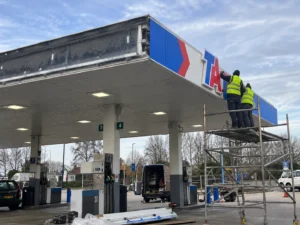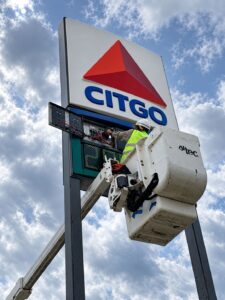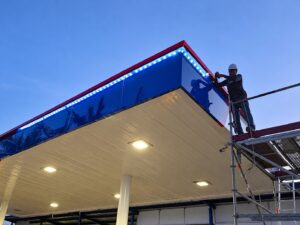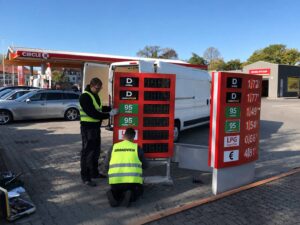
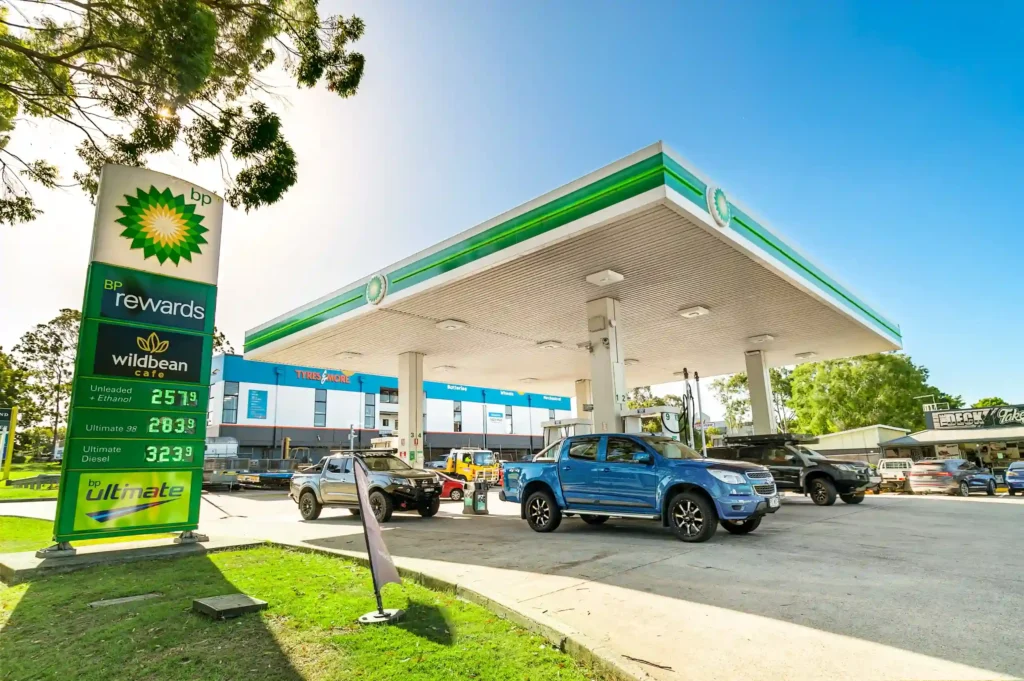
A gas station canopy is not only a roof above fuel pumps. For most fuel station projects, it is one of the largest branded structures on the site. It protects customers and supports lighting. It improves visibility. It also links the station image with the pylon sign, LED gas price sign, pump island signs, and C-store signage.
For new fuel stations, rebranding projects, or roadside service stations, plan the canopy design early. Once you fix the steel structure, fascia height, electrical wiring, and brand layout, later changes can become expensive.
What Is a Fuel Station Canopy?
A fuel station canopy is the covered structure installed above the fuel dispensers. It usually includes steel columns, a roof system, fascia panels, lighting, electrical wiring, and branded signs.
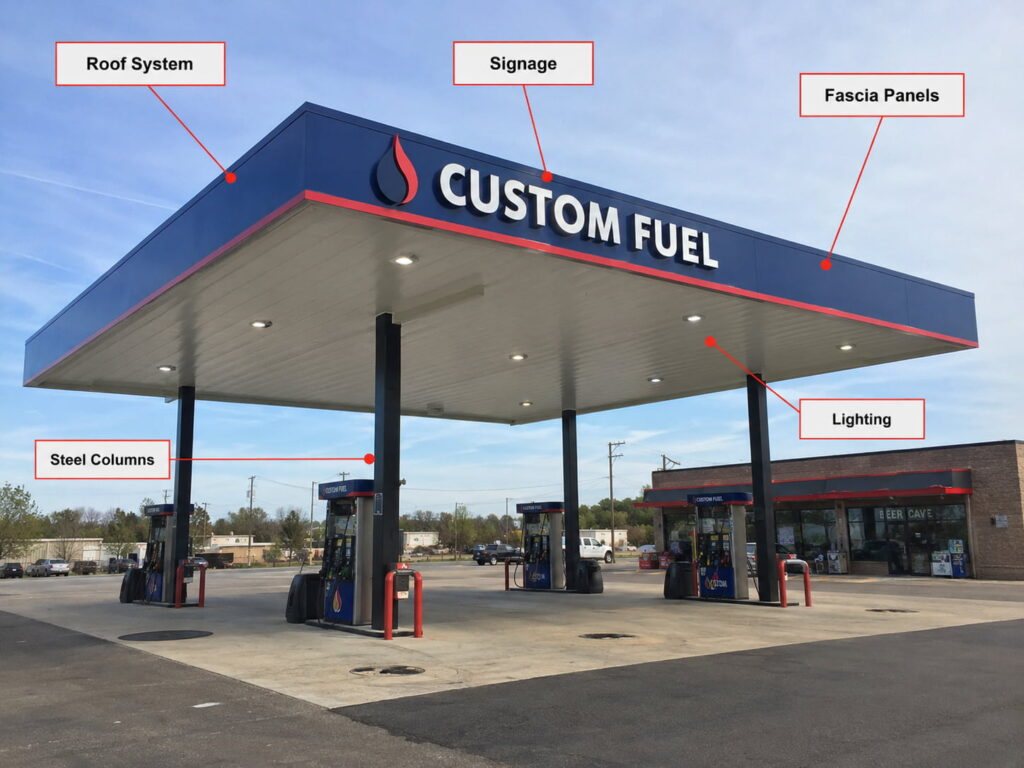
In a complete gas station branding system, the canopy works together with:
- Gas station pylon sign
- LED gas price display
- Canopy fascia sign
- Pump island signs
- C-store sign
- Directional and wayfinding signs
A well-designed canopy helps drivers recognize the station faster, especially at night or from a busy road.
What Is the Dimension of Gas Station Canopy?
Many buyers ask, “what is the dimension of gas station canopy?” There is no single standard size because each site is different.
The final dimension usually depends on:
- Number of fuel dispensers
- Fuel island layout
- Vehicle clearance requirements
- Local building code
- Wind load and snow load
- Brand fascia height
- Lighting and signage design
As a general project reference, many gas station canopies allow about 14–16 ft of clear vehicle height.
Local code officials and the structural engineer must confirm final clearance. Larger stations for trucks or commercial vehicles may need higher clearance and wider spans.
Planners usually base the canopy length and width on the fuel island layout. For example, a small station may only need a compact canopy over two pump islands. A highway station may need a wider canopy that covers many dispensers and traffic lanes.
Gas Station Canopy Design Ideas for Better Branding
1. Use the Canopy as a Main Branding Surface
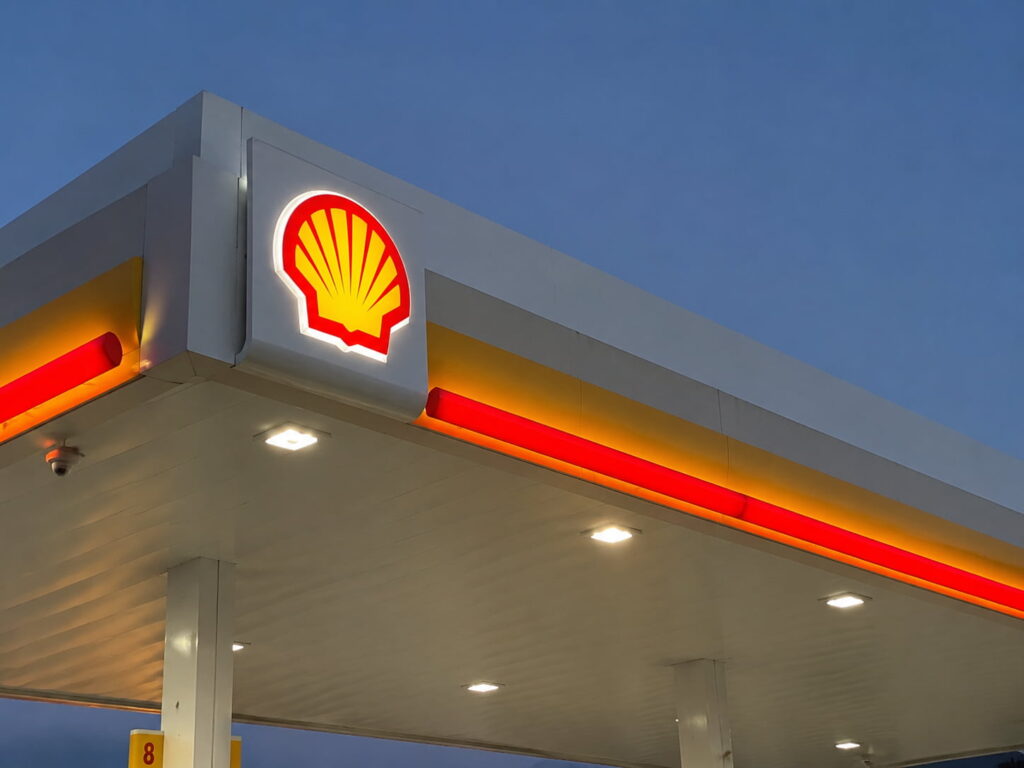
The fascia is the most visible part of the canopy. It can carry brand colors, illuminated logos, and clean horizontal lines. For fuel station branding, the canopy fascia should match the pylon sign and C-store sign, not look like a separate structure.
For better results, keep the layout simple:
- Large logo on the main traffic-facing side
- Consistent brand color on all fascia panels
- Clean LED illumination
- No overcrowded graphics
2. Match the Canopy with the Pylon Sign
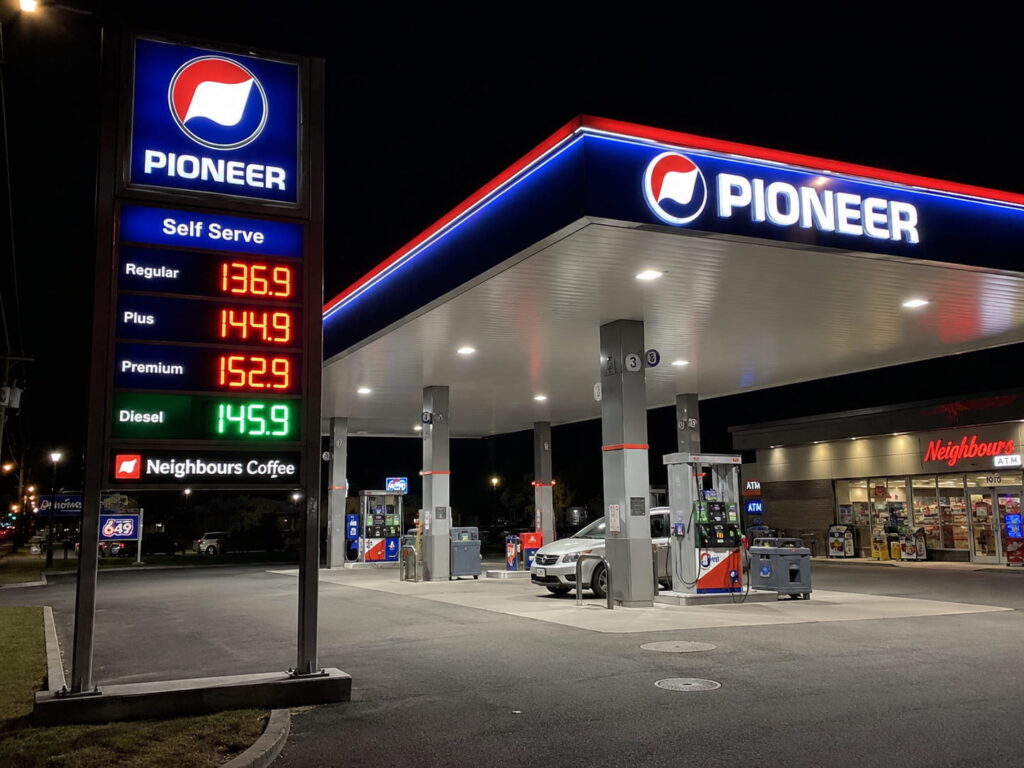
Customers see the canopy when they enter the station. They see the pylon sign before they arrive. These two signs should work together.
A common mistake is designing the canopy first and adding the pylon sign later. This often causes color mismatch, different logo proportions, or inconsistent lighting. For new stations, design the canopy fascia, pylon sign, and LED gas price sign as one visual system.
3. Plan Lighting for Night Visibility
LED lighting is important for both safety and branding. Under-canopy lighting should give clear visibility around pumps. Fascia lighting should make the brand easy to spot from the road.
For signage manufacturing, we usually consider:
- LED module spacing
- Waterproof power supplies
- Wiring access
- Maintenance points
- Brightness consistency
- Heat dissipation
Good lighting should look even, not patchy or overexposed.
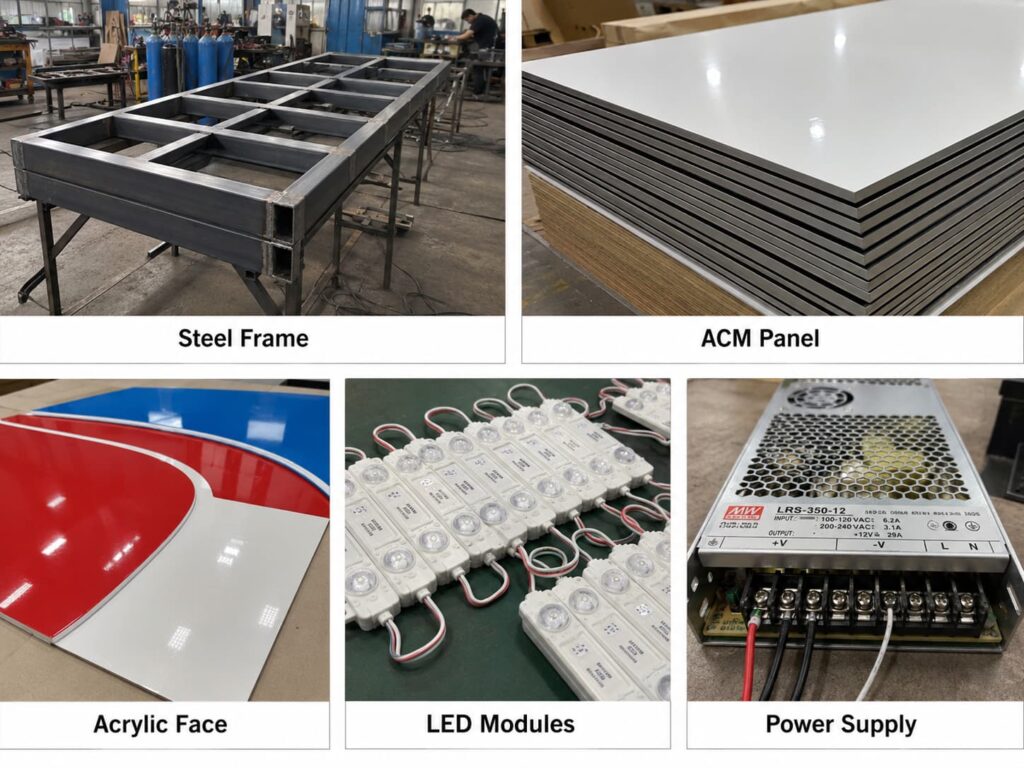
Materials Used in Fuel Station Canopy Signage
Different parts of a canopy require different materials.
Steel Structure
Manufacturers usually make the main canopy frame from structural steel. Design it based on site conditions, span, wind load, and local engineering requirements.
Aluminum Composite or Metal Panels
Builders often use ACM, or metal cladding, for canopy fascia. Lightweight and clean-looking. It also works well for branded color finishes.
Acrylic or Polycarbonate Sign Faces
For illuminated logo areas or lightbox-style signs, acrylic or polycarbonate panels may be used. Select the material based on weather conditions, lighting effect, and service life.
LED Modules and Power Supplies
For illuminated canopy signage, waterproof LED modules and stable power supplies are important. Poor-quality LEDs may cause uneven brightness, color difference, or early failure.
Manufacturing Details That Buyers Should Know
A professional canopy signage project is not only about design. Manufacturing details affect installation, appearance, and long-term maintenance.
Key production steps often include:
- Shop drawings and size confirmation
- Steel cutting, welding, and surface treatment
- Fascia panel fabrication
- Logo sign production
- LED module installation
- Wiring and lighting test
- Protective packing for export shipping
Before production, drawings should confirm dimensions, logo size, color codes, installation method, and electrical requirements. This avoids mistakes when the goods arrive on site.
Installation and Engineering Advice
Fuel station canopy installation should always be coordinated with local contractors and engineers. The signage supplier can provide shop drawings, wiring layouts, mounting details, and product dimensions. The final structure and installation must follow local requirements.
Before installation, check:
- Foundation and column position
- Existing canopy condition for retrofit projects
- Power access
- Maintenance access
- Wind and weather conditions
- Lifting equipment access
- Local permit requirements
For rebranding projects, inspect the old fascia and steel frame first. If the structure is still usable, the project may only need new fascia panels, logo signs, and lighting upgrades.
Industry Case Example
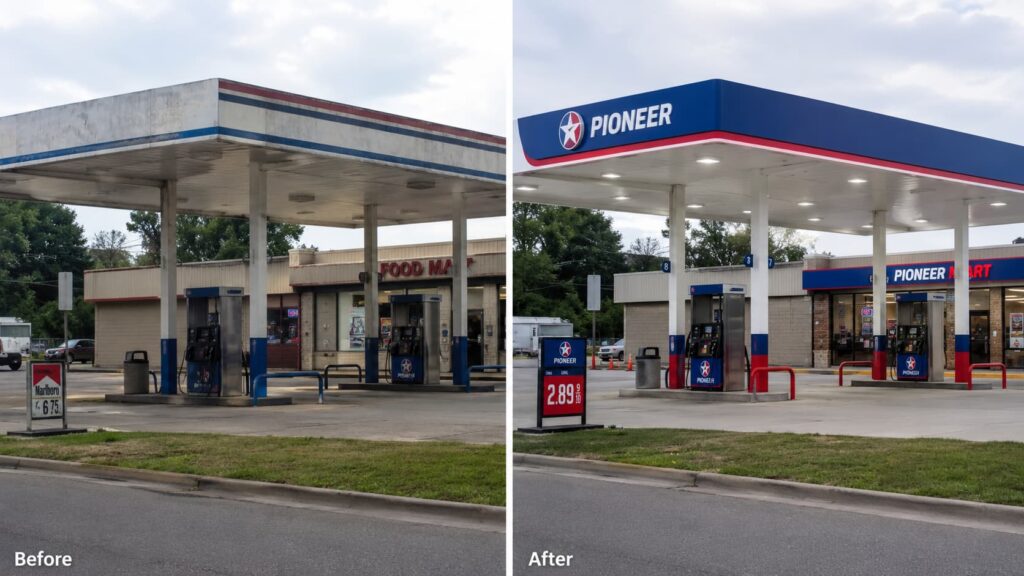
A roadside fuel station rebranding project usually needs more than one sign. In one typical project, the owner wanted to update an old canopy without rebuilding the entire site.
The practical solution would be:
- Keep the existing steel canopy structure
- Replace old fascia panels with new branded panels
- Add illuminated canopy logo signs
- Upgrade the LED gas price sign
- Match the pylon sign with the new canopy design
- Use consistent color and lighting across the site
This type of project is common for independent stations, franchise upgrades, and fuel brand conversions. It controls cost while improving the station’s visual impact.
Fuel Station Canopy Trends
Modern fuel station canopy design is becoming cleaner, brighter, and easier to maintain.Many fuel station canopy designs now use simple fascia lines, clear brand colors, energy-saving LED lights, and easy-to-replace signage parts.
For B2B buyers, the trend is clear: you should not treat a canopy as a single product. It should be part of a complete fuel station branding system.
Procurement Tips Before Requesting a Quote
To get an accurate quotation, prepare these details:
- Site photos or layout drawings
- Canopy length, width, and height
- Number of pump islands
- Logo file and brand color
- New build or retrofit project
- Lighting requirements
- Installation country
- Wind or weather requirements
- Quantity of signs needed
The more complete your project information is, the faster a manufacturer can provide drawings, material suggestions, and pricing.
FAQ
What is a fuel station canopy?
A fuel station canopy is the covered structure above fuel dispensers. It provides weather protection, lighting, and brand visibility for the station.
What is the typical dimension of a gas station canopy?
There is no single standard size. Dimensions depend on pump layout, site design, vehicle clearance, brand fascia, and local code. Many projects use around 14–16 ft clear height, but final dimensions must be confirmed by local engineers.
Can a gas station canopy include illuminated signs?
Yes. Canopy fascia signs, logo signs, and LED lighting can be integrated into the canopy design.
What materials are used for canopy signage?
Common materials include steel structure, aluminum composite panels, acrylic sign faces, LED modules, and waterproof power supplies.
Can an old fuel station canopy be rebranded?
Yes. If the structure is in good condition, the fascia panels, logo signs, lighting, and matching pylon sign can often be upgraded.
Conclusion
A gas station canopy is one of the most important visual elements in a fuel station project. Good design should balance structure, safety, lighting, signage, branding, and long-term maintenance.
For better results, plan the fuel station canopy together with the pylon sign, LED gas price sign, C-store sign, and pump island signs. This creates a cleaner site image and gives customers a stronger brand impression.
Need a custom gas station canopy signage solution?
GV Sign Factory manufactures gas station pylon signs, LED gas price signs, canopy fascia signs, pump island signs, and complete fuel station branding systems for new build and rebranding projects.
Send us your site photos, dimensions, logo, and project requirements. Our team can help you review the signage solution and provide a custom quotation.