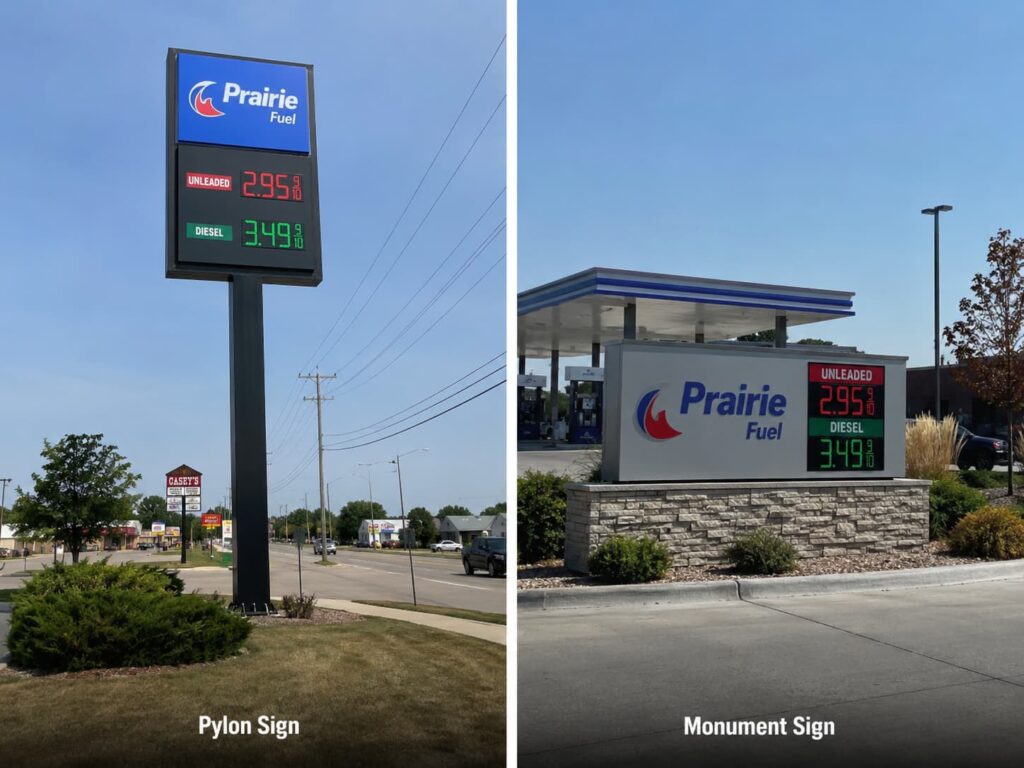
Choosing between a pylon sign and a monument sign is not only a design decision. For most commercial projects, it affects visibility, traffic capture, permitting, installation cost, and long-term brand value.
For gas stations, convenience stores, car washes, retail plazas, and roadside businesses, choosing the wrong sign type can hurt visibility. Even if the sign looks good, drivers may not see it in time.
A low monument sign can look clean and professional near the entrance. However, it may be hard to notice from a busy road. A tall pylon sign is easier to see from a distance, but it needs a stronger structure, a proper foundation, and local approval before installation.
This guide explains the pylon sign definition, the main differences between pylon signs and monument signs, and how to choose the right option for your business location.
What Is a Pylon Sign?
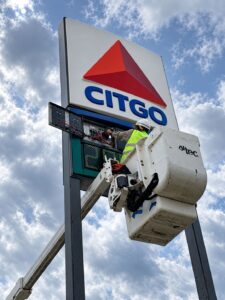
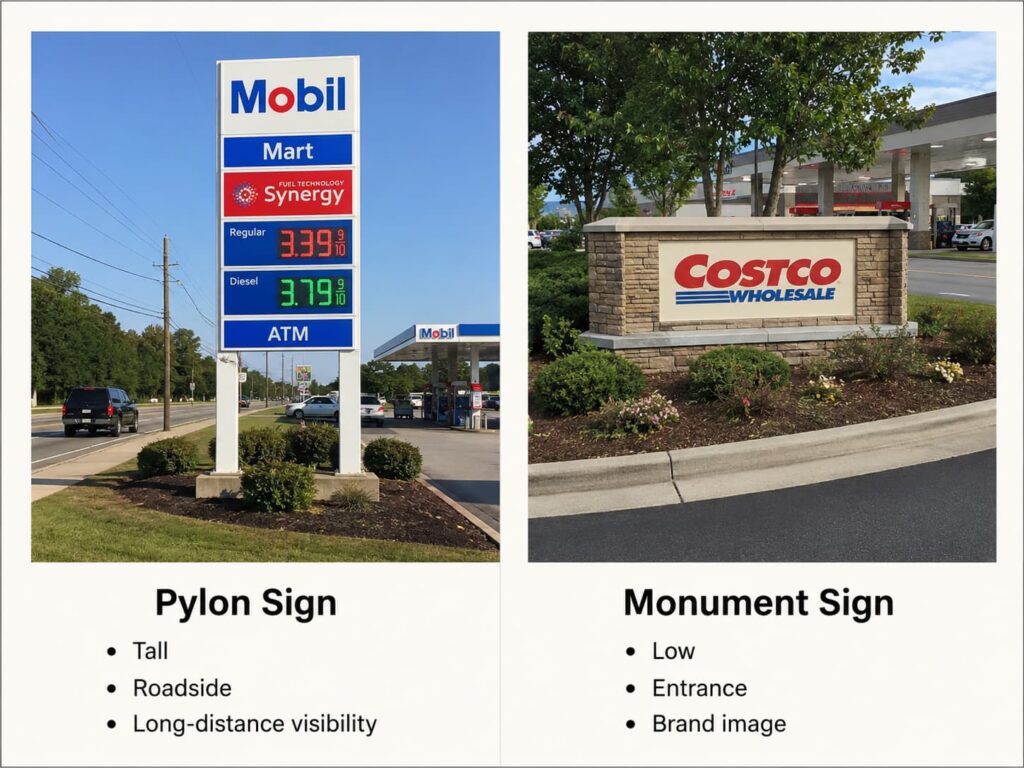
A pylon sign is a freestanding outdoor sign supported by one or more steel poles or a structural column. It is usually taller than a monument sign and is designed for long-distance visibility from roads, highways, parking lots, and commercial corridors.
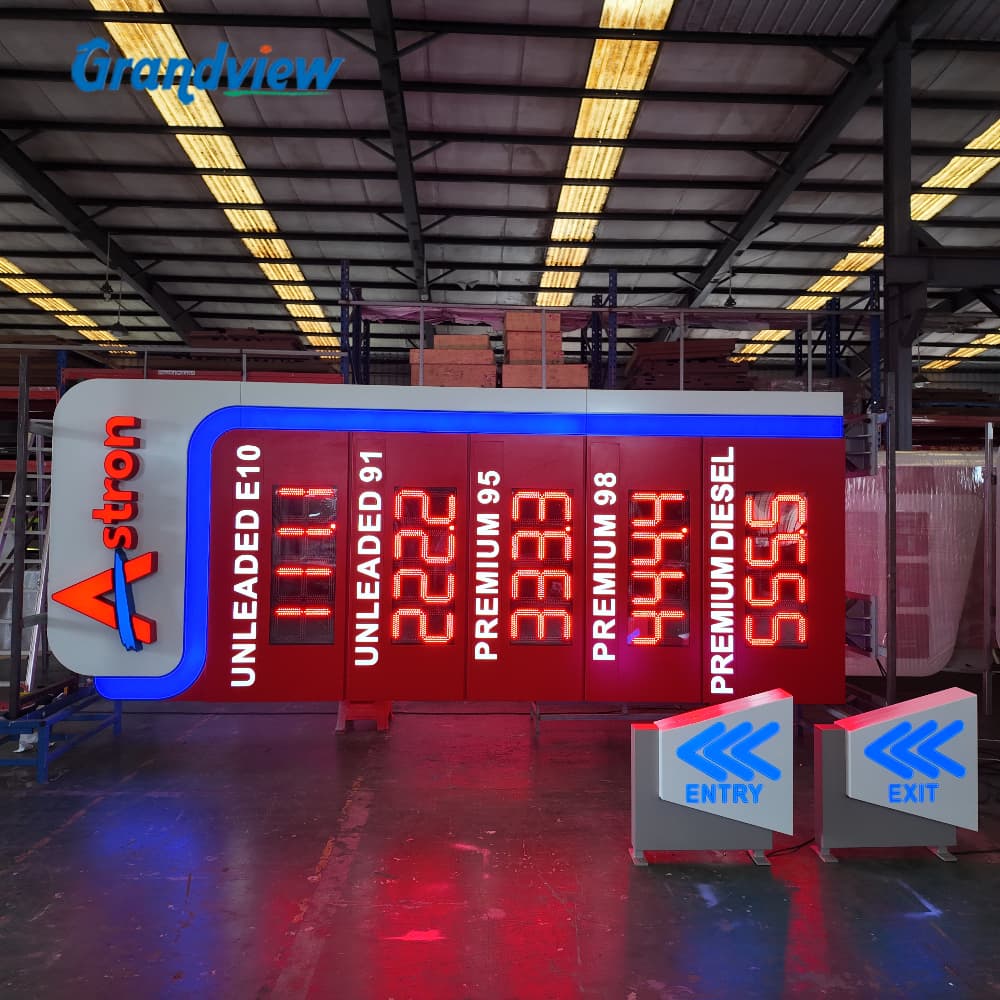
In commercial signage projects, a pylon sign often includes:
- Steel support structure
- Aluminum sign cabinet
- Acrylic or polycarbonate sign face
- Internal LED lighting
- Brand logo panels
- Tenant panels
- LED gas price display modules
- Electrical access and maintenance doors
For gas stations, pylon signs are very useful because they can show both the station brand and fuel prices in one sign.
A good gas station pylon sign helps drivers see the station, read the prices, and decide whether to enter before they pass by.
What Is a Monument Sign?
A monument sign is also a freestanding outdoor sign, but it is usually lower and wider. It is often installed near the entrance of a property and is designed to create a stable, architectural brand impression.

Monument signs are commonly used for:
- Office parks
- Hospitals
- Schools
- Hotels
- Residential communities
- Corporate campuses
- Commercial property entrances
- Low-speed retail areas
Unlike pylon signs, monument signs often use a masonry, aluminum, stone, brick, concrete, or architectural base. They work well when the goal is not long-distance roadside visibility, but a premium entrance image.
Pylon Sign vs Monument Sign: Main Differences
Height and Visibility
The biggest difference is height.
A pylon sign is made to be seen from far away. It is a good choice for businesses near highways, main roads, gas stations, truck stops, and busy commercial areas.
It helps drivers notice the business before they reach the entrance.
A monument sign is lower. It works better in areas where traffic is slower and customers are already close to the property.
For a gas station on a busy road, a monument sign alone is often not enough. Drivers need to read the brand and fuel prices early. In that situation, a tall pylon sign with LED price digits is usually the more practical choice.
Best Use Cases
Pylon signs are better for:
- Gas stations
- Truck stops
- Convenience stores
- Car washes
- Retail plazas
- Roadside restaurants
- Hotels near highways
- Multi-tenant commercial properties
Monument signs are better for:
- Office buildings
- Schools
- Medical centers
- Gated communities
- Corporate parks
- Property entrance branding
- Premium low-rise commercial sites
The right choice depends on traffic speed, viewing distance, property setback, surrounding buildings, trees, and local sign regulations.

Structure and Engineering
A pylon sign usually requires heavier structural planning. The steel pole, base plate, anchor bolts, frame, and foundation must match the sign size, local wind conditions, and installation site.
In manufacturing, common materials include:
- Galvanized steel frame for strength
- Aluminum cabinet for corrosion resistance
- Acrylic or polycarbonate face for light transmission
- LED modules for energy-efficient illumination
- Waterproof power supplies
- Hinged access panels for maintenance

A monument sign may use a lighter frame inside. However, the base can be more complex when it uses brick, stone, concrete, or decorative panels. For both sign types, outdoor durability depends on painting quality, sealing, drainage, wiring protection, and material selection.
Lighting and LED Display Options
Both pylon signs and monument signs can have lighting. But pylon signs are usually better for bright LED displays and long-distance visibility.
A gas station pylon sign may include:
- Internal LED logo lighting
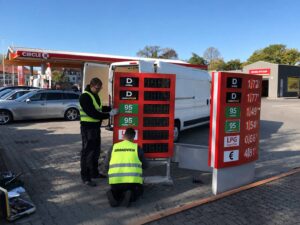
- LED gas price display
- Regular / Plus / Premium / Diesel fuel grade layout
- Remote or wired price control system
- Double-sided display
- High-brightness digits for day and night visibility
Monument signs can also use LED lighting, but they are mainly used to show the brand image. They are not designed for reading prices quickly from a long distance.
Which Sign Is Better for Gas Stations?
For most gas station projects, a pylon sign is the better primary roadside sign.
The reason is simple: fuel stations rely on quick roadside decisions. Drivers compare brand, location, fuel price, accessibility, and convenience within seconds. A tall pylon sign gives the station more time to be noticed.
A typical gas station signage system may include:
- Pylon sign with LED gas price display
- Canopy fascia logo sign
- Gas pump island signs
- Directional signs
- Convenience store sign
- Window graphics or promotional displays
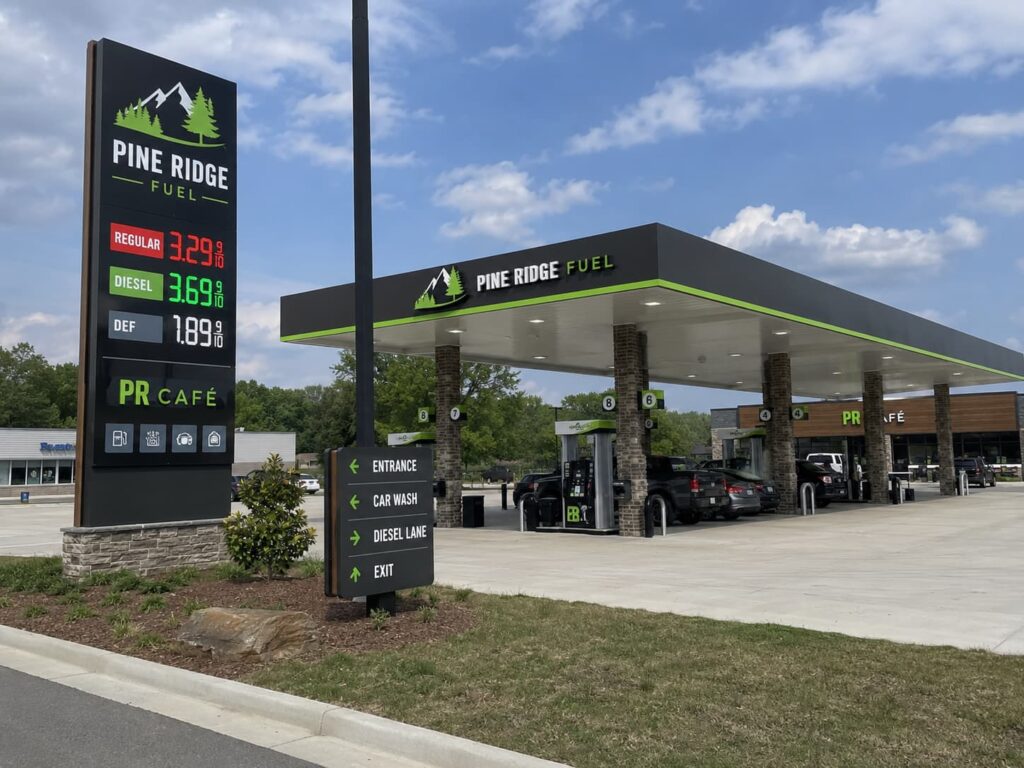
A monument sign can still be useful for some fuel stations, especially at the entrance of a large property, travel center, or branded retail area. But for price visibility and traffic capture, it usually works as a secondary sign, not the main roadside sign.
Industry Case Examples
Highway Gas Station Project
A fuel station near a highway exit needed better visibility before vehicles reached the turning lane. A low entrance sign looked clean but was blocked by parked trucks and landscaping.
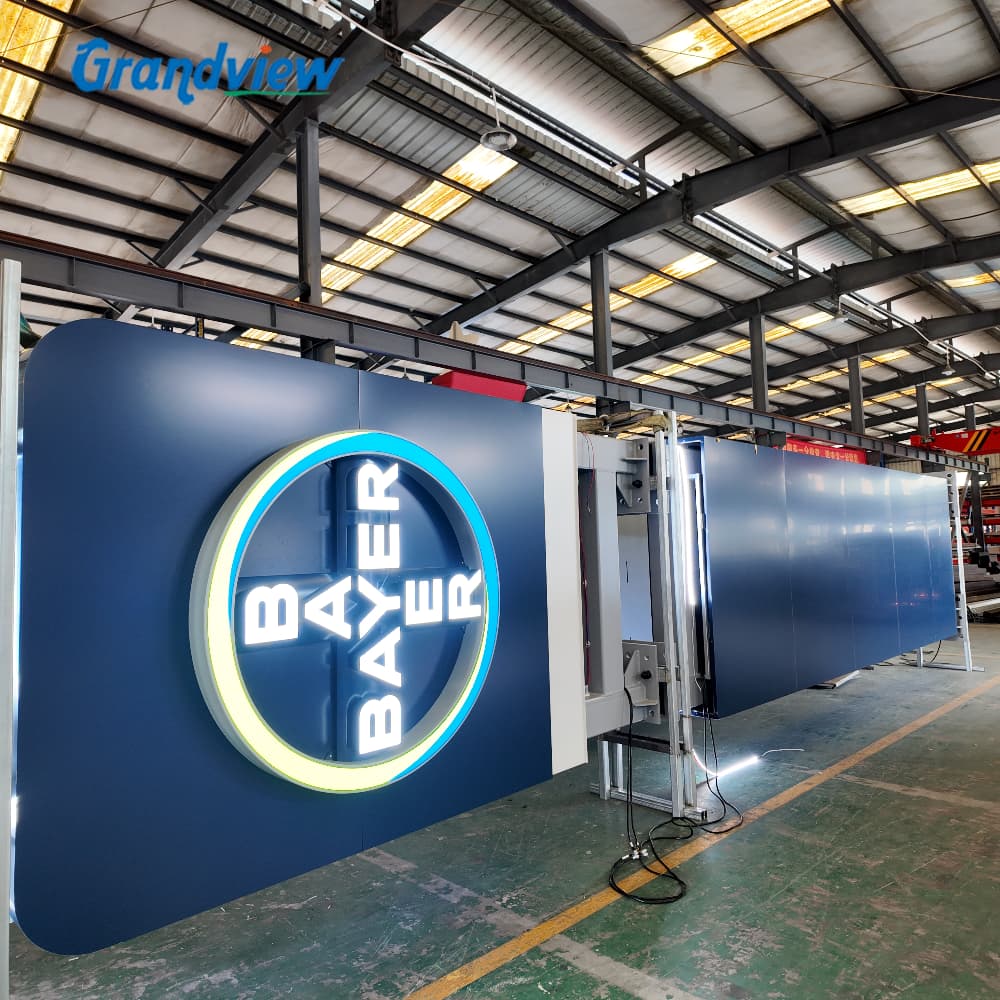
The better solution was a double-sided pylon sign with an illuminated logo and LED gas price display. The sign cabinet used an aluminum body, a steel frame inside, outdoor LED modules, and a service door for easy maintenance in the future.
The key lesson: when traffic speed is high, sign height and viewing distance are more important than decorative design.
Commercial Plaza Project
A small retail plaza with several tenants needed a sign that could display multiple business names from the main road. A multi-tenant pylon sign was suitable because tenants needed roadside exposure.
In this case, removable tenant panels were used so future businesses could be updated without replacing the entire sign structure.
Corporate Entrance Project
An office park wanted a premium entrance image rather than highway visibility. A monument sign with a low-profile structure, architectural finish, and soft internal lighting was a better match.
The key lesson: monument signs are strong for branding, but not ideal when long-distance driver recognition is the main goal.
Cost Factors to Consider
It is not accurate to say one sign type is always cheaper. The final cost depends on design, size, materials, illumination, local code requirements, and installation conditions.
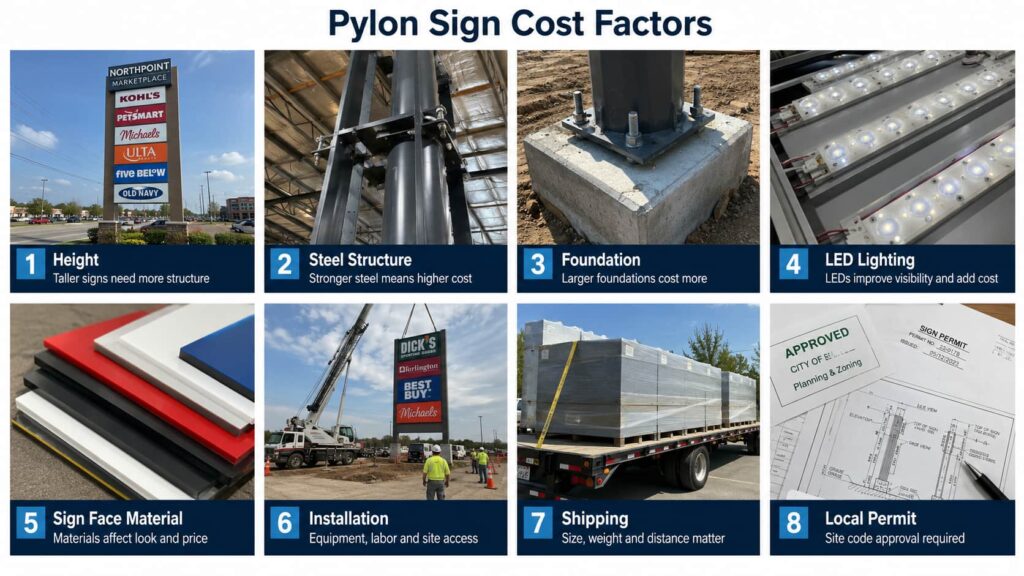
For pylon signs, cost is mainly affected by:
- Overall height
- Steel structure
- Foundation requirements
- Single-sided or double-sided cabinet
- LED lighting system
- LED price display modules
- Wind-load design
- Shipping and installation method
For monument signs, cost is mainly affected by:
- Base material
- Masonry or architectural finish
- Sign face material
- Lighting method
- Size and thickness
- Site preparation
- Landscape integration
For B2B buyers, the lowest quote is not always the best option. A poorly engineered outdoor sign may cause higher repair costs, difficult maintenance, water leakage, unstable lighting, or installation delays.
Permit and Installation Considerations
(sign permit and code requirements)
Before manufacturing a pylon sign or monument sign, buyers should check local requirements. Many cities regulate outdoor signs by height, sign area, setback, illumination, electrical safety, and placement.
For pylon signs, it is especially important to confirm:
- Maximum allowed height
- Distance from property line
- Allowed sign face area
- Wind-load requirements
- Foundation details
- Electrical connection
- Installation access for crane or lift equipment
For illuminated signs, proper wiring, waterproofing, grounding, power supply placement, and service access should be considered during design. A rendering may not show these details, but they matter after you install the sign outdoors.
How to Choose Between a Pylon Sign and a Monument Sign
Choose a pylon sign if:
- Your business depends on roadside traffic
- Drivers need to see your sign from far away
- Your location is near a highway or wide road
- You need LED gas price displays
- You operate a gas station, car wash, restaurant, hotel, or retail plaza
- Nearby buildings, trees, or vehicles may block a low sign
Choose a monument sign if:
- Your traffic is slow and close to the entrance
- You want a premium architectural appearance
- Your site is an office park, school, hospital, or community
- Local height restrictions are strict
- Brand image matters more than long-distance visibility
For many commercial properties, the best solution is not one or the other. A roadside pylon sign can attract traffic, while a monument sign can strengthen the entrance identity.
Conclusion
Pylon signs and monument signs are used for different needs. A pylon sign is taller and helps people see your business from the road. A monument sign is lower and is often used near the entrance to show the brand image.
For gas stations, convenience stores, car washes, and roadside retail stores, a pylon sign is usually a better choice. It is especially useful when you need to show LED fuel prices.
For office parks, communities, schools, and premium entrances, a monument sign may be a better fit.
The best choice depends on your site, traffic speed, visibility needs, local rules, installation conditions, and future maintenance.
Need a Custom Pylon Sign or Gas Station Signage System?
GV Sign Factory manufactures custom pylon signs, LED gas price signs, canopy fascia signs, gas pump signs, and complete gas station branding systems for commercial projects.
Send us your site photo, logo, sign size, and fuel price display requirements. Our team can help recommend the right signage solution for your project.
FAQ About Pylon Signs and Monument Signs
What is a pylon sign?
A pylon sign is a freestanding outdoor sign supported by steel poles or a structural column. It is usually tall and designed for long-distance roadside visibility.
Which sign is better for gas stations?
For most gas stations, a pylon sign is the better choice because it can show the brand, fuel prices, and key information to drivers before they reach the entrance.
Can a pylon sign include an LED gas price display?
Yes. Gas station pylon signs can include LED gas price displays for Regular, Plus, Premium, Diesel, or other fuel grades.
Are pylon signs more expensive than monument signs?
It depends on the size, height, materials, lighting, LED display system, foundation, and installation requirements. A tall illuminated pylon sign usually costs more than a simple monument sign.
How do I choose between a pylon sign and a monument sign?
Choose a pylon sign for roadside visibility, gas stations, car washes, retail plazas, and highway businesses. Choose a monument sign for office parks, schools, communities, and entrance branding.