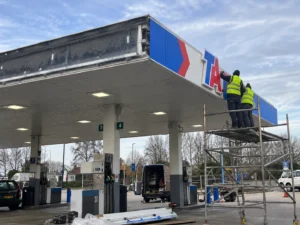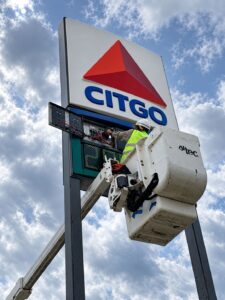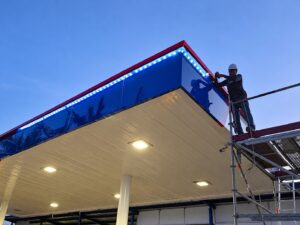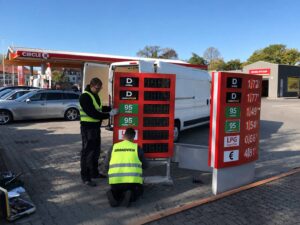
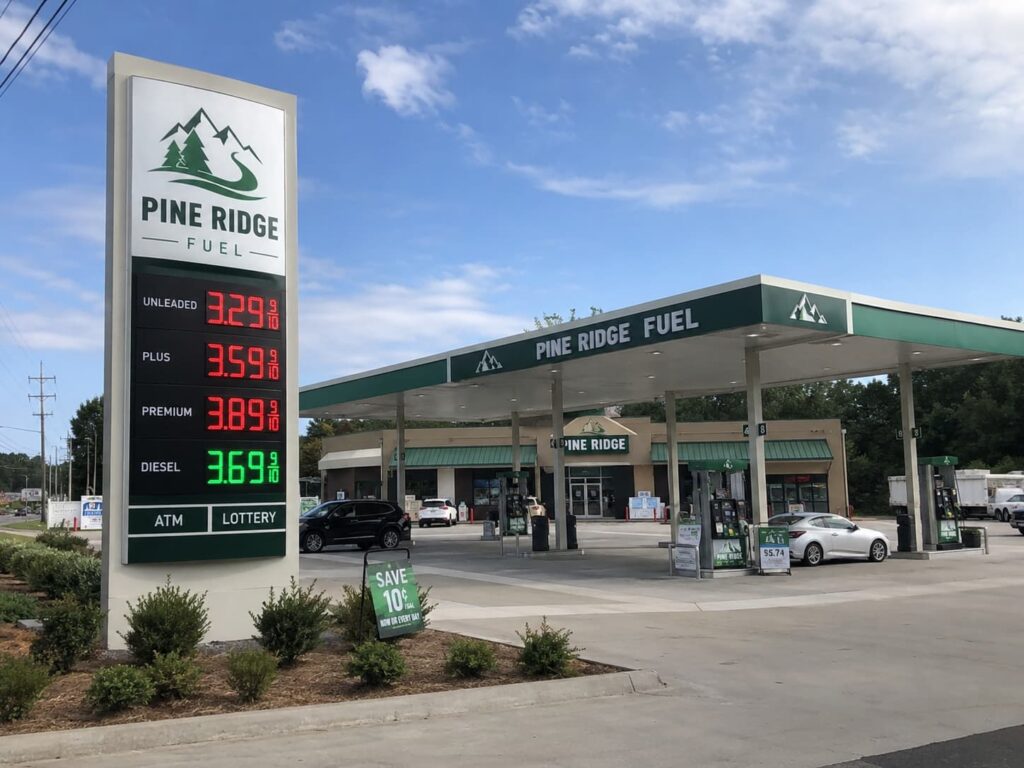
For a fuel station, signage is not only decoration. It affects roadside visibility, brand recognition, traffic flow, price communication, and the customer’s first impression. This happens before they even enter the site.
In real gas station projects, buyers rarely need only one sign. A complete signage package may include a gas station pylon sign, LED gas price display, canopy fascia, gas pump signs, directional signs, convenience store signage and service area signs. When these elements are planned together, the station looks more professional and is easier for drivers to recognize.
This guide explains how to choose service station signs for new builds, rebranding projects and station upgrades.
What Are Service Station Signs?
Service station signs are outdoor and indoor signs used around fuel stations, petrol stations and convenience store forecourts. Their main purpose is to help drivers identify the brand. They can read fuel prices and find the entrance. They can locate pumps and understand on-site services.
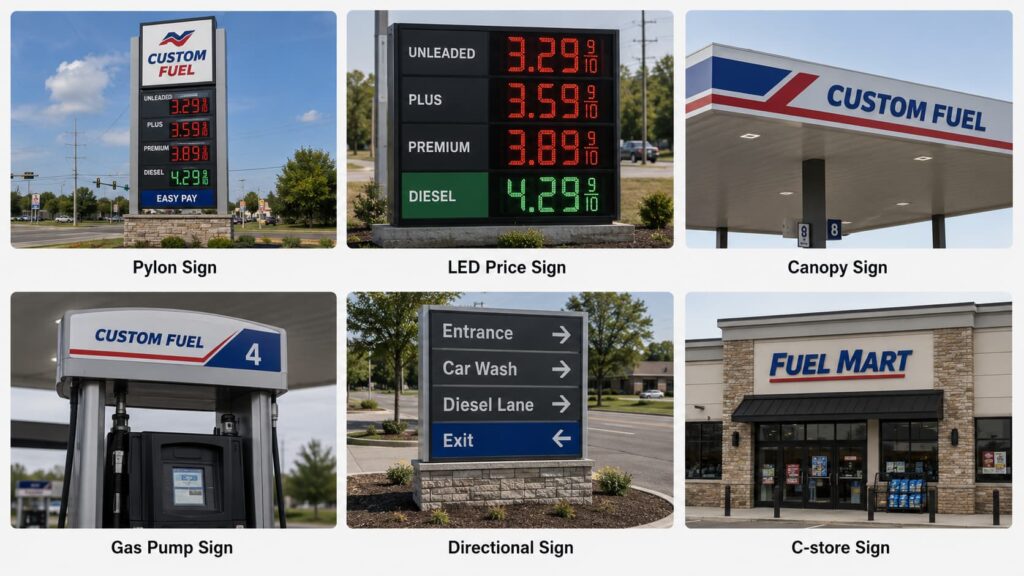
Common service station signs include:
- Gas station pylon signs
- LED gas price signs
- Canopy logo signs
- Gas pump signs
- Pump topper signs
- Fuel grade labels
- Directional signs
- Convenience store signs
- Car wash and service signs
For B2B buyers, the key point is not simply choosing a sign style. The main question is whether the full signage system fits the site layout.
It should match the brand identity. It must be easy to read from the required viewing distance. It should meet installation needs. It must also support long-term maintenance.
Service Station Signs vs Gas Station Sign vs Gas Pump Signs
These keywords are often used together, but they do not always mean the same thing.
A service station sign usually refers to the full signage system used across the station. This may include roadside signs, canopy signs, pump signs and building signs.
A gas station sign is a broader term. It can mean a large roadside pylon sign, a fuel price display, a brand logo sign or even a complete station branding package.
Gas pump signs are signs installed around fuel dispensers. They stay closer to the customer, and people often use them to identify fuel types. They also share payment steps, safety messages, loyalty program promos, or car wash offers.
For commercial fuel station projects, you should not purchase these signs separately without a full layout plan. If the pylon sign, canopy fascia and pump graphics use different colors, lighting levels or materials, the station can look inconsistent even if each sign is well made.
Main Types of Gas Station Signs
Gas Station Pylon Signs

A pylon sign is usually the most visible sign on the property. They place it near the roadside, and it helps drivers identify the station from a distance.
A typical gas station pylon sign may include:
- Main brand logo
- LED fuel price display
- Convenience store logo
- Diesel, car wash or food service panels
- Single-sided or double-sided structure
For highways or busy roads, the pylon sign must fit the viewing distance, speed, cabinet size, and LED digit height. A beautiful sign that people cannot read early enough will not perform well.
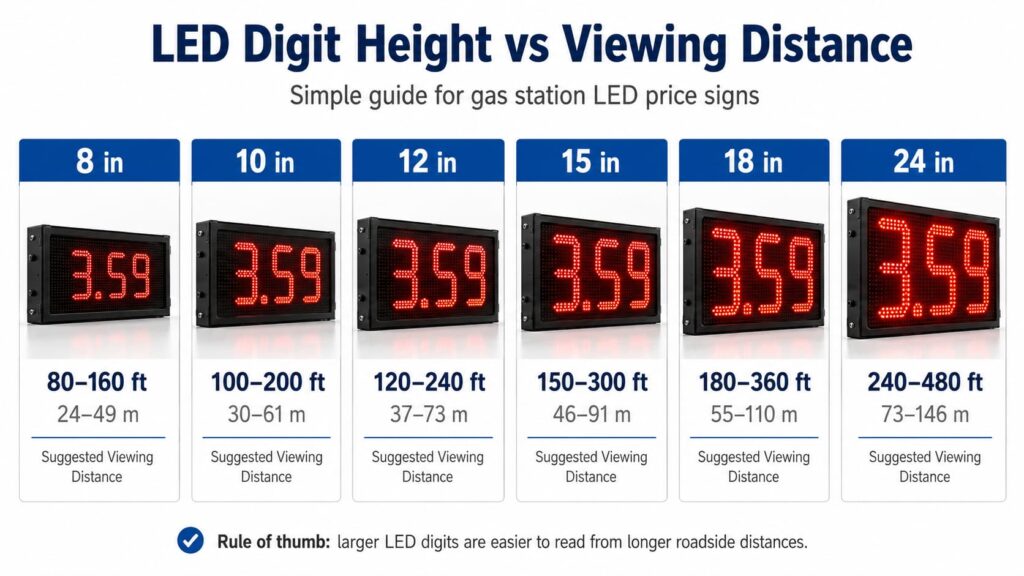
LED Gas Price Signs
LED gas price signs are widely used because they allow fuel prices to be updated faster and displayed clearly at night.
Important details include:
- Digit height
- Number of price lines
- Single-color or multi-color display
- Remote, wired or integrated control system
- Outdoor brightness
- Heat dissipation
- Maintenance access
From a manufacturing perspective, the LED cabinet must be designed for outdoor use. Water protection, ventilation, wiring layout and service doors are not small details. They directly affect maintenance cost after installation.
Canopy Fascia Signs
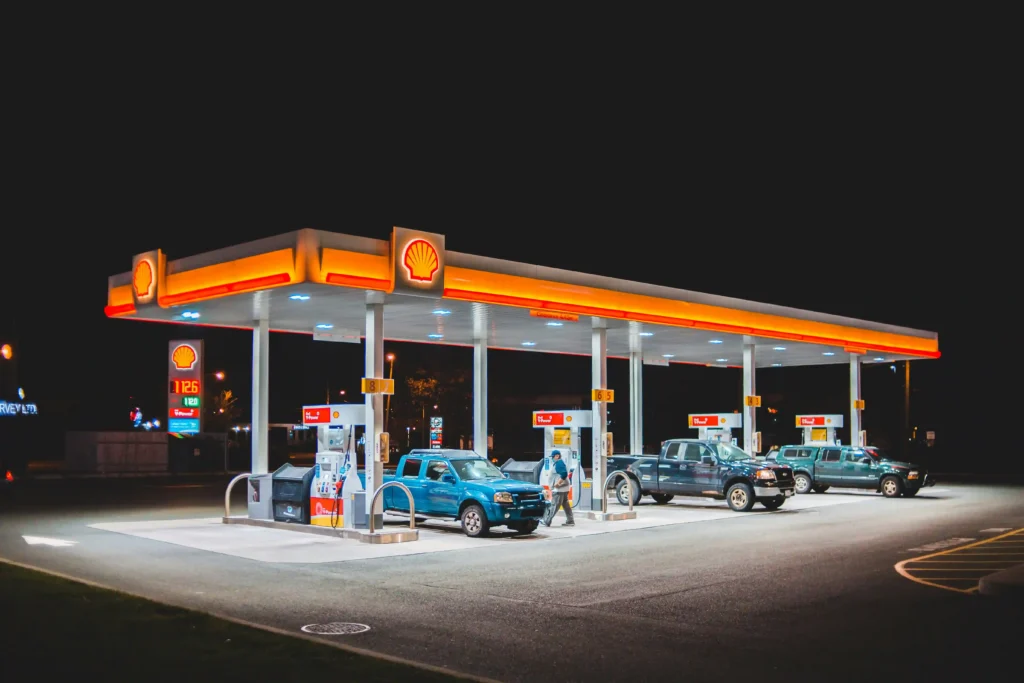
The canopy is one of the strongest visual areas of a fuel station. Canopy fascia signs often include illuminated brand panels, color bands and logo elements.
Good canopy signage should match:
- Brand color standard
- Pylon sign design
- Pump island graphics
- Storefront signage
- Night lighting effect
For rebranding projects, teams often replace canopy signs with pylon signs and pump graphics. This creates a consistent new image.
Gas Pump Signs
Gas pump signs are closer to the driver and influence the on-site customer experience.
Common uses include:
- Fuel grade identification
- Payment instructions
- Safety notices
- Pump number signs
- Promotional signs
- Car wash or loyalty program messages
The material should be selected based on exposure, cleaning frequency and installation method. For pump island areas, signs may face fuel vapor, sunlight, dust, water and repeated customer contact.
Convenience Store and Directional Signs
Many modern gas stations profit not only from fuel.
They also profit from convenience stores, food service, car washes, and other retail areas. Clear signage can guide customers from the pump area into the store.
Useful signs include:
- C-store channel letters
- Wall signs
- Window graphics
- Entry and exit signs
- Restroom signs
- Car wash directional signs
- Parking and service area signs
Materials Used in Commercial Gas Station Signs
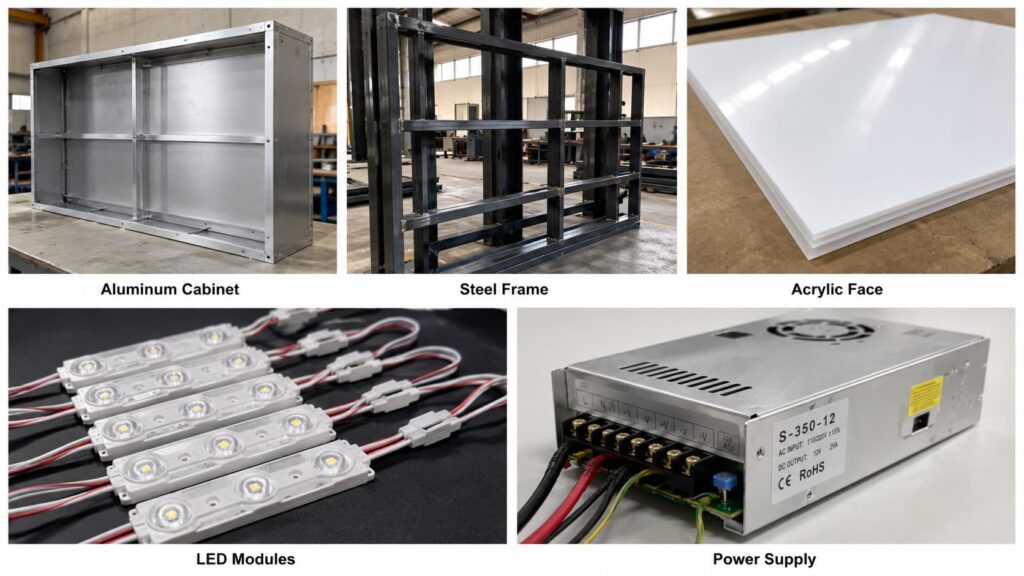
Outdoor fuel station signs must be built for long-term exposure. Low-cost materials may look fine when they arrive.
But problems often **appear** after months of sun, rain, and changing temperatures.
Common materials include:
- Aluminum cabinet: lightweight, corrosion-resistant and suitable for outdoor sign cabinets.
- Steel structure: used for support frames, pylon structures and foundation-connected parts.
- Acrylic or polycarbonate faces: used for illuminated logo panels and sign faces.
- LED modules: used for internal illumination and digital fuel price displays.
- Powder coating or automotive-grade painting: used to improve surface durability and brand color consistency.
- Waterproof power supplies and wiring: important for outdoor electrical safety and maintenance.
In factory production, details such as welding quality, painting thickness, LED layout, cabinet sealing and packing method all matter. For export projects, also pack signs with protection against scratches, vibration, and moisture during shipping.
Manufacturing Process: What B2B Buyers Should Check
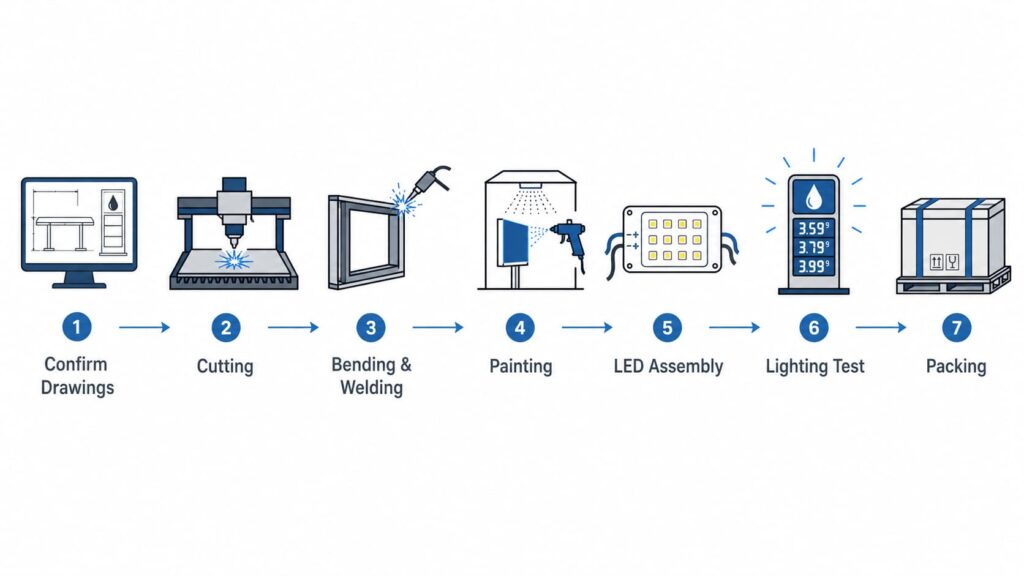
A professional gas station sign manufacturer should not only provide a drawing and a price. For commercial projects, the production process should be clear.
Typical manufacturing steps include:
- Confirm drawings, dimensions and brand colors
- Cut aluminum or steel materials
- Bend, weld and assemble the cabinet or frame
- Apply painting or powder coating
- Install LED modules, wiring and power supplies
- Test lighting, brightness and price display function
- Take production photos for confirmation
- Pack signs for domestic or international transport
For buyers, production photos are useful. They help confirm that the sign structure, finish and lighting match the approved drawings before shipment.
Installation and Engineering Considerations
Installation should be considered before production, not after the signs arrive on site.
Before ordering, confirm:
- Installation location
- Single-sided or double-sided display
- Foundation or wall structure
- Electrical access
- Local voltage
- Maintenance door position
- Wind load requirements
- Local sign permit requirements
- Transport size limits
For pylon signs, the steel structure and foundation connection are especially important. For canopy signs, the installer must check the existing fascia condition, fixing points and wiring route. For LED price signs, future maintenance access should be easy enough for technicians to replace modules or power supplies.
A common mistake is ordering a sign based only on appearance. In real projects, the sign must also fit the site structure, installation method and local regulations.
Industry Case: Full Fuel Station Rebranding Project

In a typical rebranding project, the station owner does not only change the main logo. The whole visual system needs to be updated.
One project may include:
- New pylon sign with LED gas price display
- Updated canopy fascia panels
- New pump island graphics
- Gas pump signs and fuel labels
- Convenience store sign
- Entry, exit and service area signs
The main challenge is consistency. Drivers can see the pylon sign from the road, while they can see pump signs only at close range. The color, logo proportion, lighting temperature and material finish should work together.
For this type of project, we usually recommend site photos, old sign sizes, brand files, and a clear list of signs to replace. This helps reduce design changes and makes the quotation more accurate.
How to Choose the Right Signs for Your Project
For New Gas Station Construction
Plan the full signage package before construction finishes. This makes it easier to prepare power supply, foundation, canopy fixing points and installation access.
For Existing Station Upgrades
Focus first on signs that improve visibility and conversion. Start with the pylon sign and LED price sign. Then update the canopy fascia and pump area signs.
For Independent Fuel Stations
A well-designed pylon sign and clear gas pump signs can make a smaller station look more trustworthy and organized.
For Multi-Location Petroleum Brands
Standardization is important. Use consistent materials, colors, dimensions and production drawings across different sites.
2026 Trends in Gas Station Signage
Fuel station signage is becoming more integrated and more digital. Buyers are no longer looking only for a single outdoor sign. They want a complete branding system that is easier to update, easier to maintain and more consistent across locations.
Key trends include:
- LED price displays with easier control methods
- Complete pylon, canopy and pump branding packages
- Energy-efficient LED illumination
- Modular sign structures for easier shipping and maintenance
- Stronger visual branding for convenience stores and car wash areas
- More attention to EV charging, food service and retail signage
For manufacturers, this means signage design must combine branding, structure, lighting, electrical layout and installation planning.
What to Prepare Before Requesting a Quote
To get a faster and more accurate quotation, prepare the following:
- Station photos or site layout
- Required sign types
- Logo file and brand color standard
- Approximate sign dimensions
- Fuel grades and price display format
- Single-sided or double-sided requirement
- Voltage and control method
- Installation location
- Quantity and delivery destination
- Any local permit or engineering requirements
If drawings are not available, clear site photos and rough dimensions are still useful for the first proposal.
Need Custom Service Station Signs?
GV Sign Factory provides custom gas station signs, LED gas price signs, pylon signs, gas pump signs, canopy signage and complete fuel station branding solutions for commercial projects.
Send us your station plan, logo, site photos or required sign list to get a custom signage proposal.
FAQ
What are service station signs?
Service station signs are signs used around fuel stations, including pylon signs, LED price signs, canopy signs, gas pump signs, directional signs and convenience store signs.
What is the difference between gas station signs and gas pump signs?
Gas station signs usually refer to the full signage system or large outdoor signs. Gas pump signs are installed near fuel dispensers for fuel labels, instructions, safety notices or promotions.
What signs does a gas station need?
Most gas stations need a pylon sign, fuel price display, canopy branding, pump island signs, building signs and directional signs.
Are LED gas price signs better than manual price signs?
For many stations, LED gas price signs are easier to update, more visible at night and more suitable for modern fuel station branding.
What materials are used for outdoor gas station signs?
Common materials include aluminum, steel, acrylic, polycarbonate, LED modules, waterproof power supplies and powder-coated or painted surfaces.
Do gas station signs need permits?
Permit requirements depend on the project location. Buyers should check local sign codes and approval requirements before installation.